Aaseth J, Wallace D, Vejrup K, Alexander J. Methylmercury and developmental neurotoxicity: a global concern. Curr Opin Toxicol, 2020;19. https://doi.org/10.1016/j.cotox.2020.01.005
Abdulla A, Yan HN, Chen SJ, Wu LQ, Chen XS, Zhang YZ, et al. A multichannel microfluidic device for revealing the neurotoxic effects of Bisphenol S on cerebral organoids under low-dose constant exposure. Biosens Bioelectron. 2025;267:116754. https://doi.org/10.1016/j.bios.2024.116754.
Google Scholar
Amartumur S, Nguyen H, Huynh T, Kim TS, Woo RS, Oh E, et al. Neuropathogenesis-on-chips for neurodegenerative diseases. Nat Commun. 2024;15(1):2219. https://doi.org/10.1038/s41467-024-46554-8.
Google Scholar
Ankley GT, Bennett RS, Erickson RJ, Hoff DJ, Hornung MW, Johnson RD, et al. Adverse outcome pathways: a conceptual framework to support ecotoxicology research and risk assessment. Environ Toxicol Chem. 2010;29(3):730–41. https://doi.org/10.1002/etc.34.
Google Scholar
Bakulski KM, Seo YA, Hickman RC, Brandt D, Vadari HS, Hu H, et al. Heavy metals exposure and Alzheimer’s disease and related dementias. J Alzheimers Dis. 2020;76(4):1215–42. https://doi.org/10.3233/jad-200282.
Google Scholar
Birey F, Andersen J, Makinson CD, Islam S, Wei W, Huber N, et al. Assembly of functionally integrated human forebrain spheroids. Nature. 2017;545(7652):54–9. https://doi.org/10.1038/nature22330.
Google Scholar
Boda E, Rigamonti AE, Bollati V. Understanding the effects of air pollution on neurogenesis and gliogenesis in the growing and adult brain. Curr Opin Pharmacol. 2020;50:61–6. https://doi.org/10.1016/j.coph.2019.12.003.
Google Scholar
Bu Q, Huang Y, Li M, Dai YP, Fang X, Chen K, et al. Acrylamide exposure represses neuronal differentiation, induces cell apoptosis and promotes tau hyperphosphorylation in hESC-derived 3D cerebral organoids. Food Chem Toxicol. 2020;144:111643. https://doi.org/10.1016/j.fct.2020.111643.
Google Scholar
Caiaffa CD, Tukeman G, Delgado CZ, Ambekar YS, Mekonnen TT, Singh M, et al. Dolutegravir induces FOLR1 expression during brain organoid development. Front Mol Neurosci. 2024. https://doi.org/10.3389/fnmol.2024.1394058.
Google Scholar
Cao Y, Ng C. Absorption, distribution, and toxicity of per- and polyfluoroalkyl substances (PFAS) in the brain: a review. Environ Sci Process Impacts. 2021;23(11):1623–40. https://doi.org/10.1039/d1em00228g.
Google Scholar
Cao Y, Hu D, Cai C, Zhou M, Dai P, Lai Q, et al. Modeling early human cortical development and evaluating neurotoxicity with a forebrain organoid system. Environ Pollut. 2023;337:122624. https://doi.org/10.1016/j.envpol.2023.122624.
Google Scholar
Carecho R, Marques D, Carregosa D, Masuero D, Garcia-Aloy M, Tramer F, et al. Circulating low-molecular-weight (poly)phenol metabolites in the brain: unveiling in vitro and in vivo blood-brain barrier transport. Food Funct. 2024;15(15):7812–27. https://doi.org/10.1039/d4fo01396d.
Google Scholar
Chen XJ, Cui YL, Wang C, Shi T, Zhang RH, Xu JF, Li LQ. Toxicity of tri-ortho-cresyl phosphate to human-induced pluripotent stem cell derived human brain organoids. State Key Laboratory of NBC Protection for Civilians 2021;35(11):824–829. https://doi.org/10.3867/j.issn.1000-3002.2021.11.003
Chen S, Chen Y, Gao Y, Han B, Wang T, Dong H, et al. Toxic effects and mechanisms of nanoplastics on embryonic brain development using brain organoids model. Sci Total Environ. 2023;904:166913. https://doi.org/10.1016/j.scitotenv.2023.166913.
Google Scholar
Chesnut M, Paschoud H, Repond C, Smirnova L, Hartung T, Zurich M-G, et al. Human IPSC-derived model to study myelin disruption. Int J Mol Sci. 2021;22(17):9473. https://doi.org/10.3390/ijms22179473.
Google Scholar
Chhibber T, Bagchi S, Lahooti B, Verma A, Al-Ahmad A, Paul MK, et al. CNS organoids: an innovative tool for neurological disease modeling and drug neurotoxicity screening. Drug Discov Today. 2020;25(2):456–65. https://doi.org/10.1016/j.drudis.2019.11.010.
Google Scholar
Chin-Chan M, Navarro-Yepes J, Quintanilla-Vega B. Environmental pollutants as risk factors for neurodegenerative disorders: Alzheimer and Parkinson diseases. Front Cell Neurosci. 2015;9:124. https://doi.org/10.3389/fncel.2015.00124.
Google Scholar
Choi, G., Yang, H.Y., Cho, S., Kwon, D., Kim, D.W., & Ko, S.H. (2024). Brain-On-A-Chip Based on Human Pluripotent Stem Cell-Derived Neurons and Astrocytes for Neurotoxicity Testing: Communicative Astrocyte-Neuron DYnamics (CANDY) Chip. Adv Mater Technol, 9(11). https://doi.org/10.1002/admt.202400107
Dong L, Wang S, Wang X, Wang Z, Liu D, You H. Investigating the adverse outcome pathways (AOP) of neurotoxicity induced by DBDPE with a combination of in vitro and in silico approaches. J Hazard Mater. 2023;449:131021. https://doi.org/10.1016/j.jhazmat.2023.131021.
Google Scholar
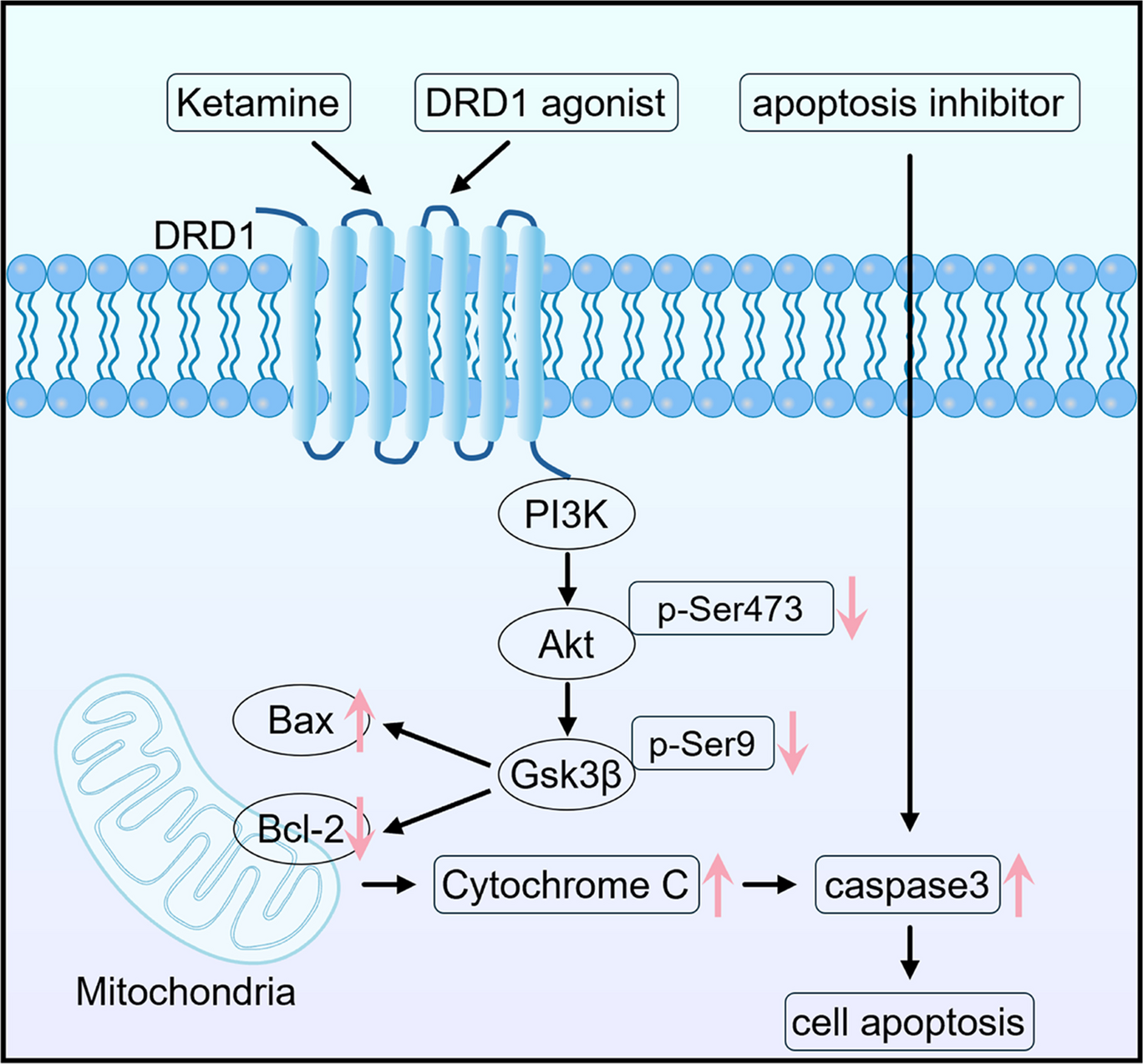
Du Z, Zang Z, Luo J, Liu T, Yang L, Cai Y, et al. Chronic exposure to (2 R,6 R)-hydroxynorketamine induces developmental neurotoxicity in hESC-derived cerebral organoids. J Hazard Mater. 2023;453:131379. https://doi.org/10.1016/j.jhazmat.2023.131379.
Google Scholar
Enright HA, Lam D, Sebastian A, Sales AP, Cadena J, Hum NR, et al. Functional and transcriptional characterization of complex neuronal co-cultures. Sci Rep. 2020;10(1):11007. https://doi.org/10.1038/s41598-020-67691-2.
Google Scholar
Fan P, Wang Y, Xu M, Han X, Liu Y. The application of brain organoids in assessing neural toxicity. Front Mol Neurosci. 2022. https://doi.org/10.3389/fnmol.2022.799397.
Google Scholar
Gao X, Yuan Y, Lan Y, Lai T, Zhu L, Xu L, et al. Polystyrene nanoplastics induced retinal toxicity: size-, dose-, and developmental stage-dependent effects on human neural retina organoids. J Hazard Mater. 2025;497:139573. https://doi.org/10.1016/j.jhazmat.2025.139573.
Google Scholar
Giandomenico SL, Sutcliffe M, Lancaster MA. Generation and long-term culture of advanced cerebral organoids for studying later stages of neural development. Nat Protoc. 2021;16(2):579–602. https://doi.org/10.1038/s41596-020-00433-w.
Google Scholar
Gu LZ, Sun H, Chen JH. Histone deacetylases 3 deletion restrains PM2.5-induced mice lung injury by regulating NF-κB and TGF-β/Smad2/3 signaling pathways. Biomed Pharmacother. 2017;85:756–62. https://doi.org/10.1016/j.biopha.2016.11.094.
Google Scholar
Habib A, Mateos PC, Dubey VK, Ahmad A, Acharya G, Ahluwalia BS, et al. Non-invasive quantitative acoustic imaging of intact brain organoids for structural assessment in drug discovery. Mater Today Adv. 2025;28:100651. https://doi.org/10.1016/j.mtadv.2025.100651.
Google Scholar
Han Y, Yu Z, Chen Y, Guo X, Liu Y, Zhang H, et al. PM2.5 induces developmental neurotoxicity in cortical organoids. Environ Pollut. 2024;361:124913. https://doi.org/10.1016/j.envpol.2024.124913.
Google Scholar
Hirano T, Ikenaka Y, Nomiyama K, Honda M, Suzuki N, Hoshi N, et al. An adverse outcome pathway-based approach to assess the neurotoxicity by combined exposure to current-use pesticides. Toxicology. 2023;500:153687. https://doi.org/10.1016/j.tox.2023.153687.
Google Scholar
Hodgson E, Smart RC (2008) Molecular and biochemical toxicology: definition and scope. In Molecular and Biochemical Toxicology. pp. 1–4. https://doi.org/10.1002/9780470285251.ch1
Hongen T, Sakai K, Ito T, Qin X-Y, Sone H. Human-induced pluripotent stem cell-derived neural organoids as a novel in vitro platform for developmental neurotoxicity assessment. Int J Mol Sci. 2024;25(23):12523. https://doi.org/10.3390/ijms252312523.
Google Scholar
Hu D, Cao Y, Cai C, Wang G, Zhou M, Peng L, et al. Establishment of human cerebral organoid systems to model early neural development and assess the central neurotoxicity of environmental toxins. Neural Regen Res. 2025;20(1):242–52. https://doi.org/10.4103/nrr.Nrr-d-23-00928.
Google Scholar
Hua T, Kiran S, Li Y, Sang QA. Microplastics exposure affects neural development of human pluripotent stem cell-derived cortical spheroids. J Hazard Mater. 2022a;435:128884. https://doi.org/10.1016/j.jhazmat.2022.128884.
Google Scholar
Hua T, Liu C, Kiran S, Gray K, Jung S, Meckes DG, et al. Phenotypic, metabolic, and biogenesis properties of human stem cell-derived cerebellar spheroids. Sci Rep. 2022b;12(1):12880. https://doi.org/10.1038/s41598-022-16970-1.
Google Scholar
Huang Y, Dai Y, Li M, Guo L, Cao C, Huang Y, et al. Exposure to cadmium induces neuroinflammation and impairs ciliogenesis in hESC-derived 3D cerebral organoids. Sci Total Environ. 2021;797:149043. https://doi.org/10.1016/j.scitotenv.2021.149043.
Google Scholar
Huang Y, Guo L, Cao C, Ma R, Huang Y, Zhong K, et al. Silver nanoparticles exposure induces developmental neurotoxicity in hiPSC-derived cerebral organoids. Sci Total Environ. 2022a;845:157047. https://doi.org/10.1016/j.scitotenv.2022.157047.
Google Scholar
Huang YY, Liu X, Feng Y, Nie XL, Liu Q, Du XL, et al. Rotenone, an environmental toxin, causes abnormal methylation of the mouse brain organoid’s genome and ferroptosis. Int J Med Sci. 2022b;19(7):1184–97. https://doi.org/10.7150/ijms.74569.
Google Scholar
Huang Y, Guo XH, Lu SY, Chen QQ, Wang ZQ, Lai L, et al. Long-term exposure to cadmium disrupts neurodevelopment in mature cerebral organoids. Sci Total Environ. 2024;912:168923. https://doi.org/10.1016/j.scitotenv.2023.168923.
Google Scholar
Huang FF, You HZ, Tang XG, Su YT, Peng HJ, Li HZ, et al. Early-life exposure to polypropylene nanoplastics induces neurodevelopmental toxicity in mice and human iPSC-derived cerebral organoids. J Nanobiotechnol. 2025;23(1):474. https://doi.org/10.1186/s12951-025-03561-1.
Google Scholar
Hughes S, Hessel EVS. Zebrafish and nematodes as whole organism models to measure developmental neurotoxicity. Crit Rev Toxicol. 2024;54(5):330–43. https://doi.org/10.1080/10408444.2024.2342448.
Google Scholar
Iqubal A, Ahmed M, Ahmad S, Sahoo CR, Iqubal MK, Haque SE. Environmental neurotoxic pollutants: review. Environ Sci Pollut Res Int. 2020;27(33):41175–98. https://doi.org/10.1007/s11356-020-10539-z.
Google Scholar
Jiang L, Huang L, Jiang W. H3K27me3-mediated epigenetic regulation in pluripotency maintenance and lineage differentiation. Cell Insight. 2024;3(4):100180. https://doi.org/10.1016/j.cellin.2024.100180.
Google Scholar
Jo J, Xiao Y, Sun AX, Cukuroglu E, Tran HD, Göke J, et al. Midbrain-like organoids from human pluripotent stem cells contain functional dopaminergic and neuromelanin-producing neurons. Cell Stem Cell. 2016;19(2):248–57. https://doi.org/10.1016/j.stem.2016.07.005.
Google Scholar
Kanton S, Boyle MJ, He Z, Santel M, Weigert A, Sanchís-Calleja F, et al. Organoid single-cell genomic atlas uncovers human-specific features of brain development. Nature. 2019;574(7778):418–22. https://doi.org/10.1038/s41586-019-1654-9.
Google Scholar
Kilic O, Pamies D, Lavell E, Schiapparelli P, Feng Y, Hartung T, et al. Brain-on-a-chip model enables analysis of human neuronal differentiation and chemotaxis. Lab Chip. 2016;16(21):4152–62. https://doi.org/10.1039/c6lc00946h.
Google Scholar
Kim J, Lee S, Lee J, Park JC, Kim KH, Ko JM, et al. Neurotoxicity of phenylalanine on human iPSC-derived cerebral organoids. Mol Genet Metab. 2022;136(2):132–44. https://doi.org/10.1016/j.ymgme.2022.04.005.
Google Scholar
Kim J-i, Imaizumi K, Jurjuț O, Kelley KW, Wang D, Thete MV, et al. Human assembloid model of the ascending neural sensory pathway. Nature. 2025;642(8066):143–53. https://doi.org/10.1038/s41586-025-08808-3.
Google Scholar
Kindberg AA, Bendriem RM, Spivak CE, Chen J, Handreck A, Lupica CR, et al. An in vitro model of human neocortical development using pluripotent stem cells: cocaine-induced cytoarchitectural alterations. Dis Model Mech. 2014;7(12):1397–405. https://doi.org/10.1242/dmm.017251.
Google Scholar
Knight GT, Lundin BF, Iyer N, Ashton LM, Sethares WA

Comments (0)