Educational Impact of a National Training Webinar on AI-based Automatic Contouring in Radiation Oncology
Background and Objective
Artificial intelligence–based automatic contouring is increasingly integrated into radiation oncology workflows, yet structured education for clinical end users remains limited. This study aimed to describe and evaluate the educational impact of a national training webinar focused on AI-based automatic contouring.
Methods
A prospective educational study was conducted during a live national training webinar delivered online. The intervention covered fundamental principles of supervised learning and convolutional neural networks, objectives of medical image segmentation, interpretation of segmentation performance metrics, and key aspects of clinical implementation requiring human validation. Educational outcomes were assessed using a five-item multiple-choice questionnaire administered before and after the webinar. Paired pre- and post-training scores were compared using the Wilcoxon signed-rank test.
Results
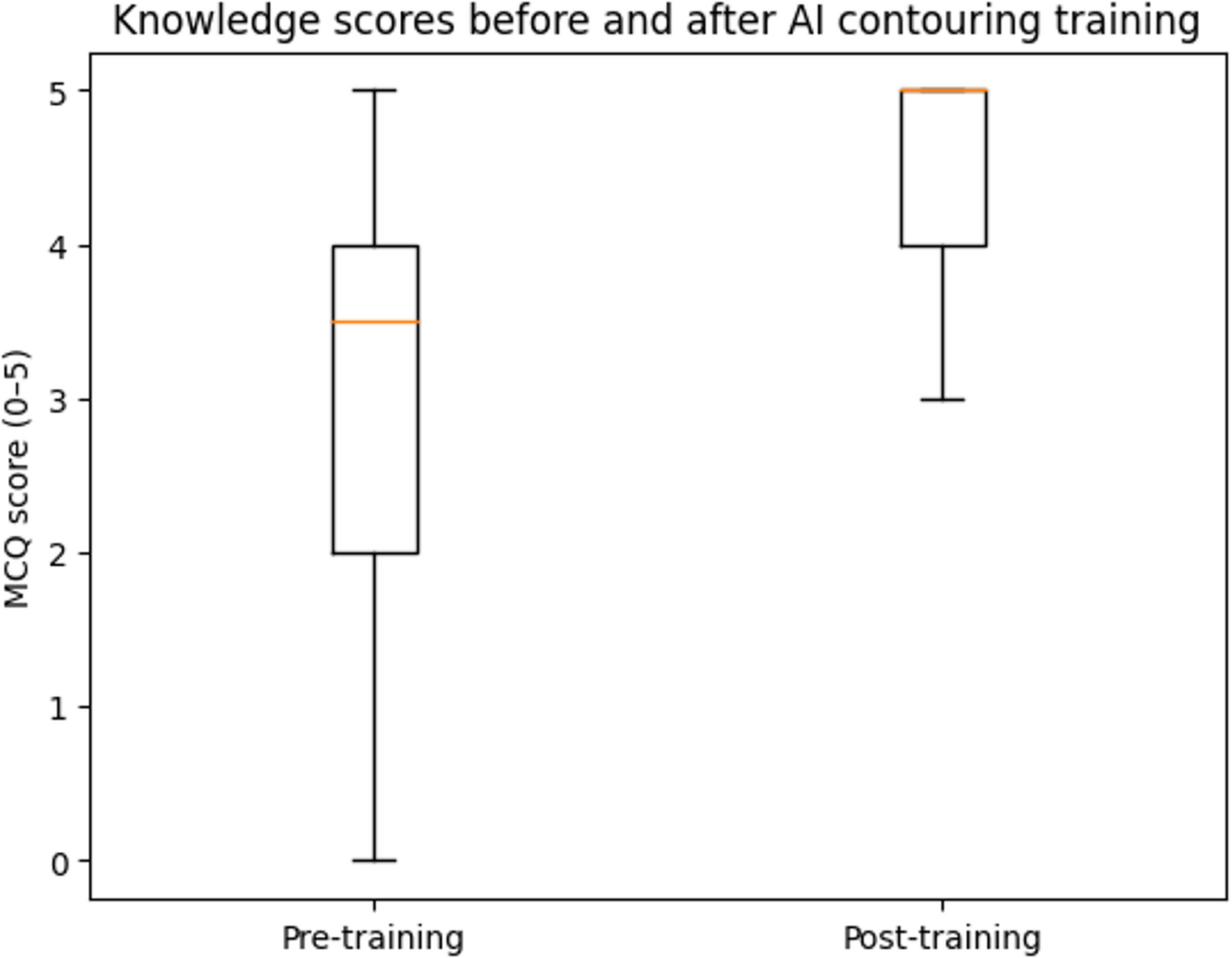
Among the 33 healthcare professionals who attended the webinar, 28 participants (85%) completed both the pre- and post-training assessments and were included in the analysis. Participants represented a multidisciplinary radiation oncology workforce, including radiation oncologists, residents or trainees, medical physicists, dosimetrists, and radiation therapists. The median questionnaire score increased from 3.5 (IQR: 2–4) before training to 5.0 (IQR: 4–5) after training, corresponding to a statistically significant improvement (p < 0.0001).
Conclusions
This national training webinar significantly improved short-term conceptual knowledge related to AI-based automatic contouring among radiation oncology professionals. These findings support the need for scalable, clinically oriented educational initiatives to accompany the safe, critical, and informed integration of AI tools into routine radiation therapy practice.

Comments (0)