Rates of squamous cell carcinoma of the anus (i.e., anal cancer) are increasing in the U.S. Anal cancer incidence has risen by approximately 2.7% per year over the past two decades, continuing an upward trend observed since the 1970s [1, 2]. The increase occurred most distinctly among men and women in birth cohorts who experienced changes in sexual norms and the HIV epidemic as adults (i.e., born between 1946 and 1966) [3]. Over the same period, anal cancer mortality has increased by 3.2% annually [2]. Thus, a syndemic of anal HPV infection, concurrent sexually transmitted infections (STIs), and related behavioral factors (e.g., anal intercourse) contributed to the rise of anal cancer incidence and disparities. The necessary and sufficient cause of anal cancer is oncogenic anal HPV infection [1], which is easily transmitted through anal intercourse [4]. HIV and concurrent STIs (e.g., syphilis and gonorrhea) significantly increase the risk of anal cancer [5].
Effective anal cancer prevention necessitates reaching those with the greatest risk. Individuals with HIV, behavioral risk factors (e.g., male-male receptive anal sex), and older ages are classified by the International Anal Neoplasia Society (IANS) as “Category A” or high-risk—defined by anal cancer rates more than ten times higher than the general population [6]. Incidence in these groups ranges from 37 to 131/100,000, a staggering 20- to 80-fold increase over the incidence in the general population [1, 2, 4, 7, 8]. Men who have sex with men (MSM) living with HIV have the highest documented risk for anal cancer [8]. However, HIV-negative individuals account for 63% of all annual anal cancer cases occurring in individuals over age 60 [9]. Given the low incidence of anal cancer in the general population along with high disparities, targeted screening is essential to achieve impact and efficiency.
As of 2024, the IANS and the CDC recommend targeted anal cancer screening [6, 10]. IANS and the CDC recommend screening starting at age 35 for MSM and transgender women (TGW) living with HIV and at age 45 for anyone living with HIV regardless of sexual risk behaviors, sex, or gender. IANS also recommends that HIV-negative MSM and individuals with a history of vulvar HPV-related disease initiate screening at age 45. Solid-organ transplant recipients are recommended to begin screening ten years after transplant. The mode of screening can include anal cytology with or without high-risk HPV testing. Those who screen positive (either abnormal cytology, the presence of high-risk HPV subtypes, or both) are recommended to undergo High Resolution Anoscopy (HRA), a clinic-based procedure shown to be effective in identifying and treating precancerous lesions of the anus (termed “high-grade dysplasia” (HSIL)) and thus preventing progression to invasive anal cancer [6].
Uptake of routine anal cancer screening is low due to the recency of national guidelines, but is also limited by a range of patient-, provider-, and system-level barriers [11]. At the patient level, low awareness and limited knowledge of anal cancer prevention are well documented [12,13,14]. Among MSM, significant knowledge gaps persist, including uncertainty about risk factors, screening procedures, and the benefits of early detection [12, 15]. Stigma and discomfort discussing anal sexual health are barriers for both patients and their clinicians [15, 16]. Anal cancer is unique in that high-risk populations are impacted by multiple, intersecting stigmas (i.e., the four stigmas): stigma related to the affected organ (i.e., the anus), the primary cause (HPV as an STI), behavioral exposures (receptive anal intercourse), and the social identities of high-risk populations (people living with HIV and MSM). Even after initial screening (e.g., anal cytology), motivational barriers—such as fear of results, low perceived need, and competing life priorities—contribute to poor retention in follow-up care [17]. Wheldon and colleagues synthesized a multi-level conceptual model of anal cancer prevention care utilization that incorporates barriers at the patient, provider, and healthcare system levels [15].
Digital health interventions, including artificial intelligence (AI)-powered, patient-facing chatbots, offer scalable solutions to address the educational and motivational barriers identified. Chatbots can deliver high-quality health information and may also help reduce stigma [18]. In oncology settings, chatbots have been successfully deployed to provide disease-specific education [19], support treatment adherence [20], manage symptoms [21, 22], and promote psychosocial well-being [23]. Importantly, chatbots can deliver tailored, on-demand information in formats patients prefer—such as text messaging, apps, or patient portals—overcoming time and geographic barriers to in-person counseling [22]. Studies in diverse cancer populations report high satisfaction, perceived usefulness, and improvements in knowledge, self-care behaviors, and patient–provider communication [20, 24]. These attributes make domain-specific chatbots potentially well-suited for anal cancer prevention, where timely education, reassurance, and follow-up guidance could directly address the barriers to screening and retention identified in prior research [13]. However, no existing studies have explored their use for anal cancer specifically—a setting uniquely affected by multiple, overlapping sources of stigma.
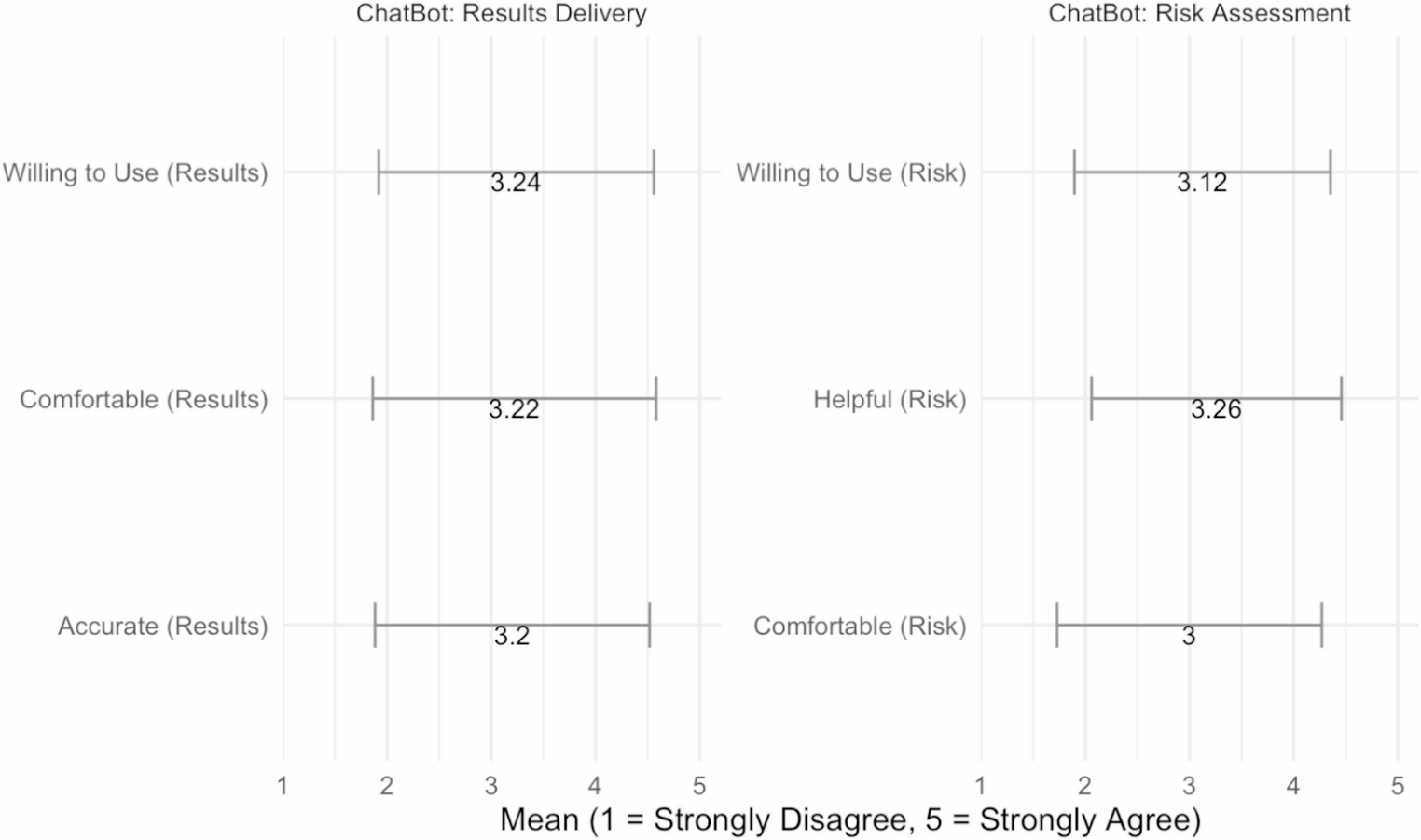
The purpose of this study was to determine the acceptability of using an AI-powered chatbot designed to improve patient education and screening uptake as well as improve rates of follow-up with HRA for those who screen positive. There were three research questions: (RQ1) What are salient attitudes and beliefs regarding the use of an anal cancer prevention chatbot? (R2) What demographic, healthcare engagement, beliefs/attitudes, and behavioral factors are associated with anal cancer chatbot attitudes and beliefs? (R3) How likely are men in high-risk groups who are being screened for anal cancer to use an anal cancer prevention chatbot?

Comments (0)