Background
Pituitary adenoma is a frequently encountered intracranial mass that is typically characterized by slow growth and benign behavior. There remains limited knowledge regarding the risk of developing a “subsequent primary malignancy” (SPM) in a patient with a pituitary adenoma. This study assessed the risk of developing a SPM after a pituitary adenoma diagnosis.
Methods
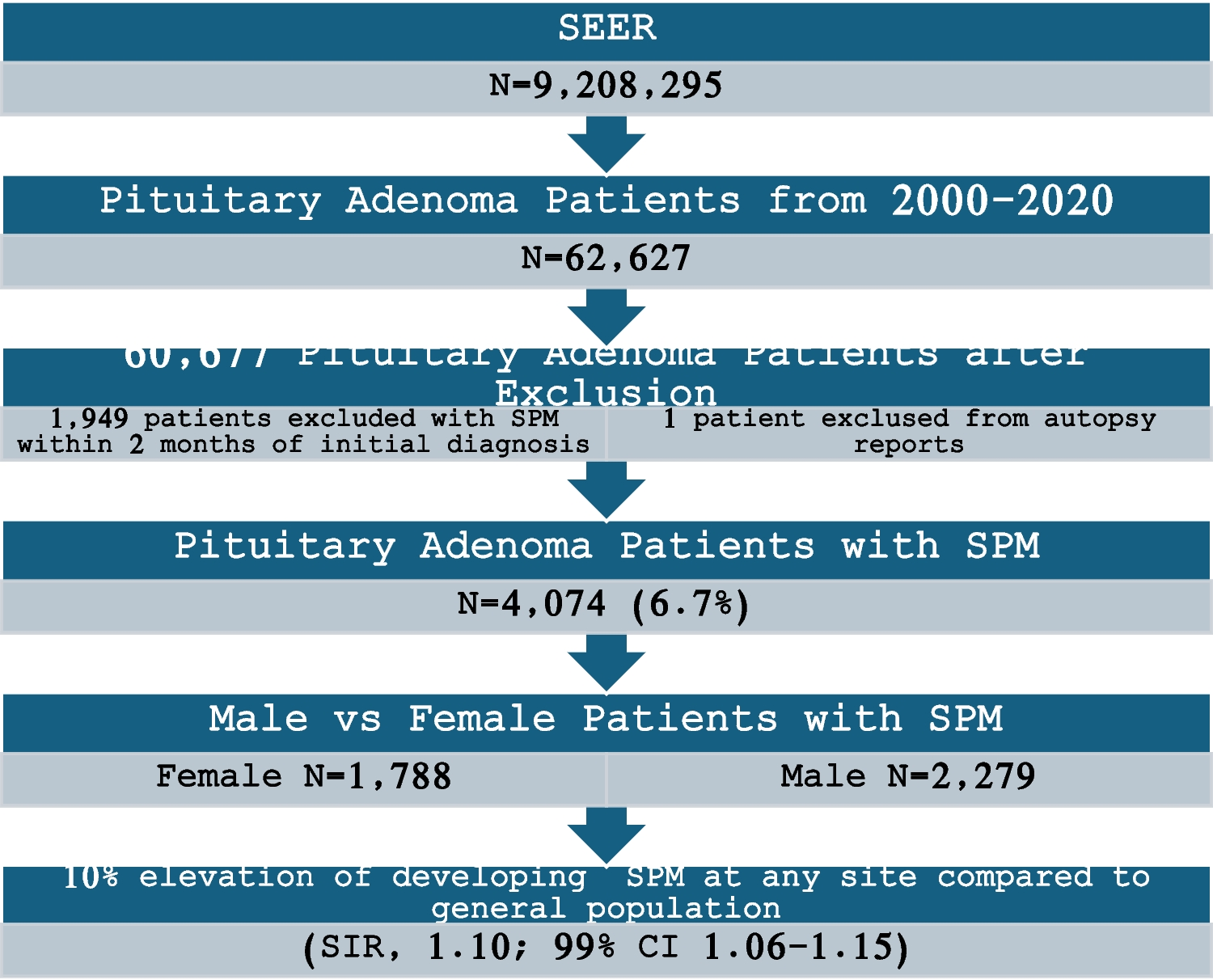
The Surveillance, Epidemiology, and End Results (SEER-17) data registry, which consisted of 9,208,295 patients, was utilized to generate a cohort of 60,677 patients diagnosed with pituitary adenoma to identify patients at risk for a SPM. The SEER patient data was collected from the years 2000 to 2020. Statistical analysis was performed through SEER’s stat package and Standardized Incidence Ratios (SIRs) for various malignancies after the diagnosis of primary pituitary adenoma were obtained. We also collected basic demographic, surgical, and postoperative data.
Results
Of the 60,677 patients, 4067 (6.7%) received a diagnosis of a SPM, which correlates to a higher risk than the general population (SIR, 1.1, 99% CI, 1.06–1.15). Patients with a pituitary adenoma had an increased risk of the following cancers: lymphatic and hematopoietic (SIR, 1.25; 99% CI, 1.09–1.41), kidney and renal pelvis (SIR, 1.45; 99% CI, 1.2–1.74), cutaneous melanoma (SIR, 1.36; 99% CI, 1.15–1.16), and thyroid cancer (SIR, 2.76; 99% CI, 2.32–3.26). Additionally, females were more predisposed to the following cancers: Digestive system (SIR, 1.19; 99% CI, 1.11–1.25), and non-Hodgkin’s Lymphoma (SIR, 1.41; 99% CI, 1.04–1.88).
Conclusion
Utilizing the SEER database, we have discovered an increased risk of SPM in patients with pituitary adenoma. Supplementary research may be done to determine any shared genetic abnormalities between the development of pituitary adenoma and these SPMs. Additionally, further research of the endocrinological effects of pituitary adenoma and potential associations to SPMs should be studied.

Comments (0)