Real-world diagnostic performance of the macimorelin stimulation test in the diagnosis of adult growth hormone deficiency
Purpose
Macimorelin, a ghrelin receptor agonist, is used for diagnosing adult GH deficiency (AGHD). The FDA-approved GH cut-off is 2.8 ng/mL, whereas post-hoc analyses proposed a cut-off of 5.1 ng/mL. The real-world performance of these cut-offs, the influence of body mass index (BMI), and the need for 90-minute sampling remain unclear.
Methods
Retrospective single-center study of adults undergoing Macimorelin stimulation testing. Patients were categorized into high, intermediate, and low pre-test probability for AGHD. Diagnostic classification at the 2.8 and 5.1 ng/mL cut-offs were compared using exact McNemar test, with estimation of the absolute diagnostic yield differences and corresponding 95% confidence intervals. BMI was compared between discordant and concordant patients and agreement between 60- and 90-minute GH values was assessed.
Results
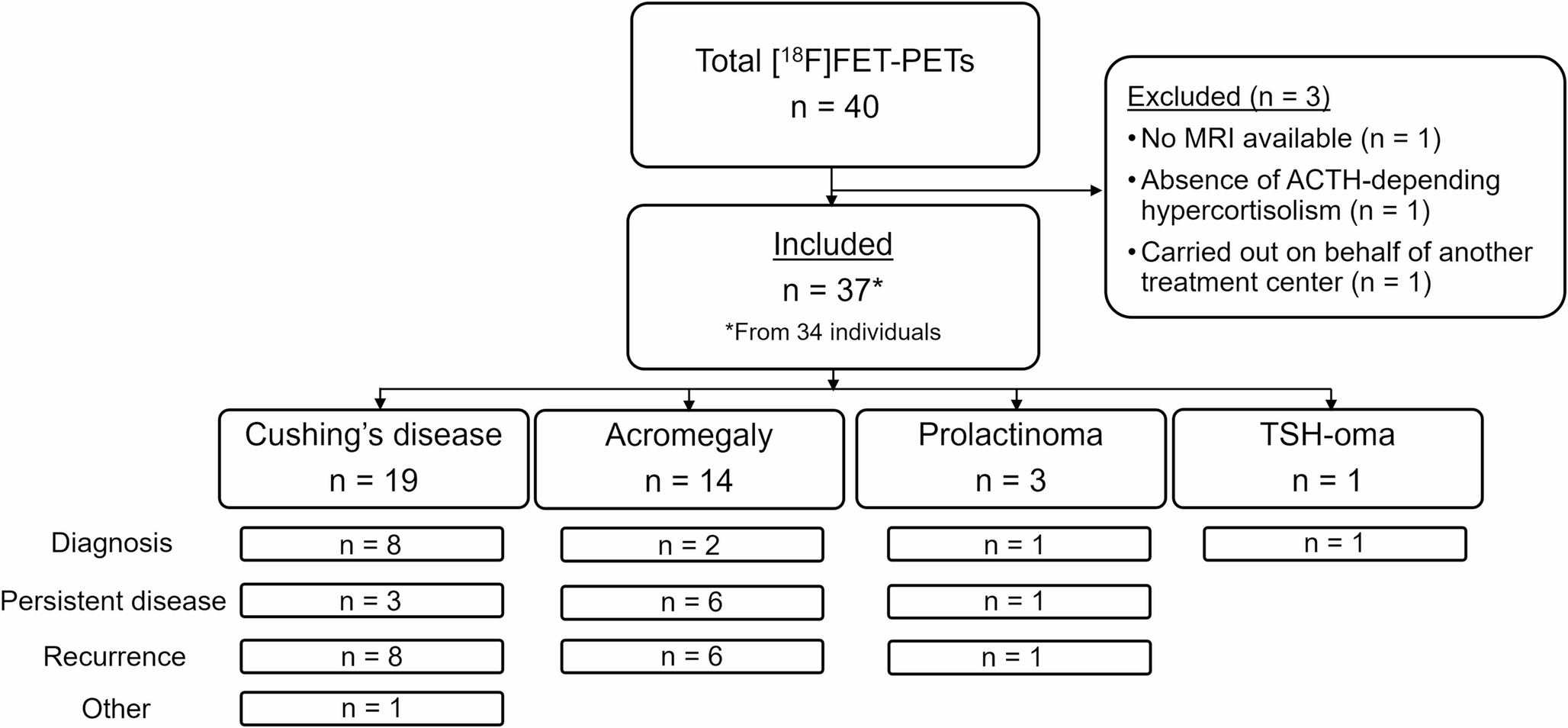
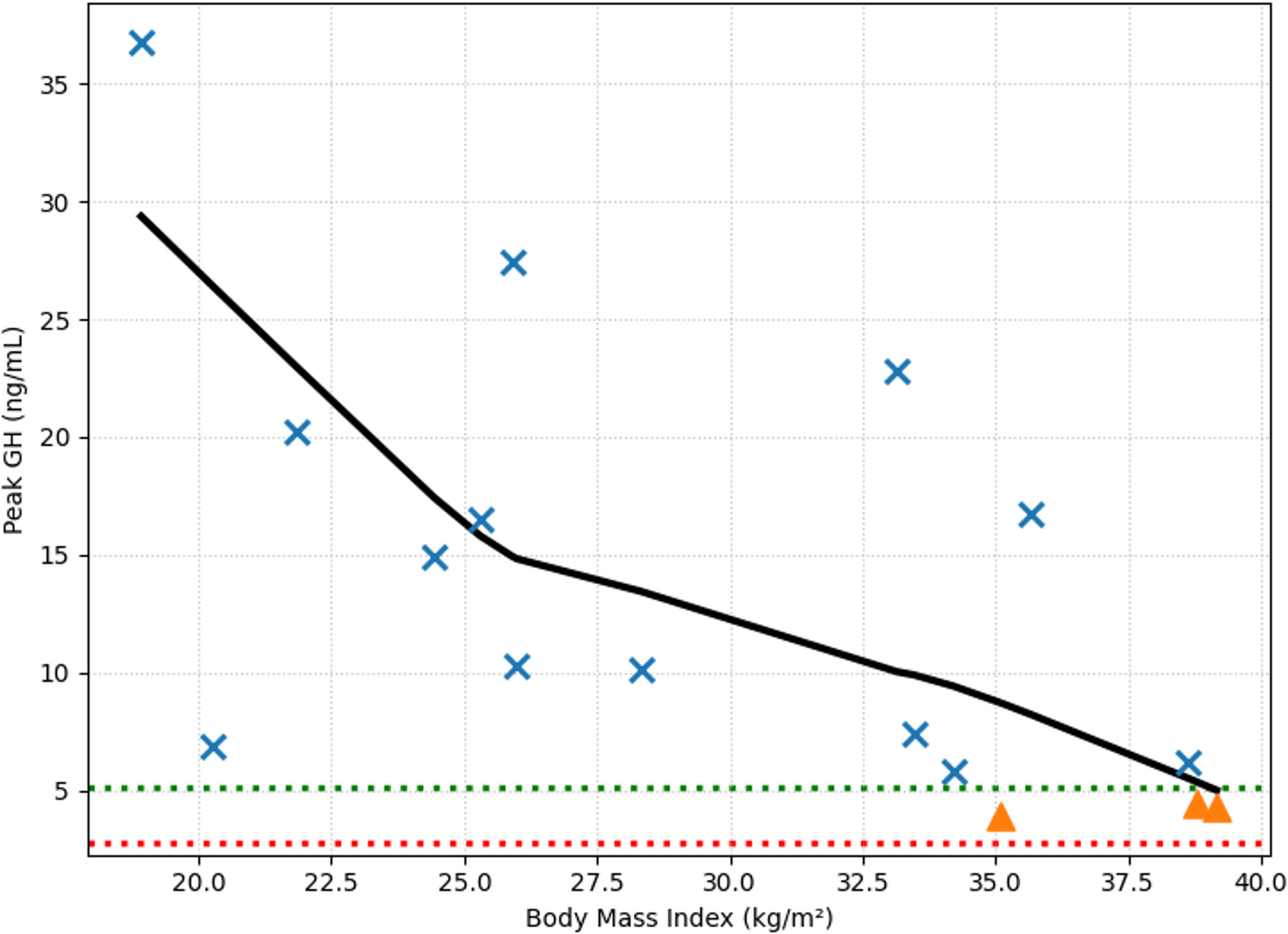
Among 37 patients, 15 (40.5%) met AGHD criteria using the 2.8 ng/mL cut-off, compared with 20 (54.0%) using the 5.1 ng/mL, corresponding to an absolute diagnostic yield difference of 13.5% (95% CI, 2.5%–24.5%; two-sided exact McNemar p = 0.0625). Of the five discordant patients, one was in the high and one in the intermediate, and three were in the low pre-test probability group (all three with BMI > 35 kg/m²). In the low pre-test probability group, BMI demonstrated a monotonic inverse association with peak GH (Spearman ρ = − 0.67, p = 0.006) and was on average higher in discordant vs. concordant patients (37.7 ± 2.7 vs. 28.2 ± 4.6 kg/m²), corresponding to a mean difference of 9.5 kg/m² (95% CI, 5–14 kg/m²). GH values at 60 and 90 min were highly correlated (r = 0.775, p < 0.0001) and excluding the 90-minute sample did not alter diagnostic outcomes.
Conclusion
Applying the 5.1 ng/mL cut-off classified more AGHD cases than 2.8 ng/mL, with discordant classifications concentrated among patients with higher BMI in low pre-test probability group, suggesting obesity may contribute to diagnostic reclassification. Diagnostic classification was unchanged when the 90-minute sample was omitted in our cohort.

Comments (0)