We described a 70-year-old woman with LO-axSpA who presented with FUO, constitutional symptoms and high acute phase reactants. Ax-SpA usually starts at the second and third decade of life. Previous studies have shown that the majority of SpA patients developed back pain before the age of 45 years [9,10,11]. These studies formed the basis for the Assessment of Spondyloarthritis International Society (ASAS) definition of inflammatory back pain (IBP) and the prominent place of age at onset, before the age of 45 years [12] and the subsequent development of ASAS classification criteria for ax-SpA [13]. However, several cases of late onset ankylosing spondylitis (AS) have been reported. Indeed, in a population based study in Rochester, Minnesota the incidences of AS was 7,3/100.000/years for all ages and 2.2/100.000/year after the age of 55 [14]. In another survey in Germany, only 6% of AS patients had onset of symptoms after the age of 40 [15]. The frequency of HLA-27 positivity in late onset AS was lower [9]. Late onset undifferentiated (u) SpA seems to be more common than late onset AS [2, 3]. Indeed, Dutrost and Sauvezie described 10 HLA-B27 positive men who developed oligo arthritis and peripheral pitting edema of the lower extremities, after the age of 50 years. These patients presented mild axial symptoms, constitutional symptoms and high acute phase reactants [16]. In another study, Dutrost et al. reviewed the files of seronegative rheumatoid arthritis (RA) patients after the age of 50 years. Twenty-nine out of the 105 patients, met the revised New York criteria for AS, 3 had reactive arthritis (ReA) and 44 had unclassified arthritis. Fourteen of these 44 were positive for HLA-B27, had peripheral oligo arthritis and elevated acute phase reactants, suggesting SpA [17]. Similar results were reported subsequently by Olivieri et al. who studied 23 consecutive uSpA over the age of 45 years [18, 19]. In another study a total of 157 AS patients from the Spanish registry were evaluated. Forty four (28,02%) had disease onset at age ≥50 years. The late onset group showed high frequency of neck involvement and peripheral arthritis affecting the upper and lower extremities. No differences were found concerning the genetic expression, disease activity and radiological findings [20]. Recently, age at onset of ax-SpA was studied by Boel et al. and found that around the world the great majority of ax-SpA patients (92%) had onset of axial disease, before the age of 45 years, with HLA-B27 positivity and the male gender associated with earlier disease onset [21]. It seems that onset of ax-SpA after the age of 50 is uncommon.
Fever occurs frequently in the course of many autoimmune rheumatic disease (ARD) [22,23,24]. However, fever has also been reported in patients with SpA [24]. On the other hand, FUO has been observed in many ARDs, but rarely in SpA patients [22,23,24]. Fever as an initial manifestation of SpA has been reported by Byuns et al. in a retrospective study [25]. The author described 26 patients who had fever as initial feature of SpA and compared them with 100 SpA patients, without fever as a control group. From the 26 patients, 13 (50%) had ReA, 26.9% uSpA, 15.4% AS, 3.8% PsA and 3.8% enteropathic arthritis. P-SpA was more common in febrile patients versus controls. Febrile SpA patients had less HLA-B27 positivity but had more frequently high acute phase reactants than controls [25]. In another study Guo et al. described 146 consecutive patients with enthesitis related arthritis (ERA). Among them, 52 (35.6%) had fever at disease onset, had more painful and swollen joints, and had more enthesitis. Patients with fever had higher acute phase reactants and poorer outcome, as compared with the control group [26]. Recently, Vitale et al. described 54 patients with recurrent fever episodes and no radiographic (nr)-axSpA with mean age 39, 9 ±14,8 years. All patients had fever before the SpA diagnosis as well as arthralgias (61%), myalgias (44%), arthritis (40,7%), headache (27,8%), diarrhea (25,9%), abdominal pain (24,1%) and skin reactions (22,1%). The majority of patients were treated with tumor necrosis factor inhibitors (TNFi) with an excellent response [27]. FUO in ax-SpA is extremely rare. Two case reports have been reported in patients with AS associated with aortitis [28] and enthesitis at an uncommon site [29]. More specifically, the first case was a 34year-old man with intermittent fever, weight loss, myalgia and arthralgia, he had elevated inflammatory markers and back pain. MRI of the pelvis showed findings of sacroiliitis. A positron emission tomography (PET) scan revealed inflammation of the ascending aorta, compatible with aortitis. He was treated successfully with prednisone and infliximab [28]. The other case was a 58year-old man with a history of one month fever accompanied with malaise, morning stiffness and bilateral temporal region pain. He had refractory neck and back pain since his early 20s. Radiographs of the cervical, lumbar and pelvis showed findings of SpA, which was confirmed with MRI of the sacroiliac joints. Upon further examination of temporal region pain, the MRI showed findings of enthesitis of temporal muscles. He was treated with infliximab with excellent response [29]. No patients with LO-ax SpA and FUO have been reported.
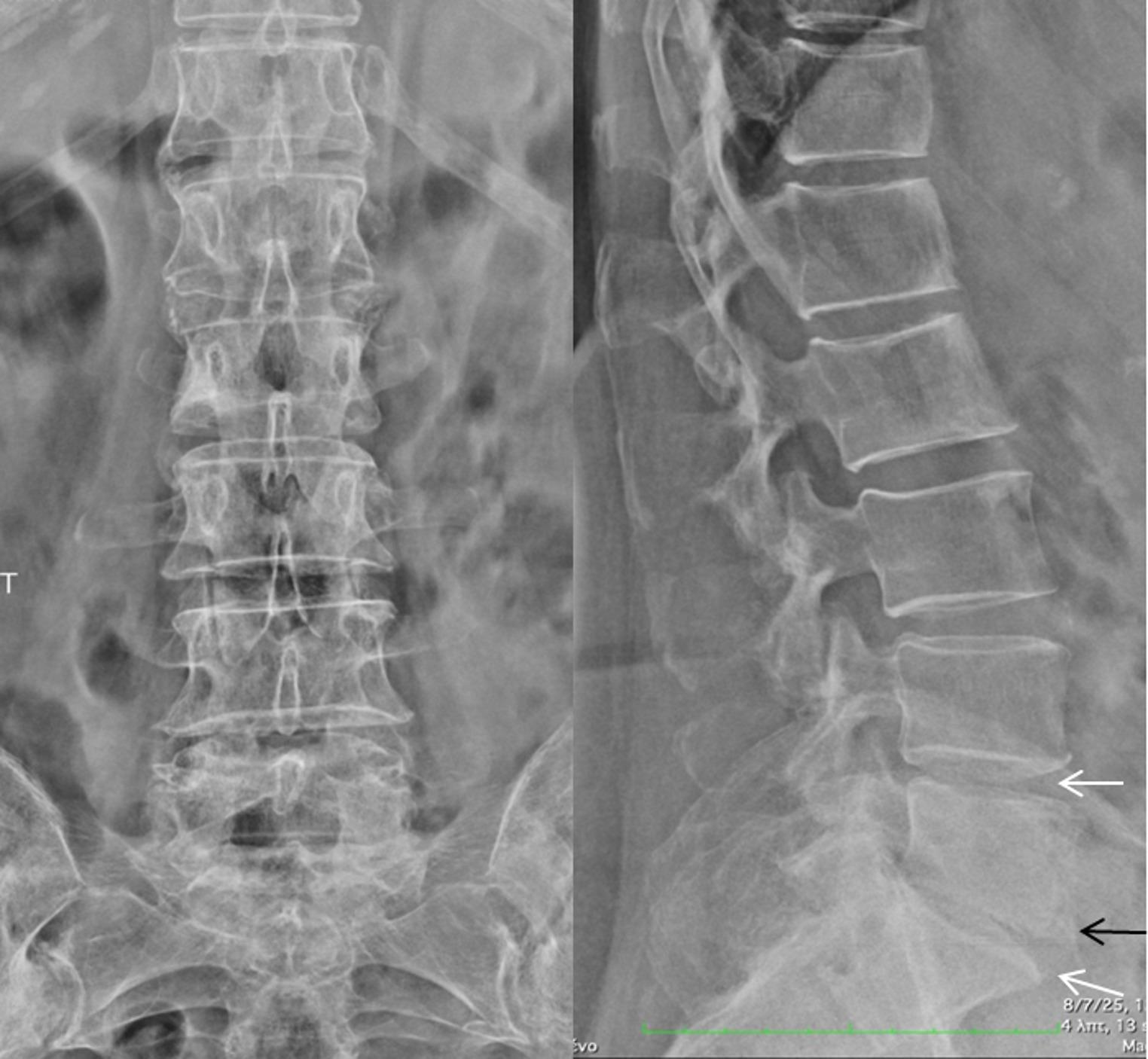
We reported an elderly woman with FUO presenting back pain, constitutional symptoms and high acute phase reactants, who was diagnosed with LO-axSpA after excluding infections, ARD, vasculitis and malignancies. The diagnosis was based on MRI of the lumbar spine findings, such as Romanus lesions, Anderson lesions and enthesitis as well as, MRI of the sacroiliac joints findings of acute sacroiliitis along with enthesitis. In addition, HLA-B27 was positive. However, the ASAS definition for sacroiliitis on MRI of sacroiliac joints is not specific, since similar MRI findings are seen in many conditions and disorders like anatomical variance, sacroilization of the fifth lumbar vertebrae, degenerative change of the lumbar spine, infections, tumors, hard workers, aging and cases mimicking ax-SpA [1, 30, 31]. Our patient except aging had no other conditions or disorders. Moreover, the patient presented many MRI lesions of the thoracic and lumbar spine suggesting SpA (Anderson and Romanus lesions, along with enthesitis) [32, 33]. On the other side, another question arises here: does the patient have a delayed diagnosis of ax-SpA [34]? Indeed, there is a gap and a delay in diagnosis of ax-SpA for approximately 6–7 years, which unfortunately did not improve the last years [35]. Our patient is a 70year-old female person, she had no family history of SpA. She never complained for symptoms of SpA and never sought consultation from general practitioners, orthopedics or rheumatologists for musculoskeletal problems, until recently, when she presented FUO along with some vague symptoms, among them back pain. We believe that our patient has a late onset ax-SpA.
LO-axSpA is underdiagnosed in the elderly population [36]. These patients deserve further attention because age population is increasing and the classification criteria for ax-SpA are not valid for elderly patients, since age at onset of ax-SpA <45 years and IBP are the major criteria [12, 13]. Thus, new classification criteria for ax-SpA including older patients are required [36]. To our knowledge, the present case is unique in the international literature, no such case has been reported so far.
In conclusion, LO-axSpA can be presented with FUO, vague constitutional symptoms and systemic inflammatory markers. In this setting, several diseases should be excluded and thorough investigation, must be performed, in order to reach the correct diagnosis.

Comments (0)