
Remember me
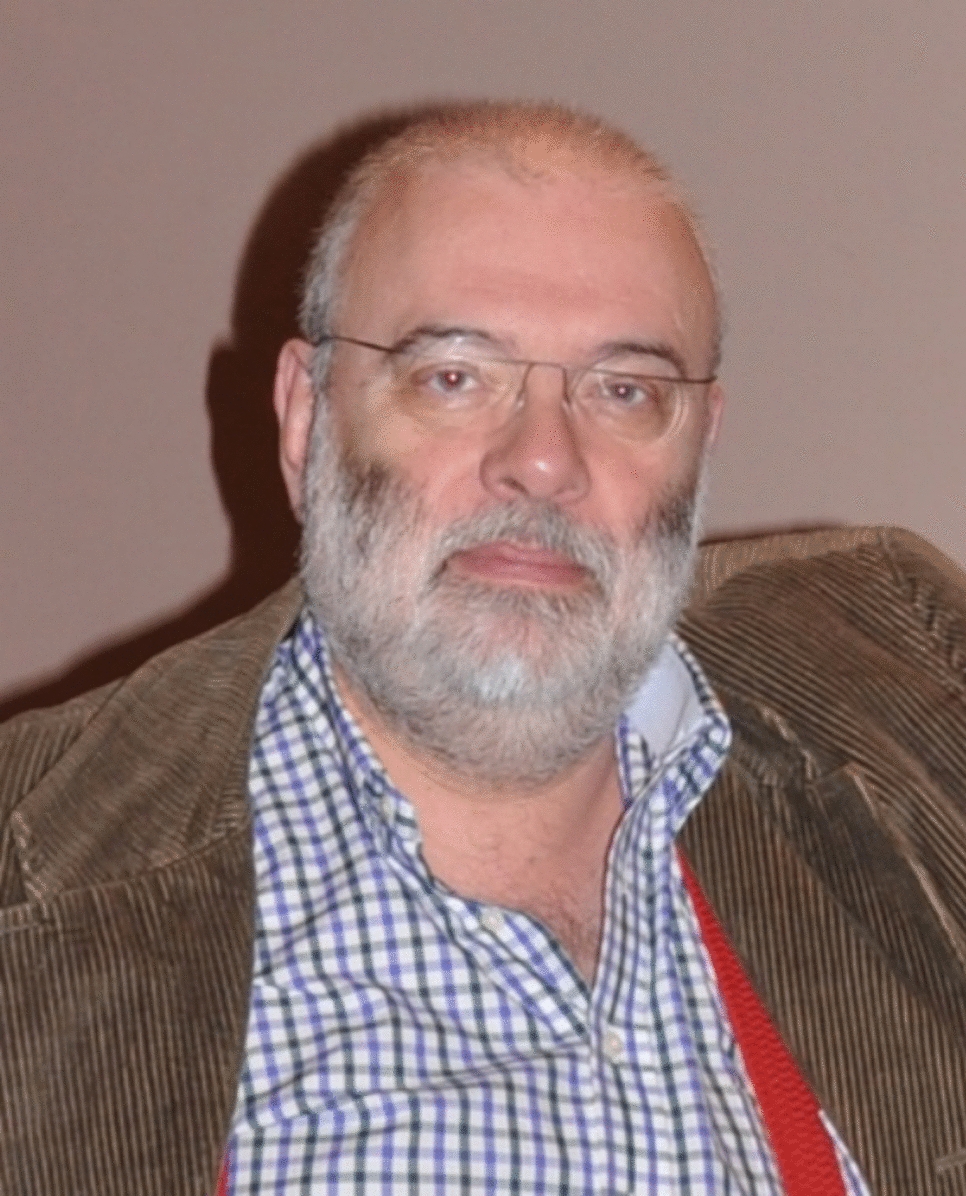





Professor Pawel P. Liberski (Fig. 1), a nationally and internationally renowned neuropathologist, died suddenly and unexpectedly on Aug. 19, 2025, in his home in Lodz, Poland, in presence of his wife, Prof. Maria Respondek-Liberska, a recognized fetal cardiologist. While Pawel was born, educated, and working in Poland, he has been a life-long traveler who established many contacts and friends in the global community of neuropathologists and beyond. He authored well over 400 publications and will be best remembered for his contributions to prion science.
Fig. 1
Pawel 2010. Picture by Prof. Bea Sikorska
I first met Pawel in 1978 when he, an MD student, started a long series of regular research stays at the then Neurological Institute, later Institute of Neurology of the (Medical) University of Vienna. With only a few years in neuropathology, I felt somewhat uncomfortable with a young guy, sporting a full beard and constantly wearing dark glasses, who was feverishly interested only in one thing: an extremely rare and strange disease named after Creutzfeldt and Jakob (CJD), something that I had no interest in then. However, my initial reluctance was soon overturned by friendship, he became my first trainee, and when he left, he gave me a nice hand-painted picture. I learned only later that he derived from an artistic family. With many stays in our institution, he was somehow considered to be an external member. His untimely death precluded another stay scheduled for this November.
Pawel got his MD in 1979 and a PhD in 1982, a habilitation (lectureship) in 1987, and a full professorship in 1993, all at the Medical Academy of Lodz. The then President of Poland, Lech Walesa, awarded the professorship to Pawel. Decisively for his career, he was a Fogarty Visiting Fellow and later Guest Researcher many times between 1986 and 1998 at Carleton D. Gajdusek’s Lab of CNS Studies, NIH, Bethesda, MD, where he became a life-long friend to Carleton and other scientists there including Paul Brown (in a very sad twist of destiny, Pawel died only 10 days after Paul), David Asher, and Joe Gibbs. Carleton appeared as inspiration for Pawel to prefer not only most colorful shirts, paint-decorated ties, and broad suspenders, but in later years also a heavy stature (Fig. 2). Pawel made short visits to Alan Dickinson’s lab in Edinburgh in 1981 and 1985, Heino Diringer’s in Berlin in 1985, Gerry Wells’ in Weybridge, UK, in 1992, and Martin Jeffrey’s, Ian Goodbrand’s and Jeanne Bell’s in Edinburgh 1995.
Fig. 2
Pawel at an art exhibition in Vienna in 2018. Picture taken by Prof. Bea Sikorska
The driving force in Pawel’s scientific research was the attempt to visualize the pathological agent of transmissible spongiform encephalopathies (TSEs) at a time when the term prion had not yet been coined. He adopted transmission electron microscopy as his favorite tool early in his career and made important contributions to the visualization of viral particles and virus-related structures in neurological diseases, such as HAM/TSP, PML, by measles virus, HIV, Hantaviruses, and parvovirus. He was excited to find “tubular-vesicular structures” in all types of human and animal TSEs he examined, suitable as ultrastructural biomarkers of unknown pathogenesis, but finally had to realize that they were not the TSE agent. However, the delineation of ultrastructural features of prion diseases remains his legacy.
For a neuropathologist, Pawel’s list of publications is peculiar for the number of no less than 24 books. He cherished books and always invited contacts to contribute. Most books by him were in Polish, including several on TSEs. For medical students and young trainees of a country like Poland, natively written teaching and textbooks remain important. He edited, among others, the Neuropatologia Mossakowskiego together with Prof. Wielislaw Papierz, a textbook named in Greenfield style after Miroslaw Mossakowski (1929–2001), the heavyweight of Polish neurobiology and neuropathology.
In addition to his scientific agenda, Pawel established the referring diagnostic center for neuropathology of human prion diseases in Poland. As such, he was involved in surveillance of all types of CJD, GSS, and others in Poland, and participated in many conferences as a regular member of European networks. On these occasions, Profs. Bob Will and James Ironside in Edinburgh became special friends to him.
Tumors, again with a focus on their ultrastructure, were the second leg of his medico-scientific work, mainly dealing with diagnostic issues. His position as Professor and Chairman was in the Department of Molecular Biology, Chair of Oncology in the Medical Academy Lodz, and triggered his later interests in genetics. A close collaboration with Prof. Beata Sikorska in his institution became his major scientific anchor during the last two decades of his life.
On the personal side, Pawel was clearly a bon vivant par excellence: at home and during travels, he loved good food and drinks, an occasional smoke of the very best Havana cigars, and all in company of good friends. He was also highly interested in arts, in particular paintings and sculptures, and a regular visitor to museums (Fig. 2). Another interest was in naval history and battleships: I learnt from him that, at the brink of WW I, the Austrian navy was the third strongest in the world, unbelievable for a citizen of such a small country today. Finally, I bear witness to Pawel’s generosity: he brought gifts at each travel to Vienna, including naval books or the extraordinary “Zubrowka” Polish Vodka; a bottle of the legendary 30-year-old Starka Vodka was to remember forever. But most importantly, Pawel was a friendly, most gentle person comfortable and respectful with the many people he met at the plethora of meetings he used to attend.
Obviously, Pawel had an interesting life. A few days before he died, I invited him to write a Reflections paper for Free Neuropathology. He was very happy and grateful for the invitation. Fate, unfortunately, intervened with realization.
Pawel, thank you for your long, loyal friendship. We will miss you.
Comments (0)