
Remember me






To study the infiltration of TAMs, we performed multicolor immunofluorescence staining in a discovery cohort, which comprised 195 clinically well-annotated cases including n = 120 newly diagnosed and n = 75 recurrent MGMs, targeting CD68, a marker that is primarily expressed by macrophages, monocytes, and microglia (Fig. 1a, Table 1). For newly diagnosed MGMs, the study cohort consisted of 33 WHO grade 1, 63 WHO grade 2, and 24 WHO grade 3 tumors, thus containing a high number of clinically aggressive cases. The median age of patients was 60.8 years at the time of first diagnosis with a female-to-male ratio of 1.6 to 1.0. To assess whether tumor recurrence results in altered TAM infiltration, we analyzed 75 recurrent MGMs including a substantial number of high-grade tumors (n = 10 WHO grade 1; n = 32 WHO grade 2; n = 33 WHO grade 3). To increase reliability, we analyzed whole-tissue sections of newly diagnosed (median area: 11.11 mm2) and recurrent MGMs (median area: 10.7 mm2) by tissue cytometry-based image analysis (Suppl. Fig. S1). We quantified TAM infiltration as the number of CD68+ TAMs relative to the total cell count (TCC) within tumor sections and observed that TAM infiltration was highly variable across MGM specimens. Additionally, we found small regional variability in TAM infiltration within large MGM tissues when analyzing different sized areas (Suppl. Fig. S2, Suppl. Table S1). Across specimens, TAM percentages varied widely from 0.01 to 31.8% with a median of 2.47% CD68+/TCC for newly diagnosed MGMs (Fig. 1b) and shifted toward a higher abundance in recurrent MGMs with a median of 3.22% CD68+/TCC (Fig. 1c, Suppl. Fig. S3a). Median TAM infiltration for newly diagnosed MGMs increased with WHO grade: from 1.9% in grade 1 to 2.4% in grade 2 (increase of 26% from grade 1), and to 4.1% in grade 3 tumors (increase of 116% from grade 1), but without reaching a level of significance (Fig. 1d; grade 1 to grade 2, P = 0.148; grade 1 to grade 3, P = 0.082). Since TAMs can acquire both anti-tumor M1-like or tumor-supportive M2-like phenotypes in the tumor micromilieu, we next examined the polarization status of TAMs by staining for CD204 and CD163, which are two well-known M2-like pro-tumoral TAM markers [13, 23, 32]. Therefore, we characterized CD68+ TAMs with an additional CD163+ and/or CD204+ detection as pro-tumoral and immunosuppressive M2-like TAMs. First, we were interested if the proportion of M2-like TAMs (% of CD68+) differed among WHO grades in newly diagnosed MGMs. Here, the median percentage of the M2-like TAM population significantly increased from grade 1 to grade 2, and to WHO grade 3 tumors (Fig. 1e; grade 1 to grade 2, P = 0.009; grade 1 to grade 3, P = 0.003). Next, we analyzed the infiltration of pro-tumoral M2-like TAMs (M2-like TAMs/TCC) in the whole cohort and found a 1.5-fold higher prevalence of M2-like TAMs in recurrent tumors with a median of 2.72% compared to newly diagnosed MGMs (median of 1.78%; Fig. 1f; P = 0.209;). When analyzing M2-like TAM infiltration upon recurrence within the same WHO grade, we observed a threefold increase of pro-tumoral M2-like TAM infiltration in recurrent grade 1 MGMs (Fig. 1g; P = 0.055) and a 1.5-fold increase in recurrent grade 2 tumors (Fig. 1g; P = 0.078). Similar results were obtained for the proportion of total TAMs when comparing newly diagnosed with recurrent tumors (Suppl. Fig. S3b). Comparison of TAM and pro-tumoral M2-like TAM infiltration in matched pairs of newly diagnosed and recurrent MGMs of n = 4 patients likewise demonstrated higher infiltration rates in recurrent tumors (Suppl. Fig. S3c-d). Further, in newly diagnosed MGMs, we found significantly increased levels of TAMs, M2-like TAMs and proportions of M2-like TAMs in prospectively recurring (PR) tumors compared to non-recurring (NR) tumors (minimum follow-up time of 60 months; P = 0.001 for TAMs, P = 0.001 for M2-like TAMs, and P = 0.020 for %M2-like TAMs; Suppl. Fig. S3e-g). Interestingly, prospectively malignant-recurring (PMR) tumors (i.e., a prospective recurrence with increased WHO grading) showed the same trend. In addition, we observed a trend toward higher infiltration of TAMs and higher frequencies of pro-tumoral M2-like TAMs in male patients (P = 0.079 and P = 0.051; Suppl. Fig. S3h-i), as well as significantly increased numbers of these immune cell subsets in older patients (P = 0.032 for TAMs and P = 0.016 for %M2-like TAMs; median split at 60.8y; Suppl. Fig. S3j-k) when analyzing newly diagnosed MGMs.
Fig. 1
TAM infiltration in newly diagnosed and recurrent meningiomas of the discovery cohort. a Representative fluorescent images of TAM staining in MGM tissues. Nuclei stained with DAPI in blue, TAM and M2-like TAM stained with CD68 in green, CD163 in purple, and CD204 in red. Scale bar: 20µm. b TAM infiltration (CD68+/TCC) in newly diagnosed MGMs. c TAM infiltration in recurrent MGMs. d TAM infiltration across WHO grades in newly diagnosed MGMs. e Proportion of M2-like TAMs (M2-like TAMs/CD68.+) across WHO grades in newly diagnosed MGMs. f M2-like TAM infiltration (M2-like TAMs/TCC) in newly diagnosed (N) and recurrent (R) MGMs. g M2-like TAM infiltration across WHO grades in newly diagnosed (N) and recurrent (R) MGMs. h Kaplan–Meier plot for PFS based on high (orange curve) and low (blue curve) M2-like TAM infiltration in newly diagnosed MGMs i Multivariate survival analysis for PFS, including prognostic confounders (age, sex, WHO grade) and M2-like TAM infiltration (median split). Statistical significance was calculated using Mann–Whitney U test in (d-g), log-rank test in (h), and Cox proportional hazard model in (i). MGM Meningioma, N newly diagnosed, PFS progression-free survival, R recurrent, ref Reference, TAM tumor-associated macrophage, TCC total cell count. Statistical significance: *, P < 0.05; **, P < 0.01; ***, P < 0.001
In summary, TAM infiltration in both newly diagnosed and recurrent MGMs was highly heterogeneous yet substantial. We identified significantly higher proportions of pro-tumoral M2-like TAMs in newly diagnosed MGMs of higher-grade tumors, with prospective recurrence and in tumors of older patients (< 60.8 y), as well as increased M2-like TAM frequencies in WHO grade 1 recurrent MGMs and in newly diagnosed tumors of male patients.
High pro-tumoral M2-like TAM infiltration is an independent prognostic factor for poor progression-free survival in meningiomasNext, we analyzed whether TAM infiltration has an impact on patient outcome in MGMs. To minimize bias in survival analysis, we included only patients from the discovery cohort who underwent GTR (Simpson°I-III), had no prior treatment, and had a minimum follow-up of 60 months. For the analysis, the patient cohort was then divided into low and high infiltration groups according to the median of TAM and pro-tumoral M2-like TAM infiltration. For newly diagnosed MGMs, survival analysis of the resulting patient cohort (n = 94) revealed that high infiltration with pro-tumoral M2-like TAMs was significantly associated with inferior PFS (Fig. 1h; P = 0.006). A similar observation for PFS was seen for total TAM infiltration in patients with newly diagnosed MGMs (Suppl. Fig. S3l), whereas in recurrent MGMs, the presence of TAMs had no further impact on PFS after recurrence (Suppl. Fig. S3m).
Subsequently, a multivariate analysis was conducted, incorporating age, sex, and WHO grade as relevant prognostic factors. Importantly, this analysis revealed that high pro-tumoral M2-like TAM infiltration (by median split) is an independent prognostic factor for poor PFS in patients with newly diagnosed MGMs (Fig. 1i, Suppl. Table S2; hazard ratio (HR) = 2.11; P = 0.023). In addition, this trend was found to be even more pronounced when analyzing pro-tumoral M2-like TAM infiltration as a Z-transformed continuous variable (M2-like TAM total; Suppl. Fig. S3n; HR = 1.57; P = 0.002). Altogether, high numbers of pro-tumoral M2-like TAMs were found to be associated with a poor PFS in patients with newly diagnosed MGMs independent of other prognostic factors.
Higher TAM infiltration is associated with an immunosuppressive micromilieu in meningiomasTAMs play vital roles in the local tumor milieu by secreting various soluble factors, including chemokines, cytokines, and growth factors, which can in particular influence the attraction and function of effector T cells [13]. To explore the TAM-related cytokine and chemokine milieu in MGM, we performed Luminex analyses of 24 different immune-related cytokines, chemokines, and growth factors in a subset of 46 tissue samples (WHO grade 1 n = 9, WHO grade 2 n = 28, WHO grade 3 n = 9) of the discovery cohort, and assessed analyte levels based on the median split of total TAM infiltration. Interestingly, in MGM tissues with high TAM infiltration, we discovered a significant increase of G-CSF, Eotaxin, IL-1β, IL-1ra, and IL-4 (Fig. 2a; P = 0.011 for G-CSF, P = 0.023 for Eotaxin, P = 0.010 for IL-1β, P = 0.008 for IL-ra, and P = 0.020 for IL-4), as well as a tendency toward increased levels of IL-6 (Fig. 2a; P = 0.064). Particularly, the cytokines IL-1β, IL-1ra, IL-4, and IL-6 are known to be TAM-associated, and both IL-4 and IL-6 are described in the literature as immunosuppressive cytokines that favor a tumor-supportive micromilieu [7]. When assessing cytokine levels based on WHO grading, we observed significantly increased protein levels in higher-grade tumors for a number of other factors, including the immunosuppressive cytokines IL-8 and IL-10, as well as the angiogenesis-promoting factor VEGF (Suppl. Fig. S4a) [2, 7, 13, 16]. Furthermore, in our PFS analysis of newly diagnosed patients, we found tendencies for inferior PFS in tumors with high levels of TAM-associated immunosuppressive cytokines IL-4 and IL-6 (Suppl. Fig. S4b-c).
Fig. 2
The cyto- and chemokine profile of meningiomas. a Concentrations of 24 cytokines and chemokines in MGM tissues (n = 46, subset of discovery cohort) assessed by Luminex analysis comparing TAM low (light blue) and TAM high (orange) infiltration in tumor specimens (median split). b Correlation matrix of protein concentrations, and TAM and TIL infiltration numbers ordered by Spearman correlation. Statistical significance was calculated in a using Mann–Whitney U tests (individually for each analyte) and in b using Spearman correlation. MGM Meningioma, PFS progression-free survival, TAM tumor-associated macrophage, TIL tumor-infiltrating T lymphocyte. Statistical significance: *, P < 0.05; **, P < 0.01; ***, P < 0.001
To further elucidate the immune network in MGMs, we integrated the protein concentrations and TAM infiltration data from our present study with TIL infiltration data (relative infiltration of CD3+ TILs per TCC in MGM tissue in the same patient cohort) from our previous publication [49] into a correlation matrix for a sub-cohort of n = 46 cases (Fig. 2b, Suppl. Table S3-4). Calculating the gap statistic resulted in the identification of four distinct clusters (Suppl. Fig. S4d), characterized by varying compositions and sizes, and differing degrees of association with the other clusters. The largest cluster contained the pro-inflammatory cytokines IFN-γ and TNF-α as well as the factors Eotaxin, PDGF-BB, G-CSF, and the TAM-associated cytokines GM-CSF and IL-4. Interestingly, especially the pro-inflammatory cytokines IFN-γ and TNF-α strongly correlated with another smaller cluster of several pro-tumoral factors, which are well described in the literature to create an immunosuppressive niche including IL-6, IL-8, IL-10, and VEGF, and in addition IL12-p70, of which all five factors are also known to be secreted by TAMs in the local TME [2, 7, 13]. Furthermore, the last cluster was formed by recruiting chemokines including MCP-1 (CCL2), MIP-1α (CCL3), MIP-1β (CCL4), RANTES (CCL5) [43], and the cytokines IL-9, IL-1β, IL-1ra. IL-1β acts as a pleiotropic cytokine and has been shown to drive carcinogenesis and metastasis in the tumor context through various mechanisms [18, 21]. Importantly, the balance between IL-1β and its natural antagonist IL-1ra influences the tumor microenvironment's inflammatory status and impacts TAM polarization and activity [18, 21]. In our analysis, IL-1β and IL-1ra were also significantly correlated with the infiltration of TAMs and pro-tumoral M2-like TAMs within the first (cellular) cluster. In summary, quantification of 24 immune-related cytokines, chemokines, and growth factors revealed a complex, TAM-driven immunosuppressive microenvironment in MGMs, highlighting the role of TAMs in secreting immunosuppressive and tumor-supportive cytokines.
High TAM infiltration is associated with poor progression-free survival outcome in meningioma patients and counteracts the beneficial effect of TILsTo further elucidate the complex association between macrophages and T cells in MGMs and their distinct impact on PFS and transcriptional programs, we performed an integrative survival analysis of TAM infiltration and previously published TIL infiltration data in the same discovery cohort [49]. To this end, the above stated selection criteria (GTR, no prior treatment, follow-up > 5 years) were applied to the study sample to prevent any survival bias, resulting in a cohort of 94 patients with newly diagnosed tumors, which were then categorized into four groups according to their combined median TAM and TIL infiltration into (1) low TAM/high TIL, (2) low TAM/low TIL, (3) high TAM/high TIL, and (4) high TAM/low TIL infiltration, respectively (Fig. 3a, Suppl. Fig. S5a-c). Significant differences in PFS were observed among the four groups (Fig. 3a; P = 0.009). Patients with high TIL and low TAM infiltration exhibited superior outcomes, with a median PFS of 146.5 months (n = 17, light blue). In contrast, the group with low TAM and low TIL numbers (n = 30, dark blue) exhibited an intermediate survival rate, with a median PFS of 101.9 months. Notably, both groups with high TAM infiltration exhibited the most unfavorable outcomes. The group with high TAM and high TIL infiltration (n = 30, dark red) had a median PFS of 74.9 months and the group with high TAM and low TIL numbers (n = 17, orange) had an even worse outcome with a median PFS of 64.5 months. This is of particular interest as the group with high TAM and high TIL infiltration demonstrated comparable high TIL numbers to the group with the most optimal outcome, namely low TAM and high TIL infiltration (Suppl. Fig. S5b). These findings suggest that high TAM infiltration exerts the most dominant negative influence on patient outcome, counteracting the beneficial effect of TILs. Moreover, in a subsequent multivariate analysis, including clinically relevant covariates (age, sex, and WHO grade), we were able to show that high TAM and high TIL infiltration (Fig. 3b, Suppl. Table S5; HR = 12.48; P < 0.001) as well as high TAM and low TIL infiltration (Fig. 3b, Suppl. Table S5; HR = 12.42; P = 0.002) are independent prognostic factors for inferior PFS in patients with newly diagnosed MGMs. Additionally, we analyzed the TAM/TIL ratio as a Z-transformed continuous variable in a subsequent multivariate analysis, thereby confirming the combined TAM/TIL infiltration ratio as an independent prognostic factor (Suppl. Fig. S5d, HR = 1.35; P < 0.001).
Fig. 3
Impact of TAM and TIL infiltration on survival and transcriptional programs in meningiomas. a Kaplan–Meier plot showing PFS according to combined TAM (CD68+/TCC) and TIL (CD3+/TCC) infiltration in newly diagnosed MGMs of the discovery cohort. The patients were categorized into four groups according to their combined median TAM and TIL infiltration into (1) low TAM/high TIL (light blue), (2) low TAM/low TIL (dark blue), (3) high TAM/high TIL (dark red), and (4) high TAM/low TIL (orange) infiltration, respectively. b Multivariate analysis for PFS including TAM and TIL infiltration grouping, patient age, sex, and WHO grade. Statistical significance was calculated using log-rank test in (a) and Cox proportional hazard model in (b). c–d Gene expression analysis of microarray data [GSE74385 (n = 62 cases) [52] with additional n = 35 MGM cases] according to the combined median TAM and TIL infiltration in patients with newly diagnosed and recurrent MGMs. For the analysis, the low TAM/high TIL group was compared to the three remaining groups. c GO enrichment analysis in the low TAM/high TIL group. Down-regulated gene sets are depicted in red, while up-regulated gene sets are depicted in blue. d Reactome Pathway Database GSEA in the low TAM/high TIL group showing up-regulated PD1 signaling and up-regulated co-stimulation by the CD28 family. GO Gene ontology, GSEA Gene set enrichment analysis, MGM Meningioma, NES Normalized enrichment score, PFS Progression-free survival, ref Reference, TAM Tumor-associated macrophage, TCC Total cell count, TIL Tumor-infiltrating T lymphocyte. Statistical significance: *, P < 0.05; **, P < 0.01; ***, P < 0.001
Next, we aimed to explore the impact of the combined TAM and TIL infiltration on the transcriptional programs in MGM tissues by re-analyzing our microarray dataset (GSE74385 [52], n = 62 cases with additional n = 35 MGM cases). To increase statistical power, we used the complete dataset containing both newly diagnosed and recurrent tumors and performed gene expression analysis contrasting the low TAM and high TIL group with the three remaining groups. GO enrichment analysis to illustrate the superior biological process revealed several significantly shared GO terms in the low TAM/high TIL group, of which GO terms for tumor cell proliferation and cancer-induced abnormality were found to be down-regulated (in red; Fig. 3c, Suppl. Table S6), whereas GO terms for adaptive immune response, MHC class-II presentation, leukocyte chemotaxis, and cytokine signaling were found to be up-regulated (in blue; Fig. 3c; Suppl. Table S6), indicating an immunologically active microenvironment in tumors with low TAM/high TIL infiltration. In addition, GSEA using the Reactome Pathway Database revealed increased PD1 signaling (normalized enrichment score (NES) = 2.398, Padj < 0.0001) and increased T-cell signaling represented through co-stimulation by the CD28 family pathway (NES = 2.173, Padj < 0.0001) in MGMs with low TAM and high TIL infiltration (Fig. 3d), further supporting an immunostimulatory TME within these tumors.
Taken together, our gene expression analysis demonstrated TAM and TIL infiltration to be associated with significant changes in the transcriptional profiles of tumors. Further, high TAM infiltration, both in combination with low and high TIL numbers, was associated with inferior PFS in newly diagnosed MGMs and was confirmed as an independent prognostic factor in multivariate analysis. Thus, our data suggest that TAMs play a vital role in establishing and maintaining the immunosuppressive TME of MGMs suggesting a negative impact on patient outcome which counteracts the beneficial prognostic effects of TILs.
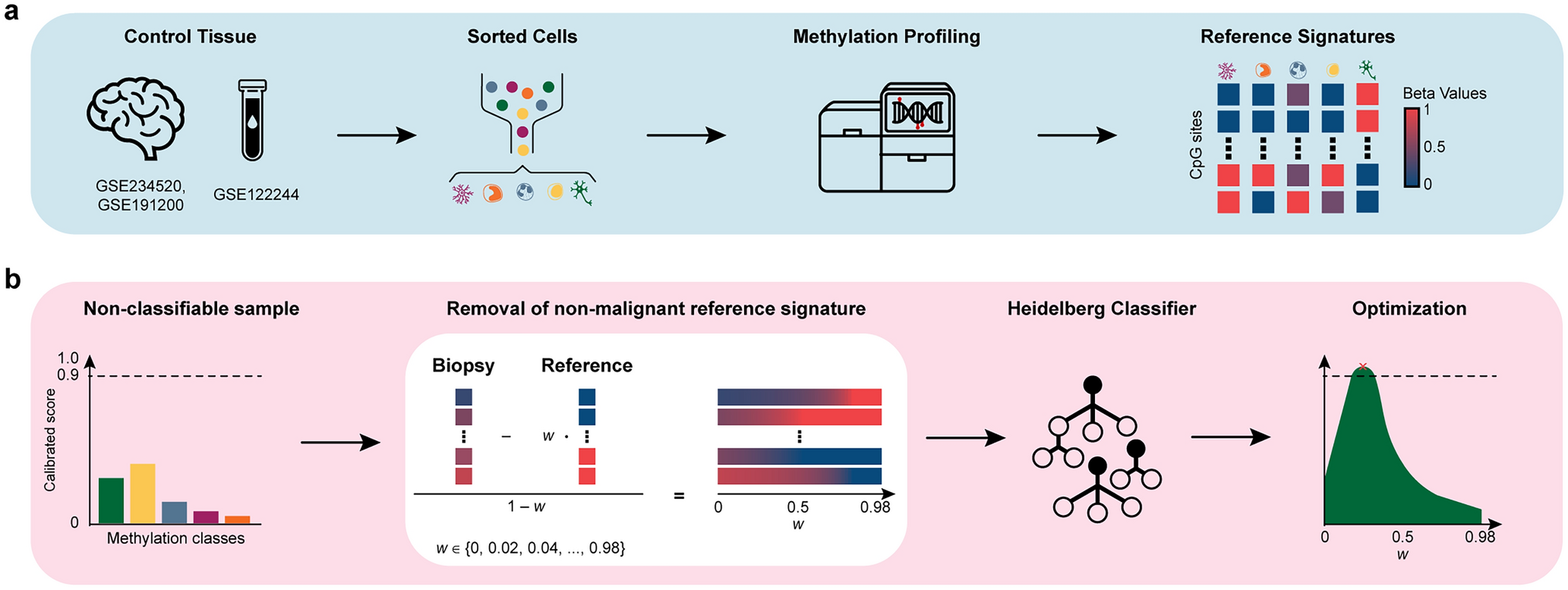
Methylation-based deconvolution analysis confirms the dominant negative impact of TAM infiltration on patient survival in an independent validation cohortTo validate our findings on the prognostic role of TAMs and TILs in MGMs from the discovery cohort, we analyzed an independent MGM validation cohort provided by the University of California San Francisco (UCSF) and the University of Hong Kong (HKU), originally published by Choudhury et al. [12], including n = 565 meningioma specimens spanning all WHO grades (n = 388 WHO grade 1, n = 142 WHO grade 2, n = 35 WHO grade 3, Suppl. Table S7; GSE183647). To this end, we developed a DNA methylation-based machine learning approach to predict infiltration rates of TILs and TAMs. Initially, we leveraged our directly assessed TAM and TIL infiltration data to identify differentially methylated CpG sites associated with these immune cells in the corresponding methylation data while controlling for WHO grade effects. This analysis revealed a total of 639 differentially methylated CpGs (Padj < 0.05), with 315 sites linked to TILs and 324 to TAMs (Fig. 4a-b). Annotation of these CpG sites to their corresponding genes highlighted several immune-related markers, such as CD4 (TILs) and CXCL10 (TAMs and TILs), which exhibited lower methylation levels (Fig. 4a-b). Subsequent GSEA demonstrated that CpG sites with reduced methylation were enriched in immune-related pathways (e.g., leukocyte cell–cell adhesion/migration), whereas those with increased methylation were associated with tumor-related pathways (e.g., Figure 4c). Therefore, only CpG sites with lower methylation (n = 320) were entered in the machine learning pipeline. Using elastic-net regression on the Heidelberg discovery cohort (n = 144 cases; heatmap shown in Fig. 4d with n = 320 CpG sites with lower methylation), we minimized collinearity and selected the most informative features, ultimately identifying 63 CpGs for TILs and 43 for TAMs (Suppl. Fig. S6a-b, Suppl. Table S8) as DNA methylation-based signatures for predicting immune cell infiltration. Validation in the Heidelberg cohort confirmed strong correlations between observed and predicted immune cell infiltration (r = 0.8390, P < 0.0001 for TILs; r = 0.7935, P < 0.0001 for TAMs; Suppl. Fig. S6c-d), supporting the robustness of our model. The pretrained regression-based deconvolution model was then applied to the larger external UCSF/HKU methylation cohort, enabling the independent prediction of TIL and TAM infiltration in a subset of 533 samples (Suppl. Fig. S6e). Next, we examined the association between the predicted immune cell infiltration and comprehensive molecular as well as clinical data, including molecular groups (Merlin-intact, Immune-enriched, Hypermitotic), genetic alterations (NF2 loss, HLA gain/loss, CDKN2A/B deletion, USF1 gain on chr1q), patient age, sex, tumor status (newly diagnosed vs. recurrent), and WHO grade in n = 485 cases (Fig. 4e) [12]. This analysis revealed that both TAM and TIL infiltration were highest in the Immune-enriched molecular group across newly diagnosed and recurrent MGMs (*, P < 0.05; **, P < 0.01; ***, P < 0.001; ****, P < 0.0001; Fig. 4f-g). In contrast, predicted TAM infiltration was lowest in the Merlin-intact group and significantly elevated in the Hypermitotic group, a pattern not seen for TILs. These observations not only validate our DNA methylation–based deconvolution approach but also highlight an enrichment for TAMs in groups associated with poorer outcomes compared to the Merlin-intact group (Suppl. Fig. S6f). Further analysis of the associations among predicted TAM/TIL groups, molecular subtypes, and WHO grades showed a broad distribution across categories (Fig. 4h). Notably, when evaluating molecular group distributions, we found significant differences between TAM/TIL categories (****, P < 0.0001; Fig. 4i): the high TAM/low TIL group contained the highest proportion of clinically aggressive Hypermitotic MGMs, whereas groups with high TIL infiltration showed the lowest proportions of this adverse molecular subtype. Further, groups with low TAM infiltration demonstrated the highest proportions of the clinically more favorable Merlin-intact MGMs.
Fig. 4
Methylation-based deconvolution predicts TAM and TIL infiltration and confirms their prognostic role in meningiomas. Volcano plot of a TIL- and b TAM-associated methylation highlighting significantly associated CpGs in red (Padj > 0.05). c Dot plot showing GO terms associated with differentially methylated CpGs for TIL and TAM. d Heatmap of discovery cohort (Heidelberg, n = 144) showing differentially methylated CpGs (n = 320 with lower methylation) with clinical and experimental parameters. e Oncoprint of validation cohort (UCSF/HKU, n = 485) showing predicted TAM and TIL infiltration as well as clinical experimental parameters. f-g Predicted infiltration according to molecular groups for newly diagnosed and recurrent MGMs of (f) TILs and (g) TAMs. H Sankey diagram showing associations of predicted TAM/TIL groups, molecular groups, and WHO grading. i Bar plot showing distribution of molecular groups across predicted TAM/TIL groups. j Kaplan–Meier plot for LFFR based on high (purple curve) and low (turquoise curve) predicted TIL infiltration in newly diagnosed MGMs (n = 221). k Kaplan–Meier plot for LFFR based on high (red curve) and low (turquoise curve) predicted TAM infiltration in newly diagnosed MGMs. l-m Multivariate survival analysis for LFFR including prognostic confounders (sex, WHO grade, molecular group) with (l) predicted TIL infiltration and (m) predicted TAM infiltration. n Kaplan–Meier plot showing LFFR according to predicted and combined TAM and TIL infiltration in newly diagnosed MGMs. Patients were categorized into four groups according to their combined median TAM and TIL infiltration into (1) low TAM/high TIL (light blue), (2) low TAM/low TIL (blue), (3) high TAM/high TIL (light green), and (4) high TAM/low TIL (green) infiltration, respectively. o Multivariate analysis for LFFR including predicted TAM and TIL infiltration grouping, patient sex, molecular group, and WHO grade. ben Benign, int Intermediate, GO Gene ontology, HKU University of Hong Kong, LFFR Local freedom from recurrence, mal Malignant, MGM Meningioma, NA Not available, R Recurrent, ref Reference, TAM Tumor-associated macrophage, TIL Tumor-infiltrating T Lymphocyte, UCSF University of California San Francisco. Statistical significance: *, P < 0.05; **, P < 0.01; ***, P < 0.001; ****, P < 0.0001
For subsequent survival analyses, we focused on a rigorously selected sub-cohort of 221 newly diagnosed MGM patients, who had undergone GTR and had a minimum follow-up of 36 months (Suppl. Table S9). Patients were stratified by median infiltration values into high- and low-infiltration groups for both TILs (median predicted infiltration of 0.64%/TCC) and TAMs (median predicted infiltration of 2.58%/TCC). We observed a trend toward improved local freedom from recurrence (LFFR) for patients with high TIL infiltration (P = 0.074; Fig. 4j), while high TAM infiltration was significantly associated with inferior recurrence-free survival (LFFR; P = 0.016; Fig. 4k). Multivariate analyses, accounting for sex, WHO grade, and molecular group, further identified high TIL infiltration as an independent predictor of improved LFFR and high TAM infiltration as an independent predictor of worse LFFR in newly diagnosed MGMs (*, P < 0.05; **, P < 0.01; Fig. 4l-m, Suppl. Table S10–11). These results are consistent with our initial findings based on tissue cytometry analyses in the discovery cohort (Fig. 1h-i) [49].
Finally, our analysis of combined TAM and TIL infiltration in the validation cohort revealed significant LFFR differences among the four defined groups (P = 0.001; Fig. 4n). Patients in the low TAM/high TIL group exhibited superior outcomes with a median LFFR of 86.5 months (n = 32, light blue), whereas those with high TAM and low TIL infiltration had the poorest outcomes (median LFFR of 65.4 months, n = 32, green). Intermediate PFS rates were observed in the low TAM/low TIL (median LFFR 99.4 months, n = 79, blue) and high TAM/high TIL (median LFFR 77.2 months, n = 78, light green) groups. Multivariate analysis incorporating key clinical covariates (sex, WHO grade, and molecular group; Fig. 4o; Suppl. Table S12) confirmed that the low TAM/low TIL and high TAM/high TIL profiles were independent predictors of inferior LFFR (low TAM/low TIL: HR = 8.38, P < 0.05; high TAM/high TIL: HR = 9.69, P < 0.05) as well as the high TAM/low TIL group showing the highest HR of 22.80 (P < 0.01; Fig. 4o; Suppl. Table S12). These findings emphasize the beneficial prognostic impact of high TIL levels and the deleterious effect of high TAM infiltration in MGMs, particularly in the absence of T cells.
In summary, the application of our refined DNA methylation–based deconvolution approach to a second, independent, and large MGM study cohort [12] robustly validates our earlier observations on the opposing prognostic roles of TILs and TAMs in MGMs. These results underscore the importance of understanding the tumor immunobiology to inform future immunotherapeutic development and clinical decision-making.
Comments (0)