Rylski, B., O. Schilling, and M. Czerny. 2023. Acute aortic dissection: evidence, uncertainties, and future therapies. European Heart Journal 44:813–821.
Google Scholar
Sen, I., Y. M. Erben, C. Franco-Mesa, and R. R. DeMartino. 2021. Epidemiology of aortic dissection. Seminars In Vascular Surgery 34:10–17.
Google Scholar
Yuan, X., A. Mitsis, and C.A. Nienaber. 2022. Current Understanding of Aortic Dissection. Life. https://doi.org/10.3390/life12101606.
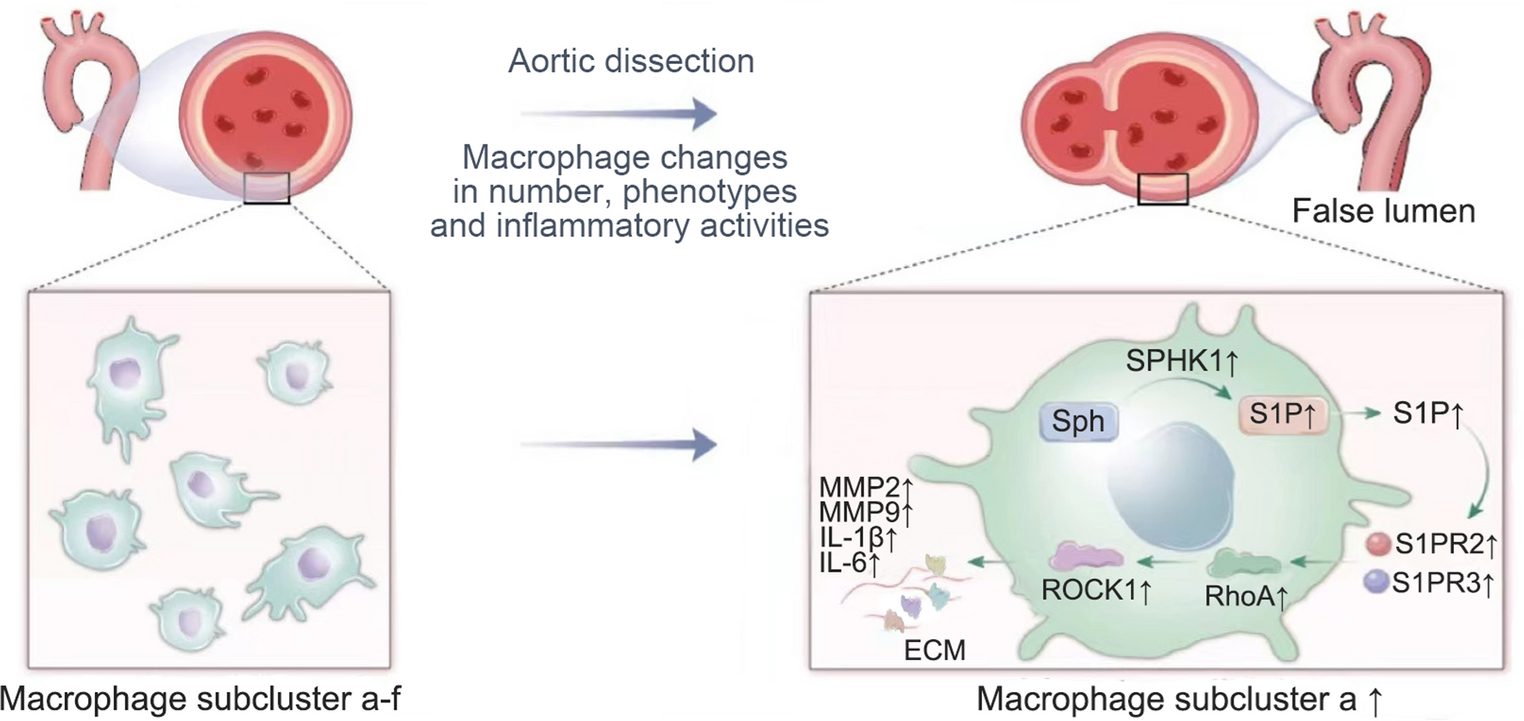
Xu, C., W. Chen, X. Nie, R. Xu, X. Feng, Z. Chen, and D. Wang. 2025. The innate immune axis drives aortic dissection pathogenesis through inflammation and presents novel therapeutic targets. Frontiers In Immunology 16:1654622.
Google Scholar
Shen, W. Y., C. Luo, P. Reinaldo Hurtado, E. Hurtado-Perez, R. Y. Luo, Z. L. Hu, H. Li, J. M. Xu, X. F. Zhou, and R. P. Dai. 2020. The regulatory role of ProBDNF in monocyte function: Implications in Stanford type-A aortic dissection disease. The Faseb Journal 34:2541–2553.
Google Scholar
Ma, M., F. Zhu, F. Fan, J. Pan, H. Cao, Q. Zhou, and D. Wang. 2022. Relationship between preoperative lymphocyte to monocyte ratio and surgery outcome in type A aortic dissection. Front Surg 9:1103290.
Google Scholar
Liu, Y., L. Zou, H. Tang, J. Li, H. Liu, X. Jiang, B. Jiang, Z. Dong, and W. Fu. 2022. Single-cell sequencing of immune cells in human aortic dissection tissue provides insights into immune cell heterogeneity. Frontiers in Cardiovascular Medicine 9: 791875.
Google Scholar
Wang, X., H. Zhang, L. Cao, Y. He, A. Ma, and W. Guo. 2020. The role of macrophages in aortic dissection. Frontiers In Physiology 11: 54.
Google Scholar
Hsieh, L.T., M.V. Nastase, H. Roedig, J. Zeng-Brouwers, C. Poluzzi, S. Schwalm, C. Fork, C. Tredup, R.P. Brandes, M. Wygrecka, et al. 2017. Biglycan- and Sphingosine Kinase-1 Signaling Crosstalk Regulates the Synthesis of Macrophage Chemoattractants. Int J Mol Sci. https://doi.org/10.3390/ijms18030595.
Wang, C., T. Xu, B.B. Lachance, X. Zhong, G. Shen, T. Xu, C. Tang, and X. Jia. 2021. Critical roles of sphingosine kinase 1 in the regulation of neuroinflammation and neuronal injury after spinal cord injury. Journal of Neuroinflammation 18: 50.
Google Scholar
Wang, D., X. Bi, L. Zhao, S. Xiang, W. Xi, S. Yang, W. Wu, T. Chen, L. Zheng, X. Chi, and Y. Kang. 2025. Targeting SphK1/S1PR3 axis ameliorates sepsis-induced multiple organ injury via orchestration of macrophage polarization and glycolysis. Biochim Biophys Acta Mol Cell Res 1872:119877.
Google Scholar
Wang, X., C. Liu, X. Li, K. Guo, S. Xu, J. Zhou, S. Wang, X. Wu, G. Yan, and H. Cui. 2025. JTE-013 reduces inflammation and improves pulmonary fibrosis by regulating the TRAF2/NF - kappaB/IGF-1 signaling pathway and macrophage polarization. International Immunopharmacology 167:115727.
Google Scholar
Hei, R., X. Wu, T. Zhang, M. Zhang, Y. Huang, Z. Zhou, W. Xiao, W. Ai, and Y. Chen. 2025. Increasing S1P promotes M1 macrophage in chronic obstructive pulmonary disease and chronic obstructive pulmonary disease-obstructive sleep apnea overlap syndrome via S1PR1/HDAC1 signaling. J Thorac Dis 17:2350–2364.
Google Scholar
Ding, X., X. Zhang, J. Cao, S. Chen, Y. Chen, K. Yuan, B. Chen, G. Yang, S. Li, and J. Yang et al. 2024. Sphingosine Kinase 1 Aggravates Liver Fibrosis by Mediating Macrophage Recruitment and Polarization. Cell Mol Gastroenterol Hepatol 18:101406.
Google Scholar
McGinley, M. P., and J. A. Cohen. 2021. Sphingosine 1-phosphate receptor modulators in multiple sclerosis and other conditions. Lancet 398:1184–1194.
Google Scholar
Michaud, J., D.S. Im, and T. Hla. 2010. Inhibitory role of sphingosine 1-phosphate receptor 2 in macrophage recruitment during inflammation. The Journal of Immunology 184: 1475–1483.
Google Scholar
Muppidi, J. R., R. Schmitz, J. A. Green, W. Xiao, A. B. Larsen, S. E. Braun, J. An, Y. Xu, A. Rosenwald, and G. Ott et al. 2014. Loss of signalling via Galpha13 in germinal centre B-cell-derived lymphoma. Nature 516:254–258.
Google Scholar
Thangada, S., K.M. Khanna, V.A. Blaho, M.L. Oo, D.S. Im, C. Guo, L. Lefrancois, and T. Hla. 2010. Cell-surface residence of sphingosine 1-phosphate receptor 1 on lymphocytes determines lymphocyte egress kinetics. Journal of Experimental Medicine 207: 1475–1483.
Google Scholar
Zheng, H., J. Yu, L. Gao, K. Wang, Z. Xu, Z. Zeng, K. Zheng, X. Tang, X. Tian, and Q. Zhao et al. 2025. S1PR1-biased activation drives the resolution of endothelial dysfunction-associated inflammatory diseases by maintaining endothelial integrity. Nature Communications 16:1826.
Google Scholar
Drouillard, A., A. L. Mathieu, A. Marcais, A. Belot, S. Viel, M. Mingueneau, K. Guckian, and T. Walzer. 2018. S1PR5 is essential for human natural killer cell migration toward sphingosine-1 phosphate. The Journal Of Allergy And Clinical Immunology 141:2265–2268e2261.
Google Scholar
Cartier, A., and T. Hla. 2019. Sphingosine 1-phosphate: Lipid signaling in pathology and therapy. Science 366.
Wu, Q., J. Li, L. Chen, L.L. Yan, Z. Qiu, Y. Shen, X. Xie, and L. Xie. 2020. Efficacy of interleukin-6 in combination with D-dimer in predicting early poor postoperative prognosis after acute stanford type a aortic dissection. Journal of Cardiothoracic Surgery 15: 172.
Google Scholar
Wang, X., S. Chen, H. Xiang, X. Wang, J. Xiao, S. Zhao, Z. Shu, J. Ouyang, Z. Liang, and M. Deng et al. 2022. S1PR2/RhoA/ROCK1 pathway promotes inflammatory bowel disease by inducing intestinal vascular endothelial barrier damage and M1 macrophage polarization. Biochemical Pharmacology 201:115077.
Google Scholar
Bossone, E., T.M. LaBounty, and K.A. Eagle. 2018. Acute aortic syndromes: Diagnosis and management, an update. European Heart Journal 39: 739–749d.
Google Scholar
van der Valk, F. M., S. Bekkering, J. Kroon, C. Yeang, J. Van den Bossche, J. D. van Buul, A. Ravandi, A. J. Nederveen, H. J. Verberne, and C. Scipione et al. 2016. Oxidized Phospholipids on Lipoprotein(a) Elicit Arterial Wall Inflammation and an Inflammatory Monocyte Response in Humans. Circulation 134:611–624.
Google Scholar
Li, X., D. Liu, L. Zhao, L. Wang, Y. Li, K. Cho, C. Tao, and B. Jiang. 2020. Targeted depletion of monocyte/macrophage suppresses aortic dissection with the spatial regulation of MMP-9 in the aorta. Life Sciences 254:116927.
Google Scholar
Wang, Y., X. Jia, Y. Zhang, B. Zhang, Y. Zhou, X. Li, X. Zhu, J. Xia, J. Ren, C. Zou, and Q. Zheng. 2025. ACKR1(hi)ECs promote aortic dissection through adjusting macrophage behavior. Circulation Research 136: 211–228.
Google Scholar
Liu, X., W. Chen, G. Zhu, H. Yang, W. Li, M. Luo, C. Shu, and Z. Zhou. 2022. Single-cell RNA sequencing identifies an Il1rn(+)/Trem1(+) macrophage subpopulation as a cellular target for mitigating the progression of thoracic aortic aneurysm and dissection. Cell Discov 8:11.
Google Scholar
Wang, X. L., O. Liu, Y. W. Qin, H. J. Zhang, and Y. Lv. 2014. Association of the polymorphisms of MMP-9 and TIMP-3 genes with thoracic aortic dissection in Chinese Han population. Acta Pharmacologica Sinica 35:351–355.
Google Scholar
Zhao, Y.F., Z.A. Zuo, Z.Y. Li, Y. Yuan, S.C. Hong, W.G. Fu, B. Zhou, and L.X. Wang. 2024. Integrated multi-omics profiling reveals neutrophil extracellular traps potentiate aortic dissection progression. Nature Communications 15: 10736.
Google Scholar
Pyne, S., S. C. Lee, J. Long, and N. J. Pyne. 2009. Role of sphingosine kinases and lipid phosphate phosphatases in regulating spatial sphingosine 1-phosphate signalling in health and disease. Cellular Signalling 21:14–21.
Google Scholar
Zhan, Y., J. Xu, Z. Zhang, Y. Hu, Y. Li, J. Qian, Y. Ling, D. Wu, H. Deng, and G. Li et al. 2025. Targeting SPHK1 in macrophages remodels the tumor microenvironment and enhances anti-PD-1 immunotherapy efficacy in colorectal cancer liver metastasis. Cancer Commun (Lond) 45:1203–1228.
Google Scholar
Gong, L., Y. Shen, S. Wang, X. Wang, H. Ji, X. Wu, L. Hu, and L. Zhu. 2023. Nuclear SPHK2/S1P induces oxidative stress and NLRP3 inflammasome activation via promoting p53 acetylation in lipopolysaccharide-induced acute lung injury. Cell Death Discovery 9: 12.
Google Scholar
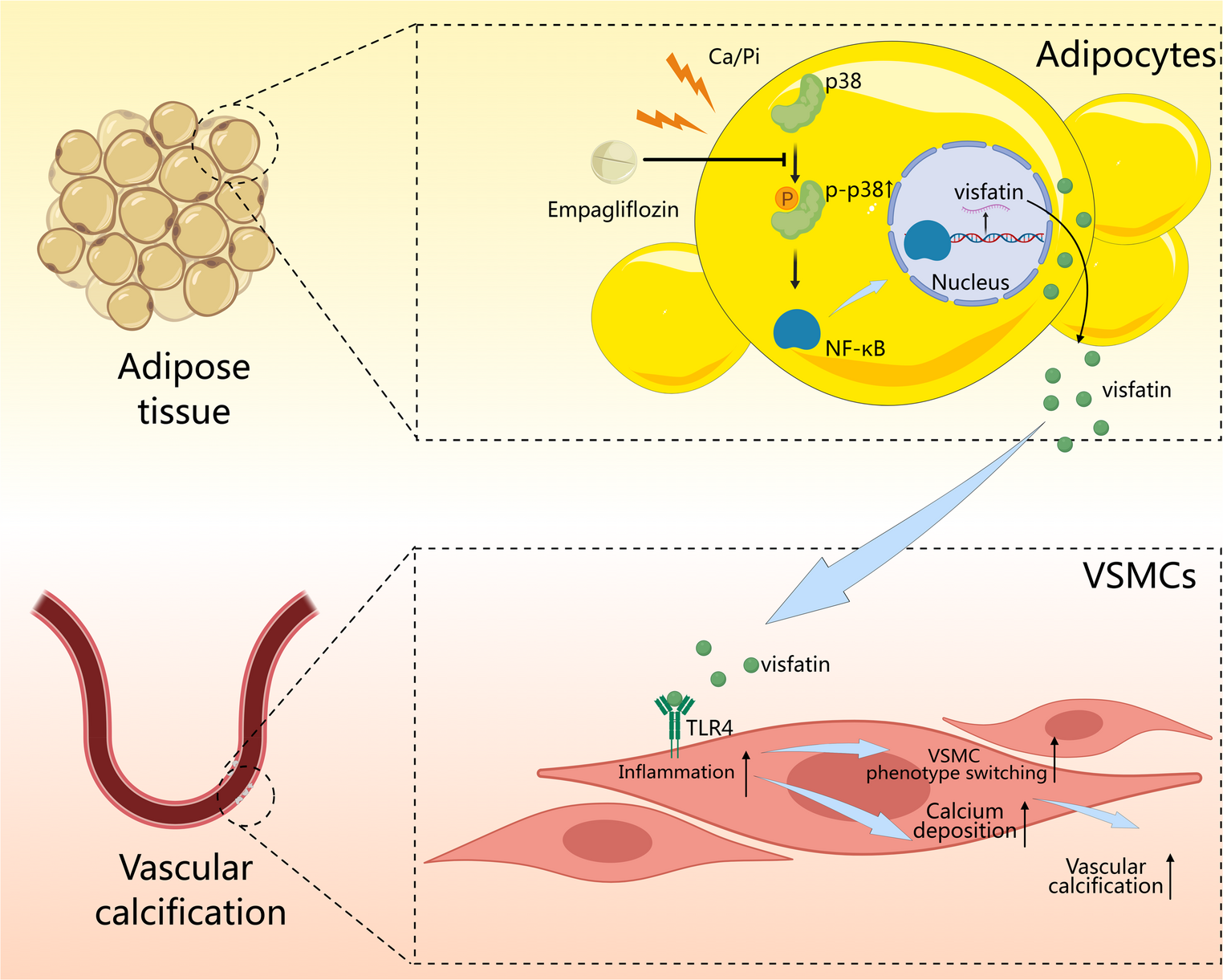
Razazian, M., S. Bahiraii, I. Jannat, A. Tiffner, G. Beilhack, B. Levkau, J. Voelkl, and I. Alesutan. 2025. Sphingosine kinase 1 inhibition aggravates vascular smooth muscle cell calcification. Pflugers Archiv. European Journal Of Physiology 477:815–826.
Google Scholar
Ranasinghe, A., M. Holohan, K.M. Borger, D.L. Donahue, R.D. Kuc, M. Gerig, A. Kim, V.A. Ploplis, F.J. Castellino, and M.A. Schwarz. 2023. Altered smooth muscle cell histone acetylome by the SPHK2/S1P axis promotes pulmonary hypertension. Circulation Research 133: 704–719.
Google Scholar
Weigel, C., J. Bellaci, and S. Spiegel. 2023. Sphingosine-1-phosphate and its receptors in vascular endothelial and lymphatic barrier function. Journal of Biological Chemistry 299: 104775.
Google Scholar
Igarashi, J., and T. Michel. 2009. Sphingosine-1-phosphate and modulation of vascular tone. Cardiovascular Research 82: 212–220.
Google Scholar
Zhang, H. H., L. Wang, W. Zhang, and Z. Wan. 2022. The Role of Sphingomyelin Metabolism in the Protection of Rat Brain Microvascular Endothelial Cells by Mild Hypothermia. Neurocritical Care 36:546–559.
Google Scholar
Xiong, S. L., X. Liu, and G. H. Yi. 2014. High-density lipoprotein induces cyclooxygenase-2 expression and prostaglandin I-2 release in endothelial cells through sphingosine kinase-2. Molecular And Cellular Biochemistry 389:197–207.
Google Scholar
Keul, P., S. Peters, K. von Wnuck Lipinski, N.H. Schroder, M.K. Nowak, D.A. Duse, A. Polzin, S. Weske, M.H. Graler, and B. Levkau. 2022. Sphingosine-1-Phosphate (S1P) Lyase Inhibition Aggravates Atherosclerosis and Induces Plaque Rupture in ApoE(-/-)Mice. Int J Mol Sci. https://doi.org/10.3390/ijms23179606.
Vaidya, M., J. A. Jentsch, S. Peters, P. Keul, S. Weske, M. H. Graler, E. Mladenov, G. Iliakis, G. Heusch, and B. Levkau. 2019. Regulation of ABCA1-mediated cholesterol efflux by sphingosine-1-phosphate signaling in macrophages. Journal Of Lipid Research 60:506–515.
Google Scholar
Chen, H., J. Wang, C. Zhang, P. Ding, S. Tian, J. Chen, G. Ji, and T. Wu. 2022. Sphingosine 1-phosphate receptor, a new therapeutic direction in different diseases. Biomedicine & Pharmacotherapy 153:113341.
Google Scholar
Hou, L., L. Yang, N. Chang, X. Zhao, X. Zhou, C. Dong, F. Liu, L. Yang, and L. Li. 2020. Macrophage sphingosine 1-phosphate receptor 2 blockade attenuates liver inflammation and fibrogenesis triggered by NLRP3 inflammasome. Frontiers in Immunology 11: 1149.
Google Scholar
Yang, J., X. Tang, B. Li, and J. Shi. 2022. Sphingosine 1-phosphate receptor 2 mediated early stages of pancreatic and systemic inflammatory responses via NF-kappa B activation in acute pancreatitis. Cell Communication and Signaling 20: 157.
Google Scholar
Keul, P., S. Lucke, K. von Wnuck Lipinski, C. Bode, M. Graler, G. Heusch, and B. Levkau. 2011. Sphingosine-1-phosphate receptor 3 promotes recruitment of monocyte/macrophages in inflammation and atherosclerosis. Circ Res 108:314–323.
Google Scholar
Wang, Y., C. Wang, Q. He, G. Chen, J. Yu, J. Cang, and M. Zhong. 2023. Inhibition of sphingosine-1-phosphate receptor 3 suppresses ATP-induced NLRP3 inflammasome activation in macrophages via TWIK2-mediated potassium efflux. Frontiers in Immunology 14: 1090202.
Google Scholar
Hou, J., Q. Chen, X. Wu, D. Zhao, H. Reuveni, T. Licht, M. Xu, H. Hu, A. Hoeft, and S. A. Ben-Sasson et al. 2017. S1PR3 Signaling Drives Bacterial Killing and Is Required for Survival in Bacterial Sepsis. American Journal Of Respiratory And Critical Care Medicine 196:1559–1570.
Google Scholar
Van den Bossche, J., L.A. O’Neill, and D. Menon. 2017. Macrophage immunometabolism: Where are we (going)? Trends in Immunology 38: 395–406.
Google Scholar
Jozefczuk, E., R. Nosalski, B. Saju, E. Crespo, P. Szczepaniak, T. J. Guzik, and M. Siedlinski. 2020. Cardiovascular Effects of Pharmacological Targeting of Sphingosine Kinase 1. Hypertension 75:383–392.
Google Scholar
Zhong, M., W. Wu, Y. Wang, H. Mao, J. Song, S. Chen, and D. Zhu. 2020. Inhibition of sphingosine kinase 1 attenuates sepsis-induced microvascular leakage via inhibiting macrophage NLRP3 inflammasome activation in mice. Anesthesiology 132: 1503–1515.
Google Scholar
Chen, L., L. Li, Y. Song, and T. Lv. 2021. Blocking SphK1/S1P/S1PR1 signaling pathway alleviates lung injury caused by sepsis in acute ethanol intoxication mice. Inflammation 44: 2170–2179.
Google Scholar
Bernacchioni, C., R. Squecco, T. Gamberi, V. Ghini, F. Schumacher, M. Mannelli, R. Garella, E. Idrizaj, F. Cencetti, E. Puliti, et al. 2022. S1P Signalling Axis Is Necessary for Adiponectin-Directed Regulation of Electrophysiological Properties and Oxidative Metabolism in C2C12 Myotubes. Cells. https://doi.org/10.3390/cells11040713.
Weske, S., M. Vaidya, K. von Wnuck Lipinski, P. Keul, K. Manthe, C. Burkhart, G. Haberhauer, G. Heusch, and B. Levkau. 2019. Agonist-induced activation of the S1P receptor 2 constitutes a novel osteoanabolic therapy for the treatment of osteoporosis in mice. Bone 125:1–7.
Google Scholar
Zhu, D., T. Jiang, D. Ma, H. Zhang, J. Zhang, W. Lv, M. Gong, H. Wang, Z. Liu, and H. Su et al. 2023. S1P-S1PR3-RAS promotes the progression of S1PR3(hi) TAL1(+) T-cell acute lymphoblastic leukemia that can be effectively inhibited by an S1PR3 antagonist. Leukemia 37:1982–1993.
Google Scholar
Liu, X.T., Y. Huang, D. Liu, Y.C. Jiang, M. Zhao, L.H. Chung, X.D. Han, Y. Zhao, J. Chen, P. Coleman, et al. 2024. Targeting the SphK1/S1P/PFKFB3 axis suppresses hepatocellular carcinoma progression by disrupting glycolytic energy supply that drives tumor angiogenesis. Journal of Translational Medicine 22: 43.
Google Scholar
Gao, G., W. Liao, P. Shu, Q. Ma, X. He, B. Zhang, D. Qin, and Y. Wang. 2023. Targeting sphingosine 1-phosphate receptor 3 inhibits T-cell exhaustion and regulates recruitment of proinflammatory macrophages to improve antitumor efficacy of CAR-T cells against solid tumor. J Immunother Cancer. https://doi.org/10.1136/jitc-2022-006343.



Comments (0)