The spiral of reintervention: clinical outcomes of successive restorative treatments in permanent teeth
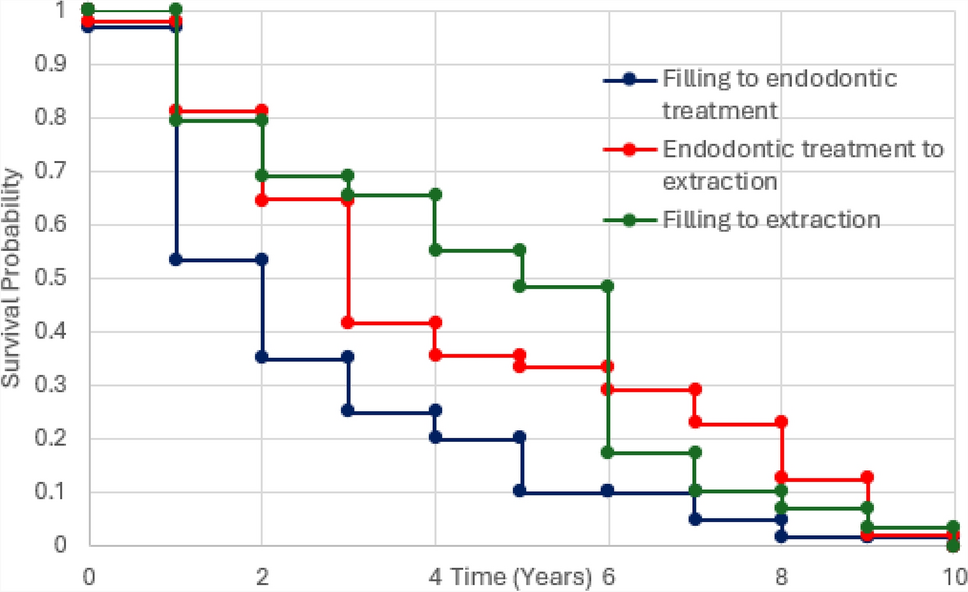
The spiral of reintervention refers to a progressive cycle where a tooth becomes increasingly vulnerable after an initial invasive treatment. Each new intervention raises the risk of complications such as structural failure, secondary caries, or eventual extraction. The primary objective is to describe the long-term prognosis of teeth following their first invasive treatment. This retrospective cohort study, approved by the University Research Ethics Committee (CEEI24/600), includes adults aged 18–65 treated at CEU Cardenal Herrera University Dental Clinic since 2014, with a complete 10-year follow-up. Eligible cases were identified via the clinic electronic history database. Data on demographics, treatment type, sequence, and risk factors were collected. Descriptive and comparative analyses, including subgroup evaluations and p-value testing, were used to assess treatment progression patterns and factors influencing reintervention. A total of 137 cases met the inclusion criteria. 43.8% of cases progressed from a filling to endodontic treatment, while 35.04% underwent extraction following a filling. The 50–65 age group had a shorter interval between a filling and subsequent endodontic treatment compared to 18–33-year-olds (p = 0.04), and also had a shorter transition from endodontic treatment to extraction than the 34–49 age group (p = 0.02). Systemic conditions like diabetes can accelerate treatment failure. Older patients (50–65 years) are especially vulnerable to retreatment risks after invasive procedures. Preventive and minimally invasive techniques should be prioritized to improve tooth longevity.

Comments (0)