In our review, we used two distinct methodological approaches: first, a systematic review to evaluate comparative studies on robot-assisted versus laparoscopic surgery in urogynecology, and second, a bibliometric analysis of the included studies to assess publication patterns, journal distribution, and citation metrics.
Search strategy
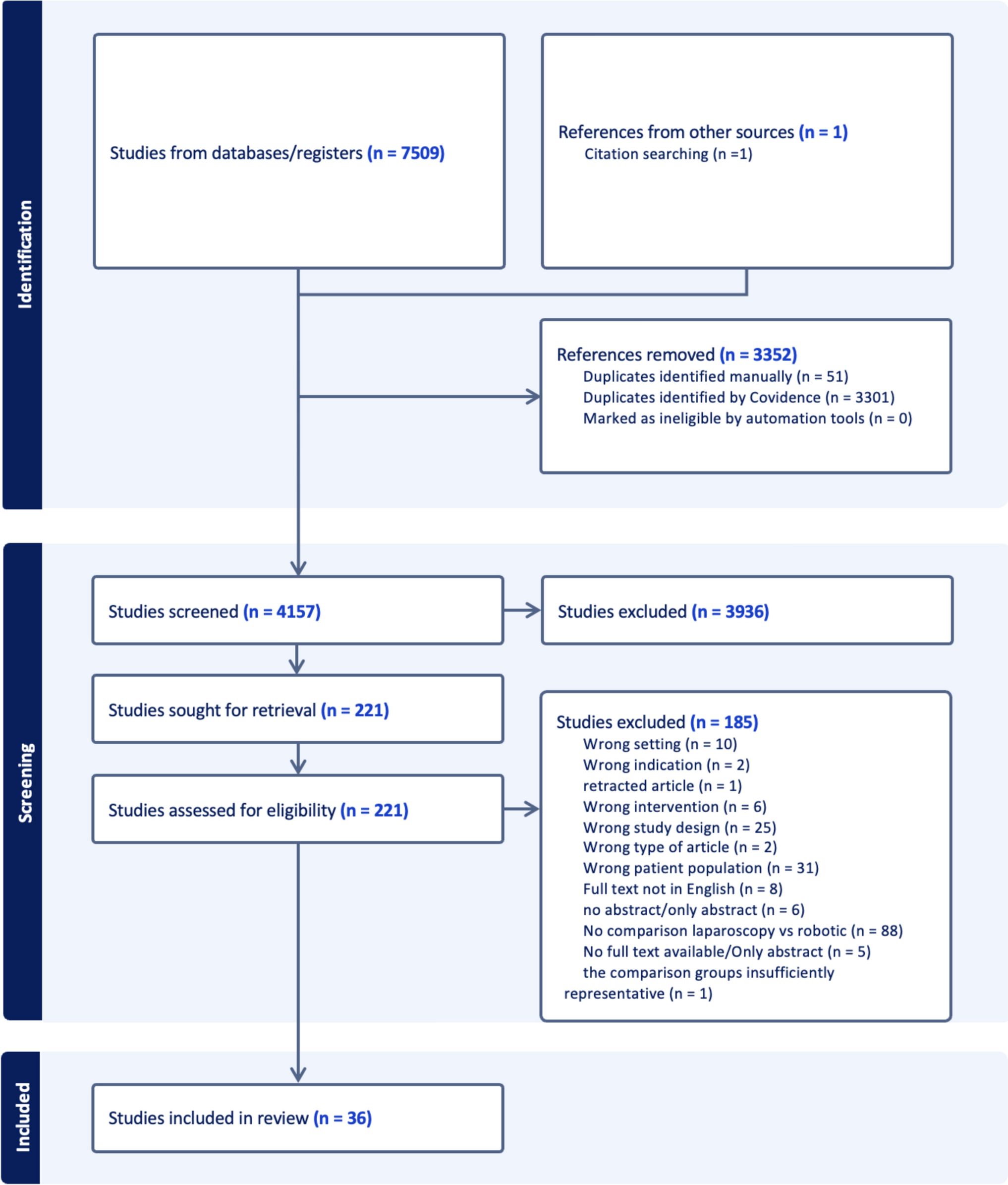
We conducted a systematic literature review using a comprehensive electronic search strategy. The search was performed across multiple databases, including PubMed, Cochrane Library, Scopus, Web of Science, and Ovid MEDLINE in January 2024. Our query consisted of three distinct components. The first component focused on keywords related to robot-assisted surgery, the second encompassed keywords pertaining to laparoscopy, and the third targeted terms associated with urogynecologic surgeries. The surgical terms included in the search were Burch, colposuspension, fistula, urethropexy, pelvic organ prolapse, prolapse, sacrohysteropexy, sacrocolpopexy, cervicosacropexy, CSP, sacral colpopexy, enterocele, cystocele, incontinence, incontinent, mesh, band, type, repair, pectopexy, cervicopectopexy, colpopectopexy, native tissue repair, anterior colporrhaphy, anterior vaginal wall repair, posterior colporrhaphy, and posterior vaginal wall repair. These terms were meticulously selected and reviewed by the senior authors of the project to ensure their relevance and comprehensiveness. We incorporated all relevant Medical Subject Headings (MeSH) related to robot-assisted surgery, laparoscopy, and the specified urogynecological procedures. Additionally, we supplemented these with manually curated non-MeSH keywords to ensure comprehensive coverage across the various databases. The complete search strategy is available in Supplementary Information 1. The electronic search was conducted by an experienced medical librarian from Koç University Health Sciences Library, Istanbul, Türkiye. Furthermore, we prospectively registered our study protocol in PROSPERO (registration number CRD42024500936) on 25 January 2024 [10].
Selection of studies
We included only original research articles, excluding case reports, congress abstracts, editorials, commentaries, book chapters, ongoing clinical trials, study protocols, retracted papers, and all types of review articles. Studies were eligible if they included only female participants; those involving males were excluded unless a separate analysis for females was performed. We included the patients with the same primary diagnosis and the same primary surgery. Thus, the studies comparing different conditions or surgical techniques between laparoscopy and robot-assisted approaches were excluded. Furthermore, we excluded the studies on vaginal natural orifice transluminal endoscopic surgery, mini-laparoscopy, and single-port surgeries.
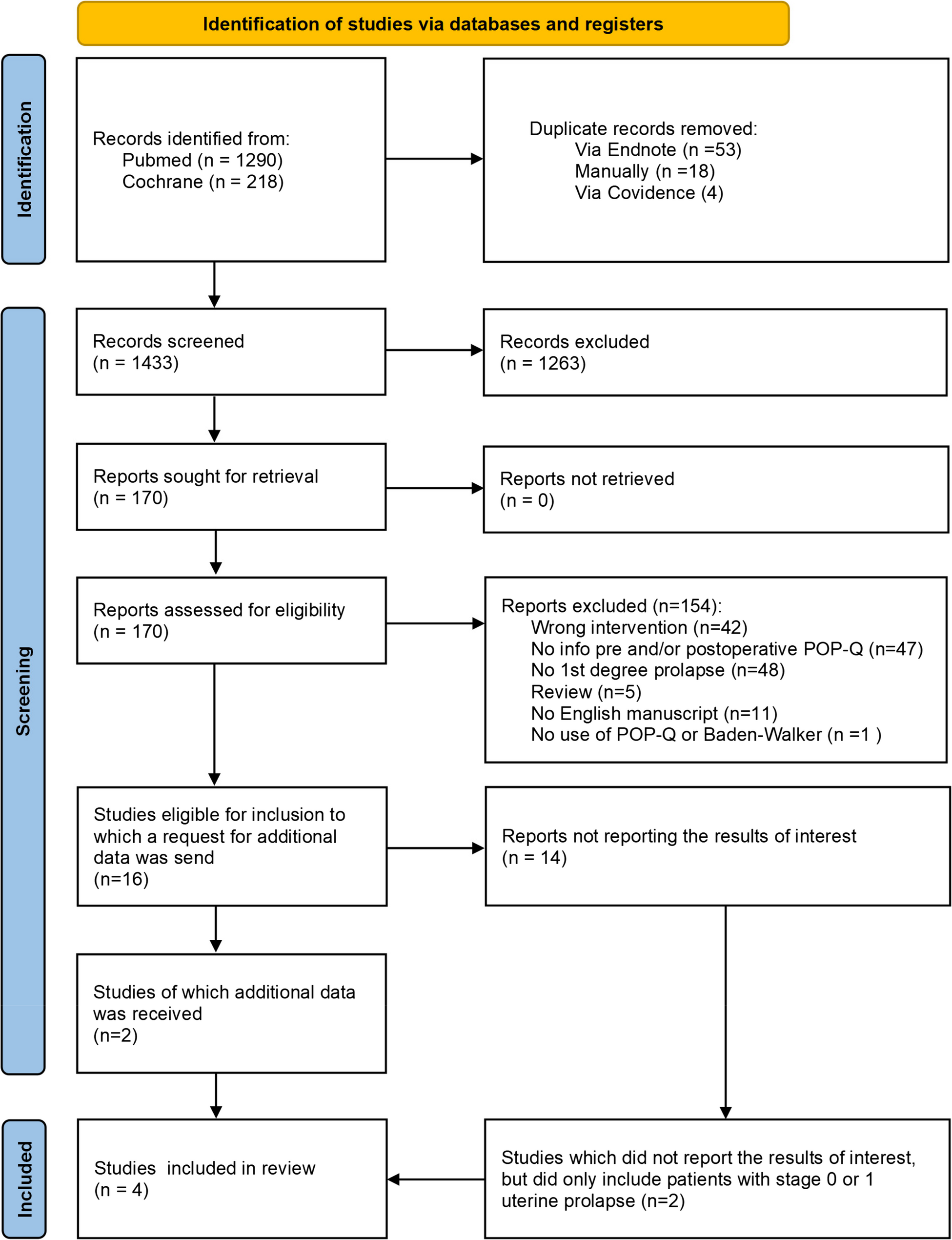
Eligible studies were required to have full-text availability in English and to explicitly compare outcomes of a specific urogynecological surgery performed via laparoscopy versus a robot-assisted approach. Study selection and data extraction were conducted using Covidence software (Veritas Health Innovation Ltd., Melbourne, Australia) [11]. Four co-authors (E.B., X.D., J.V., M.M.K.) independently screened studies for eligibility. Discrepancies were resolved by the primary investigator (E.B.) after discussion with another member of the screening team. The selection process adhered to the Preferred Reporting Items for Systematic Reviews and Meta-Analyses (PRISMA) 2020 guidelines [12]. Covidence facilitated a structured workflow, beginning with the screening of titles and abstracts and progressing to full-text reviews [11]. During this process, we manually removed the further duplicates. Following the finalization of full texts, EndNote® 20.6 for Mac OS software was used for reference management, culminating in data extraction from the final eligible studies.
Data extraction
Upon finalizing the study selection process, the following data were extracted from the full-text articles: author, year of publication, country of the study, study design, urogynecological condition, intervention, information on mesh, total number of patients, number of patients undergoing laparoscopy, number of patients undergoing robot-assisted surgery, robot surgical system, baseline characteristics for comparison, intraoperative variables for comparison, and postoperative outcomes for comparison. We classified the countries into three income groups: low-middle-income (LMIC), middle-income (MIC), and high-income (HIC) based on the World Health Organization’s (WHO) database [13].
We also assessed whether the studies reported outcomes in accordance with the recommendations outlined in the National Institutes of Health Terminology Workshop for Researchers in Female Pelvic Floor Disorders, which was published in 2001 [14]. Specifically, we examined the references to determine if the original recommendations were appropriately cited and carefully reviewed the reported outcomes to verify adherence to these guidelines.
Bibliometric analysis
We accessed the websites of the journals to determine their impact factors. Additionally, we created a word cloud analysis illustration based on the terms used in the titles of the studies. We retrieved both the total and yearly citation counts for each article from Google Scholar on October 4, 2025. [15]
Statistics
Frequencies, summaries, and percentages were calculated if necessary. Moreover, we pooled the patient data when needed. We used Python 3.0 for the calculations. The analysis was performed using Python 3.0 scripts executed on Google Colab, an interactive computing environment [16]. Our codes are available in Supplementary Information 2. We accepted a p-value of less than 0.05 as the threshold for statistical significance in all tests.


Comments (0)