
Remember me
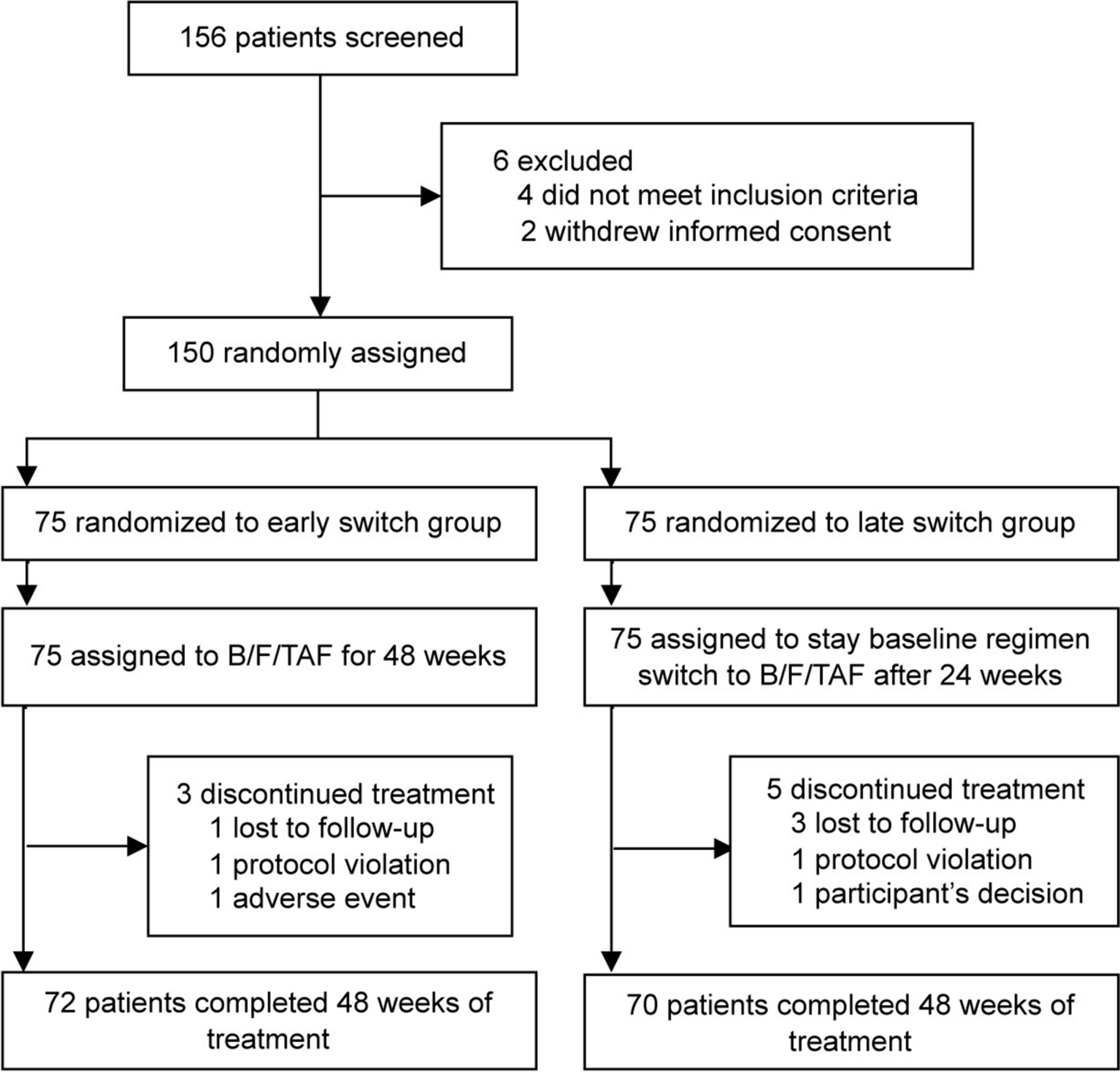
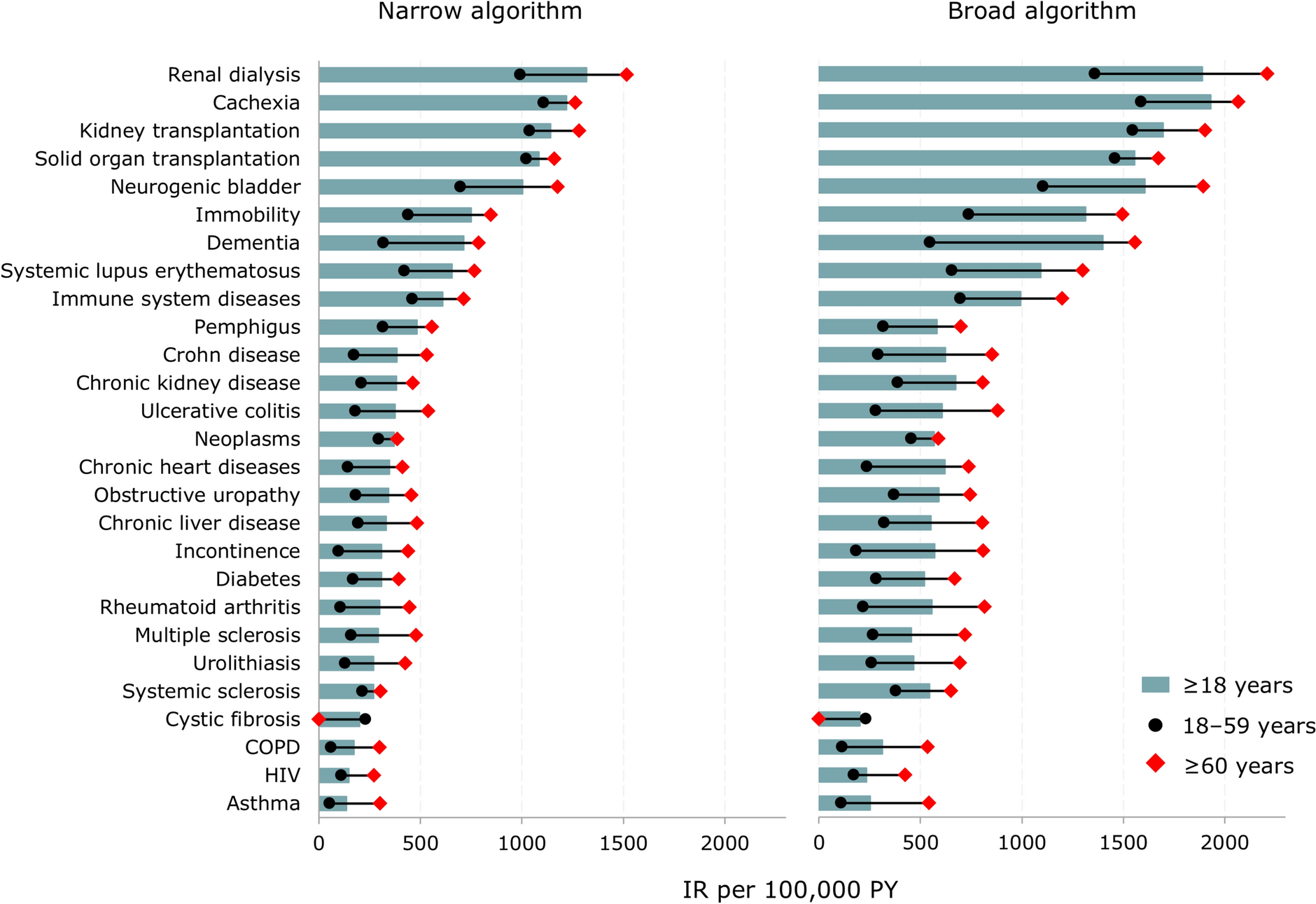
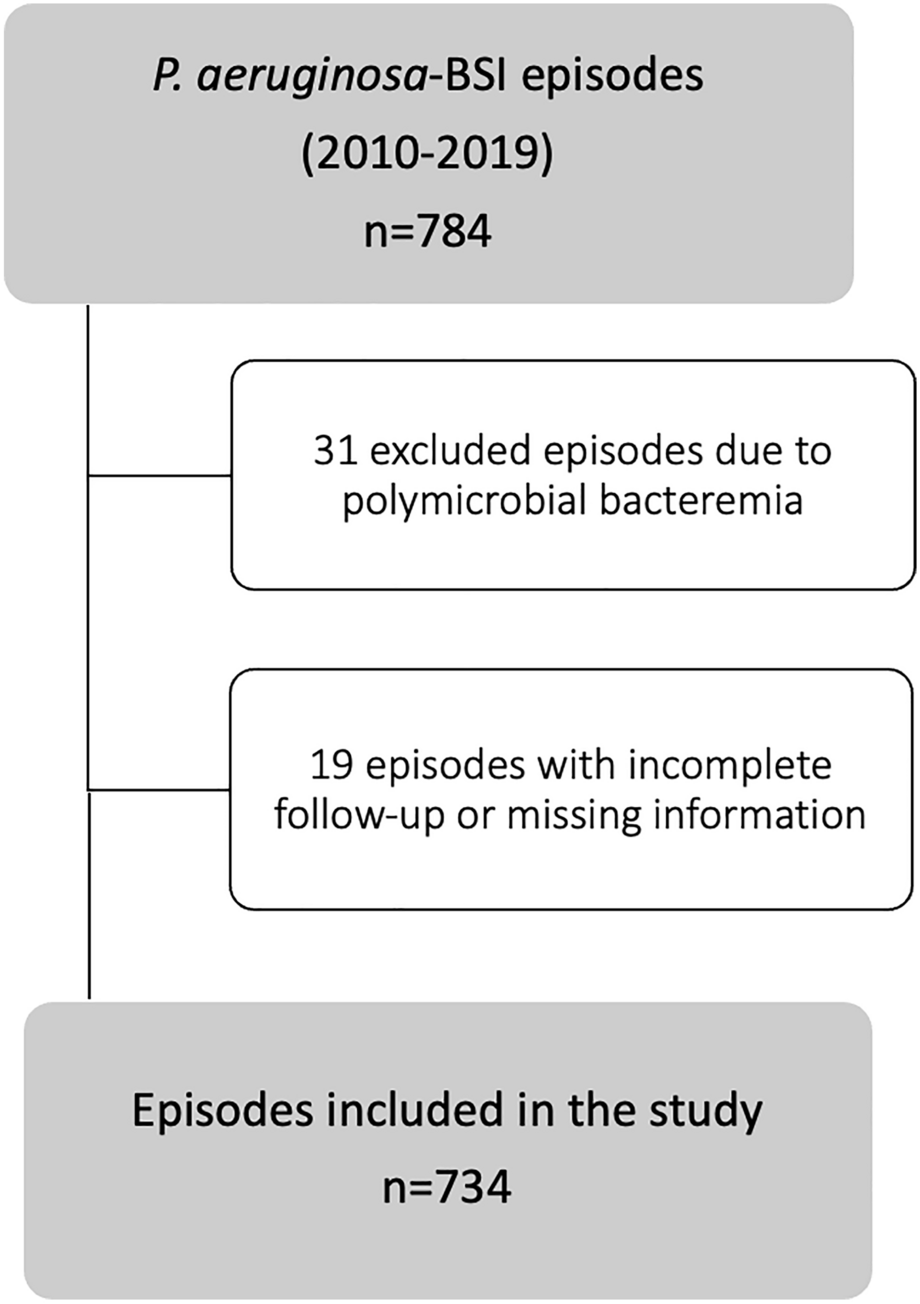
Of the 3724 people with HIV included in the analysis, 1591 were from BICSTaR and 2133 from the China cohort. The SF-36 population included 3004 people with at least one score between baseline and 24 months, with follow-up time recorded for any MCS/PCS scores at subsequent visits. Overall, 3029 people had an HIVTSQs score at baseline and 2109 people had an HIVTSQc score at 12 months.
Baseline demographics and disease characteristics are shown in Table 1. In the overall population, most participants were male (89.0%) and Asian (64.2%); the median (quartile [Q]1, Q3) age at B/F/TAF initiation was 41 (33, 52) years. Most participants were diagnosed after 2015 (52.3%) or between 1996 and 2014 (43.0%). Median (Q1, Q3) duration of treatment with B/F/TAF was 419 (358, 709) days. At the time of B/F/TAF initiation, 54.6% of participants had at least one comorbidity and 10.3% had a neuropsychiatric disorder. Median number of concomitant medications used at B/F/TAF initiation was 0 (IQR 0–1; absolute range 0–17). Participants with missing data were more likely to be from the China cohort (were more likely to have switched their prior ART regimen for simplification, be on a multi-tablet regimen, or have switched from an NNRTI, or a TDF- or an EFV-based regimen).
Table 1 Baseline demographics and disease characteristicsBaseline demographics and disease characteristics for participants according to study (BICSTaR or China cohort) are shown in Table S1. Most participants in the China cohort were diagnosed with HIV after 2015 (74%), while those in BICSTaR were mostly diagnosed between 1996 and 2014 (66%). Participants in the China cohort were generally younger at B/F/TAF initiation, were more likely to be immunocompromised (cluster of differentiation 4 [CD4] cell count > 350 cells/µL); have had a lower rate of virologic suppression (HIV-1 RNA < 50 copies/mL), fewer comorbidities, a shorter median B/F/TAF treatment duration; have used fewer concomitant medications; have been on NNRTIs (EFV) and a TDF-based regimen; and less likely to have used a single-tablet regimen, PI, or INSTI than participants in BICSTaR. The most common regimen used immediately before B/F/TAF, by approximately one-third of participants in both cohorts, was the INSTI-based regimen elvitegravir/cobicistat/emtricitabine/tenofovir alafenamide fumarate (EVG/COBI/FTC/TAF). A lower proportion of participants in the China cohort had baseline comorbidities or neuropsychiatric disorders than in BICSTaR.
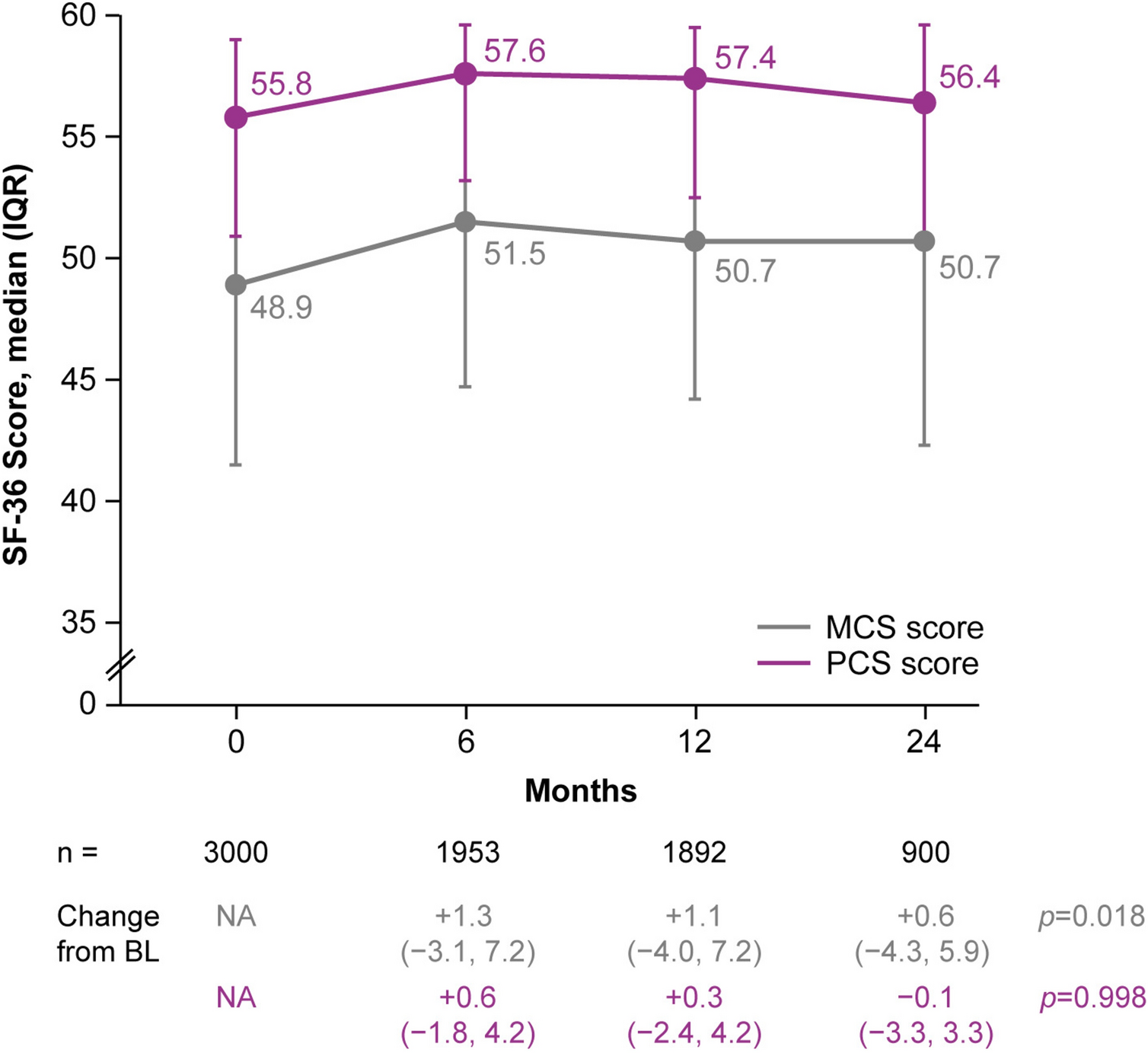
SF-36 MCS and PCS ScoresObserved MCS and PCS Scores in the Overall PopulationAt baseline, the observed median MCS score was below the reference population norm of 50, while the PCS score was above the norm (Fig. 1). There were small, statistically significant improvements from baseline in the observed MCS and PCS scores (median [IQR]) during the first 6 months after switching to B/F/TAF (+ 1.3 [− 3.1, + 7.2]; p < 0.001 and + 0.6 [− 1.8, + 4.2]; p < 0.001, respectively). By 24 months, changes in MCS and PCS scores were + 0.6 (− 4.3, + 5.9; p = 0.018) and − 0.1 (− 3.3, 3.3; p = 0.998), respectively.
Fig. 1
Quality of life (SF-36) MCS and PCS observed scores after switch to B/F/TAF in the overall population. p value for change over time from baseline to 24 months from a Wilcoxon signed-rank test. B/F/TAF bictegravir/emtricitabine/tenofovir alafenamide, BL baseline, IQR interquartile range, MCS Mental Component Summary, NA not applicable, PCS Physical Component Summary, SF-36 36-item Short Form Health Survey
Model-Predicted Adjusted MCS Scores in Key PopulationsTesting for interaction with time showed that the change in the average predicted MCS scores differed over time for participants in the China versus BICSTaR (reference) cohorts (Table 2). This interaction revealed that participants in the China cohort demonstrated overall larger improvements in MCS scores over time versus those in the BICSTaR cohort (mean change [95% CI] at 12 months + 3.1 [2.6, 3.8] vs + 0.6 [0.1, 1.1]; Fig. 2). An interaction with time (albeit smaller) was also detected in certain key populations; specifically, in those with baseline comorbidities (vs no comorbidities), in those with a baseline neuropsychiatric disorder (vs no neuropsychiatric disorder), and in those with prior NNRTI (vs no prior NNRTI) use (all statistically significant at p < 0.001; Table 2). As a result of the biggest interaction being detected in the China cohort versus BICSTaR, we present all other variables with interactions separately by these cohorts (Figs. 3 and 4).
Table 2 SF-36 MCS variables showing interaction with timeFig. 2
MCS scores: Model-adjusted change over time by race/cohort. All changes over time in the figure are reported for the reference populations (other than the variable described): race/cohort = white (BICSTaR cohort). Bootstrapped CIs were used for change in scores at 12 and 24 months. BICSTaR BICtegravir Single Tablet Regimen, BL baseline, CI confidence interval, MCS Mental Component Summary, NA not applicable
Fig. 3
MCS scores: Model-adjusted change over time for a, b comorbidities and c, d neuropsychiatric disorder, by cohort. All changes over time in the figures are reported for the reference populations (other than the variable described): sex at birth = male, age group = below 50 years, era of HIV diagnosis = 1980 to < 1995, comorbidities = no, neuropsychiatric disorder = no, number of comedications = median number of comedications, prior INSTI = no, prior NNRTI = no, prior PI = no. Variables with interactions with time are shown in Figs. 3 and 4. Key populations where there were no interactions with time are not displayed as the change over time and the corresponding CIs were similar but not identical as differing point estimates and bootstrapping led to small differences. Bootstrapped CIs were used for change in scores at 12 and 24 months. BICSTaR BICtegravir Single Tablet Regimen, BL baseline, CI confidence interval, INSTI integrase strand transfer inhibitor, MCS Mental Component Summary, NA not applicable, NNRTI non-nucleoside reverse transcriptase inhibitor, PI protease inhibitor
Fig. 4
MCS scores: Model-adjusted change over time for prior NNRTI use in a the BICSTaR cohort and b the China cohort. All changes over time in the figures are reported for the reference populations (other than the variable described): sex at birth = male, age group = below 50 years, era of HIV diagnosis = 1980 to < 1995, comorbidities = no, neuropsychiatric disorder = no, number of comedications = median number of comedications, prior INSTI = no, prior NNRTI = no, prior PI = no. Variables with interactions with time are shown in Figs. 3 and 4. Key populations where there were no interactions with time are not displayed as the change over time and the corresponding CIs were similar but not identical as differing point estimates and bootstrapping led to small differences. Bootstrapped CIs were used for change in scores at 12 and 24 months. BICSTaR BICtegravir Single Tablet Regimen, BL baseline, CI confidence interval, INSTI integrase strand transfer inhibitor, MCS Mental Component Summary, NA not applicable, NNRTI non-nucleoside reverse transcriptase inhibitor, PI protease inhibitor
In the BICSTaR cohort, larger improvements in MCS scores were observed (vs the reference) at 24 months in those with baseline neuropsychiatric disorders (+ 4.0 [2.5, 5.5] vs + 1.3 [0.3, 2.2]) and in those who had received a prior NNRTI-based regimen (+ 3.4 [2.3, 4.7] vs + 1.3 [0.3, 2.2]). Greater improvements in MCS scores were seen in the China cohort for these key populations (Figs. 3d and 4b). In the BICSTaR cohort, changes in MCS scores were negligible in participants with baseline comorbidities at 24 months (− 0.7 [− 1.5, 0.0]), but showed small improvements in those without (+ 1.3 [0.3, 2.2]; Fig. 3a). However, in the China cohort, MCS scores improved in both participants with or without baseline comorbidities (Fig. 3b).
For those variables where no interaction with time was found (i.e. sex at birth, age group, era of HIV diagnosis, number of concomitant medications taken at baseline, prior use of PI or INSTI), the change in model-predicted MCS scores over time was the same for each variable and in a positive direction (+ 0.6 [p = 0.012] in BICSTaR and + 3.1 [p < 0.001] in the China cohort at 12 months) (see Table 2 and associated footnote). However, there were statistically significant differences in baseline MCS scores (p < 0.05) in some of these key populations. For example, Black participants (BICSTaR cohort), those aged 50–64 years or ≥ 65 years, or on a prior PI- or INSTI-based regimen had higher baseline MCS scores versus the reference population. In comparison, those with a neuropsychiatric disorder and increasing use of non-ART concomitant medications had lower baseline MCS scores (Table 3).
Table 3 SF-36 MCS baseline variablesModel-Predicted Adjusted PCS Scores in Key PopulationsSimilar to the findings observed for the MCS scores, an interaction with time was also observed for the PCS scores; however, this was only detected among participants in the China cohort versus the BICSTaR cohort, and in those with baseline comorbidities versus no comorbidities (Table 4). Consistent with the MCS scores, a larger improvement in PCS scores was observed at 12 months in the China cohort versus the BICSTaR cohort (+ 1.9 [1.5, 2.3] vs + 0.2 [0.1, 0.5]; Fig. 5). In the BICSTaR cohort, changes in PCS scores at 24 months were negligible regardless of baseline comorbidities (− 0.3 [− 0.7, 0.1] vs + 0.5 [− 0.2, 1.1]; Fig. 6a), while in the China cohort, both participants with and without baseline comorbidities showed improvements (Fig. 6b).
Table 4 SF-36 PCS variables showing interactions with timeFig. 5
PCS scores: Model-adjusted change over time by race/cohort. All changes over time in the figures are reported for the reference populations (other than the variable described): race/cohort = white (BICSTaR cohort). Bootstrapped CIs were used for change in scores at 12 and 24 months. BICSTaR BICtegravir Single Tablet Regimen, BL baseline, CI confidence interval, NA not applicable, PCS Physical Component Summary
Fig. 6
PCS scores: Model-adjusted change over time for variables with interactions with time, by comorbidities in a the BICSTaR cohort and b the China cohort. All changes over time in the figures are reported for the reference populations (other than the variable described): sex at birth = male, age group = below 50 years, era of HIV diagnosis = 1980 to < 1995, comorbidities = no, neuropsychiatric disorder = no, number of comedications = median number of comedications, prior INSTI = no, prior NNRTI = no, prior PI = no. Key populations where there were no interactions with time are not displayed graphs as the change over time and the corresponding CIs were similar but not identical as differing point estimates and bootstrapping led to small differences. Bootstrapped CIs were used for change in scores at 12 and 24 months. BICSTaR BICtegravir Single Tablet Regimen, BL baseline, CI confidence interval, INSTI integrase strand transfer inhibitor, NA not applicable, NNRTI non-nucleoside reverse transcriptase inhibitor, PI protease inhibitor, PCS Physical Component Summary
For those variables where no interaction with time was found (i.e. sex at birth, age group, era of HIV diagnosis, neuropsychiatric disorder, number of concomitant medications taken at baseline, prior INSTI, prior PI, or prior NNRTI), the changes in PCS scores over time were the same (+ 0.2 in BICSTaR [p = 0.412] and + 1.9 in the China cohort [p < 0.001] at 12 months) (see Table 4 and the associated footnote). However, statistically significant differences were observed in baseline PCS scores (p < 0.05) among some key populations. For example, participants of other race (BICSTaR cohort), those aged 50–64 or ≥ 65 years, female participants, participants with a neuropsychiatric disorder, and those with higher use of non-ART concomitant medications had lower baseline PCS scores versus the reference population. In contrast, Asian (BICSTaR cohort) participants had higher baseline PCS scores (Table 5).
Table 5 SF-36 PCS baseline variablesSensitivity AnalysisThe sensitivity analysis confirmed the findings from the main MCS and PCS models (Appendix S1). Adjusting for specific prior antiretroviral drugs, excluding the China cohort, restricting the analysis to the BICSTaR cohort, and including baseline HIV-1 RNA viral loads had no statistically significant effect on the model outputs. Additionally, imputing missing baseline HIV-1 RNA viral load data in the BICSTaR-only model using a Random Forest approach yielded results consistent with those of the main model. The only substantive finding from the sensitivity analysis using the BICSTaR-only model (with imputation) was an interaction between baseline HIV-1 RNA viral load and MCS score over time: participants with baseline HIV-1 RNA ≥ 50 copies/mL (81 [6.9%]) had greater improvements over time in predicted MCS scores following the switch to B/F/TAF (MCS score of 45.8 at baseline, mean [95% CI] change + 3.2 [0.9, 5.7] at 24 months) than those with baseline HIV-1 RNA < 50 copies/mL (1099 [93.1%]; MCS score of 47.1 at baseline, mean change + 0.9 [− 0.1, 1.8] at 24 months) (Fig. 7). No such interaction was found for the PCS score.
Fig. 7
Model-adjusted MCS score by HIV-1 RNA viral load at baseline in the BICSTaR cohort (sensitivity analysis). BICSTaR BICtegravir Single Tablet Regimen, BL baseline, CI confidence interval, MCS Mental Component Summary, NA not applicable
Treatment SatisfactionIn the overall pooled population, participants’ satisfaction with their previous ART regimen was high, with a baseline median (Q1, Q3) HIVTSQs score of 55 (49, 60) out of a possible maximum score of 60 (Table 6). Twelve months after switching to B/F/TAF, participants reported a statistically significant improvement in their treatment satisfaction compared with their previous ART regimen, with a median (Q1, Q3) HIVTSQc score of + 27 (19, 30; p < 0.001) out of a possible maximum score of + 30.
Table 6 HIV treatment satisfaction with current treatment at baseline (HIVTSQs) and relative change in HIV treatment satisfaction (HIVTSQc) at 12 months following the switch to B/F/TAF (overall and in key populations)Similarly, in all key populations explored, treatment satisfaction with the current ART regimen was high at baseline, with median scores ranging from 52 to 57 (Table 6). Asian participants (excluding China) and older participants (≥ 65 years) were the most satisfied with their current ART regimen (scores of 57 for both populations). After switching to B/F/TAF, treatment satisfaction improved further across all populations, with scores ranging from + 24 to + 29.
Comments (0)