
Remember me
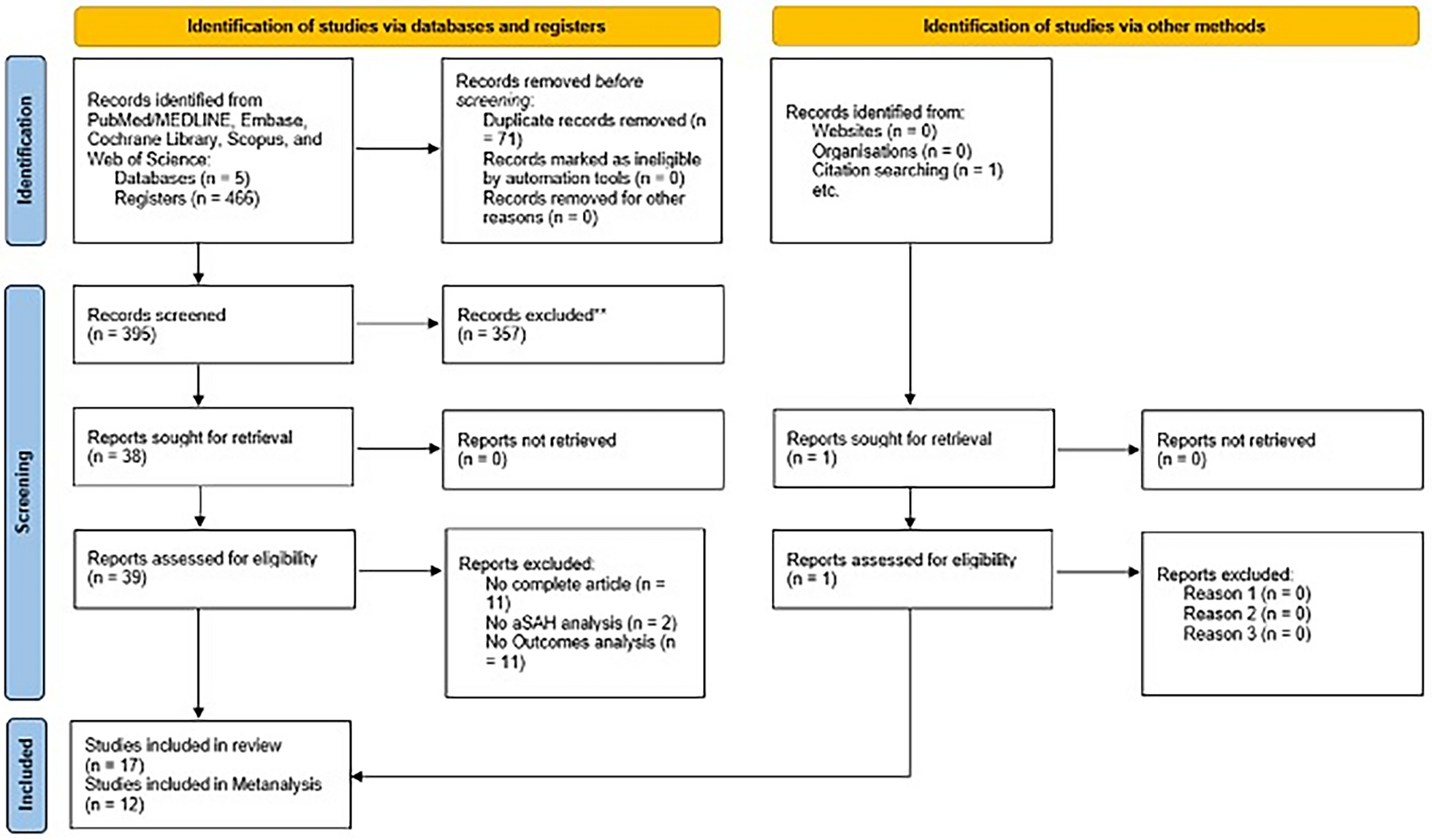
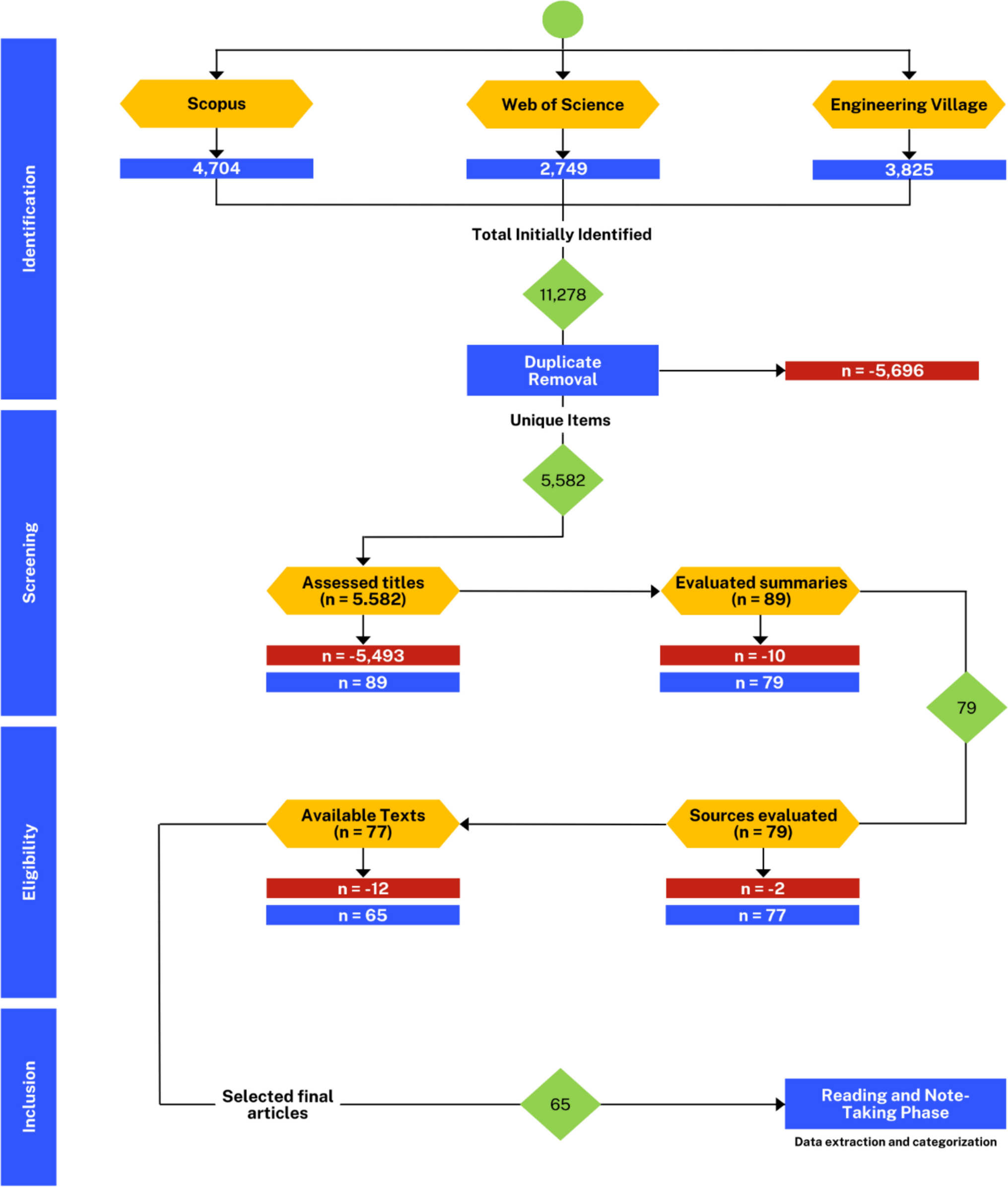
The 65 identified articles that met the inclusion criteria contribute to explaining the literature on the interrelationships between computer vision, robotics, and sealing deposition process. This section presents a descriptive analysis of the literature, followed by a classification of the studies into research lines based on technological maturity and a detailed content analysis of the findings.
4.1 Descriptive analysis of the literature on robotic sealingThe temporal evolution of publications reveals a clear technological transition. While seminal studies from the early 1990 s, such as those developed by Imperial College in the United Kingdom, focused on the basic control of robotic cells and binary visual inspection [20, 37], an exponential growth in scientific production is observed starting from 2020 as depicted in Fig. 2, in the graph, the square markers represent the absolute frequency of publications per year, while the circular markers indicate the cumulative frequency over time. This recent increase directly correlates with the adoption of Deep Learning (DL) techniques and the implementation of Industry 4.0 paradigms in manufacturing.
Fig. 2 The alternative text for this image may have been generated using AI.
Temporal evolution of the selected literature
Table 4 presents the synthesis of the quality assessment of the bibliographic portfolio. It was observed that most recent studies present a low risk of bias regarding algorithmic rigor (D4), consolidating the use of standardized statistical metrics. However, significant gaps persist in the description of physical process parameters (D2) in approximately 40% of the sample, as well as in the detailed description of hardware calibration in uncontrolled environments.
Table 4 Quality Assessment and Risk of Bias of the Included Studies4.1.1 Methodological approaches adoptedThe classification of the studies regarding the methodology employed reveals the maturity level and nature of research in robotic sealing. Table 5 summarizes the distribution of the analyzed articles.
Table 5 Classification by methodology usedA significant predominance of Technical/Experimental Development studies is observed (63%). This result indicates that the field is still strongly focused on proposing and validating new hardware and software architectures, such as the integration of laser profilometry sensors for seam tracking [30, 44] and the development of instrumented end-effectors for force monitoring [24]. The need to overcome physical challenges in robotic deposition, such as part deformation and the dynamics of non-Newtonian fluids, drives this category [45].
The Quantitative category (26%) has grown substantially in recent years, driven by the application of Deep Learning (DL) algorithms. In these studies, the focus shifts from the construction of the physical system to the rigorous statistical comparison of performance metrics among different neural network architectures, such as YOLOv8, YOLOv11, and customized CNNs, aiming to prove the superiority of AI in detecting subtle defects [11, 39,40,41].
Industrial Case Studies (8%) represent validation in shop-floor environments, dealing with real cycle-time constraints and integration into production lines, as demonstrated in the inspection of sealant on rotating tires [26] and automation in the footwear industry [4]. Finally, Conceptual/Review studies (3%) provide the theoretical basis and taxonomies necessary to structure the field [43].
Although the predominance of the analyzed studies is of an applied experimental nature, a specific technological convergence is observed to overcome the challenge of reflective (metallic) and deformable surfaces. Data synthesis indicates that laser triangulation sensors and structured light cameras, such as the Keyence, Mech-Eye, and Intel RealSense lines, validated in studies like [1, 2, 5], exhibit higher efficacy than traditional 2D vision. These sensors, when combined with optical noise filtering and point cloud registration algorithms, allow for a more faithful 3D reconstruction of the sealing bead, mitigating occlusions and glare artifacts caused by ambient lighting or material viscosity.
4.1.2 Geographical distributionThe analysis of the authors’ institutional affiliations reveals the formation of regional clusters of expertise, with a global distribution that reflects local industrial priorities and incentive policies for Smart Manufacturing. Figure 3 illustrates the quantitative distribution of publications by country.
Fig. 3 The alternative text for this image may have been generated using AI.
Geographical distribution of the selected publications
China leads the recent production in quantitative terms, driven by the intensive application of Artificial Intelligence and Deep Learning (DL) algorithms. Institutions such as Zhejiang Sci-Tech University and Central South University focus on enhancing neural networks for defect detection and 3D reconstruction of complex surfaces [1, 10, 21, 39, 44]. Some development is also observed in Taiwan and Vietnam, where research aligns with the demands of the footwear industry, focusing on 3D vision systems for real-time contour tracking and trajectory adaptation [9, 14, 17, 27, 33]. Japan maintains a distinct tradition, with seminal and current works focused on physical process modeling and real-time control [45,46,47].
Europe presents a consolidated production focused on the integration of robotic cells and experimental validation. The United Kingdom plays a pioneering historical role, having established the foundations of deposition control at Imperial College London in the 1990 s [20, 37], recently evolving into offline programming based on RGB-D sensors for the aerospace sector [7]. The Iberian Peninsula stands out for direct industrial application: in Portugal, consortia between universities and industry focus on tire inspection and the use of Data Augmentation using Generative Adversarial Networks (GANs) for the automotive sector [15, 16, 26, 48], Spain leads in collaborative robotics for the footwear sector [4], complemented by research on intelligent virtual sensors [21]. Greece contributes with inspection systems for zero-defect manufacturing in large components [5].
In the Americas, Brazil (Federal University of São Carlos—UFSCar, Federal University of Amazonas—UFAM) contributes with the development of instrumented hardware, integrating force and vision sensors for process monitoring and adhesive level control in electronics [24, 49]. In the USA, collaborations with the aerospace industry stand out for the development of closed-loop visual inspection frameworks [29].
4.1.3 Main publication venuesThe analysis of publication venues reveals a high dispersion of scientific production. More than 50 distinct venues were identified for the 65 articles in the portfolio. Only five journals concentrate more than one publication each, collectively representing approximately 27% of the total sample. The majority of studies are scattered across venues with a single publication within the timeframe, which suggests a multidisciplinary research field that spans various areas of knowledge, from materials chemistry to robotics and computing systems. Table 6 details the distribution of publications.
Table 6 Classification by publication venueDespite the fragmentation, the formation of a core of preferred journals for disseminating results is observed. Notable journals include The International Journal of Advanced Manufacturing Technology and Robotics and Computer-Integrated Manufacturing, with 5 and 4 publications respectively, establishing themselves as references for studies focused on system integration and advanced manufacturing processes. Simultaneously, the journal Applied Sciences (4 articles) and IEEE Access (3 articles) emerge as relevant venues, indicating a recent trend toward publishing in open-access journals with a broad scope in engineering and practical applications.
The nature of the identified venues reflects the technical complexity of the robotic sealing process. The list ranges from journals focused on materials science and adhesion, such as the International Journal of Adhesion and Adhesives and Polymer Composites, to publications specialized in instrumentation and sensors, such as IEEE Transactions on Instrumentation and Measurement and Sensors. Additionally, there is a notable presence of conferences and journals geared toward industrial electronics and automation (IEEE Industrial Electronics Society, Control Engineering Practice), highlighting that research on this topic requires an intersection between the physics of the bonding process and the control of robotic systems.
Regarding the distribution by venue type, a predominance of articles published in journals is observed (approximately 78% of those identified) compared to conference proceedings and symposia (approximately 22%). The presence of specific conferences, such as the International Conference on Mechatronics and Automation and Procedia CIRP, indicates that while initial discussion forums exist, most of the analyzed literature has reached a level of maturity sufficient to be published in full scientific journals.
4.2 Technological distribution in the sealing workflowThe analysis of the selected studies reveals that the incorporation of digital technologies into the robotic sealing process does not occur uniformly. A clear segmentation is observed in the maturity and typology of the employed algorithms, conditioned by the specific latency and precision requirements of each production stage. While the preliminary phases rely heavily on geometric and spatial reconstruction methods, the final quality evaluation stages have established themselves as the primary field of application for Deep Learning (DL). Table 7 presents the cross-referencing of the process stages with the predominant technology and the industrial problem addressed.
Table 7 Taxonomic Mapping: Stage, Technique, and ObjectiveIn the initial trajectory planning stage, the literature indicates a transition from static methods, based purely on theoretical CAD models, to active inspection approaches. Point cloud processing and 3D vision techniques predominate at this stage, driven by the need to adapt the robot’s path to complex and deformable surfaces, as evidenced in the footwear and aerospace sectors [1, 2, 27, 43, 50,51,52]. The technological characterization of this stage centers on the use of laser profilometry sensors and RGB-D cameras for real-time workpiece digitization. Registration algorithms, such as Iterative Closest Point (ICP) and its variations, are widely employed to align the digital model with the physical part, compensating for positioning deviations without the need for high-precision mechanical fixtures [27, 45]. Furthermore, stochastic optimization techniques and genetic algorithms have been used for automatic contour extraction in irregular geometries, ensuring that the end-effector maintains a normal orientation to the surface, a critical requirement for uniform sealant deposition [14, 17, 43, 52, 53].
Regarding process control, technological solutions are characterized by the requirement for low latency to act upon the dynamics of non-Newtonian fluids. The identified approaches focus on closing the control loop in real-time, utilizing vision systems or force sensors to adjust the robot’s speed or the deposition flow rate [8, 28]. Unlike planning, where static geometry prevails, control demands the modeling of the adhesive’s material behavior. Classical techniques such as PID (Proportional-Integral-Derivative) control remain the foundation,however, they are frequently enhanced by Fuzzy Logic to handle non-linearities in material viscosity and temperature [37, 54]. Recent advances point toward the use of Riemannian Motion Policies (RMPs) based on neural networks, which allow the robot to react to dynamic disturbances in the environment, adjusting the sealing trajectory instantaneously to avoid obstacles or correct visually detected deviations [28, 36]. Sensory integration (force and vision) emerges as a strategy to ensure that the sealant bead maintains constant width and height, mitigating “dragging” effects or material accumulation [24, 55,56,57].
The quality inspection stage, in turn, concentrates the largest volume of innovations based on Artificial Intelligence, characterized by the massive replacement of rule-based algorithms with Deep Learning (DL) architectures. The literature demonstrates that traditional computer vision methods based on thresholding, edge detection, and mathematical morphology, although the fast exhibit robustness limitations in the face of lighting variations and complex backgrounds [11, 39, 58]. In response, the use of Convolutional Neural Networks (CNNs) has become consolidated, with a focus on the family of single-stage detectors (YOLOv5, YOLOv8, YOLOv11) that balance precision and inference speed [10, 39,40,41]. These networks are trained to perform not only binary classification (good/bad part but also semantic segmentation of specific defects, such as bubbles, discontinuities, and material excess [21]. An emerging trend at this stage is the use of attention mechanisms to focus on micro-defects and the application of Data Augmentation via Generative Adversarial Networks (GANs to circumvent the scarcity of real defect samples [15, 40, 41].
Thus, the technological distribution reveals a gradient of computational complexity and abstraction. Planning has reached a high level of maturity in 3D reconstruction, enabling flexible and fixtureless manufacturing. Control remains anchored in classical and adaptive control theory, with occasional incursions of neural networks for dynamic modeling, prioritizing the stability of the physical process. In contrast, inspection stands at the frontier of modern computer vision, where Deep Learning (DL) has vastly outperformed heuristic techniques, offering superior performance metrics in unstructured environments. A persistent gap, however, remains the holistic integration of these three stages into a unified Digital Twin that utilizes post-process inspection data to automatically correct pre-process planning and control parameters in subsequent production cycles [25, 29]. Figure 4 below shows the classification of the selected articles according to their primary application focus. A predominance of studies focused on quality assurance (Quality Inspection) is observed, driven by the adoption of AI.
Fig. 4 The alternative text for this image may have been generated using AI.
Distribution of publications by sealing workflow stage
4.3 3D Inspection and adaptive automation on complex surfacesThe integration of three-dimensional vision systems and point cloud registration algorithms has established itself as the primary technological enabler for operation in fixtureless environments (without rigid jigs) and for the compensation of deformations in flexible parts. The literature analysis reveals a hierarchical inspection architecture, where the capture of physical geometry is followed by stages of virtual alignment and trajectory re-planning based on the real topology of the component.
The capture of three-dimensional geometry is predominantly performed through laser triangulation and structured light techniques, which are preferred in applications requiring high sub-millimetric precision, such as in the aerospace and footwear industries [1, 14, 17, 30, 34]. Line laser profilometry sensors are frequently mounted on the robot’s end-effector, allowing for the dynamic scanning of sealant beads and complex surfaces for dense point cloud reconstruction [2, 7]. Simultaneously, RGB-D cameras emerge as low-cost solutions for the localization of larger objects and 6-degree-of-freedom (6-DoF) pose detection, being crucial for identifying the position of parts randomly arranged in the workspace [4, 7, 27, 59]. The choice of sensor demonstrates a direct correlation with process tolerance: laser scanners for fine trajectory definition and RGB-D for global localization and collision avoidance [14, 26].
To enable trajectory adaptation, the literature describes the massive adoption of "Coarse-to-Fine" registration strategies. Initially, global registration algorithms, such as Singular Value Decomposition (SVD) or feature-based descriptor methods, are employed to approximately align the acquired point cloud with a reference model (CAD), mitigating significant rotation and translation deviations [1, 7, 60]. Subsequently, the ICP (Iterative Closest Point) algorithm and its variants, such as Trimmed ICP, are used for local refinement, minimizing the mean squared error between surfaces to ensure that the deposition trajectory perfectly matches the contour of the physical part [27,
Comments (0)