
Remember me
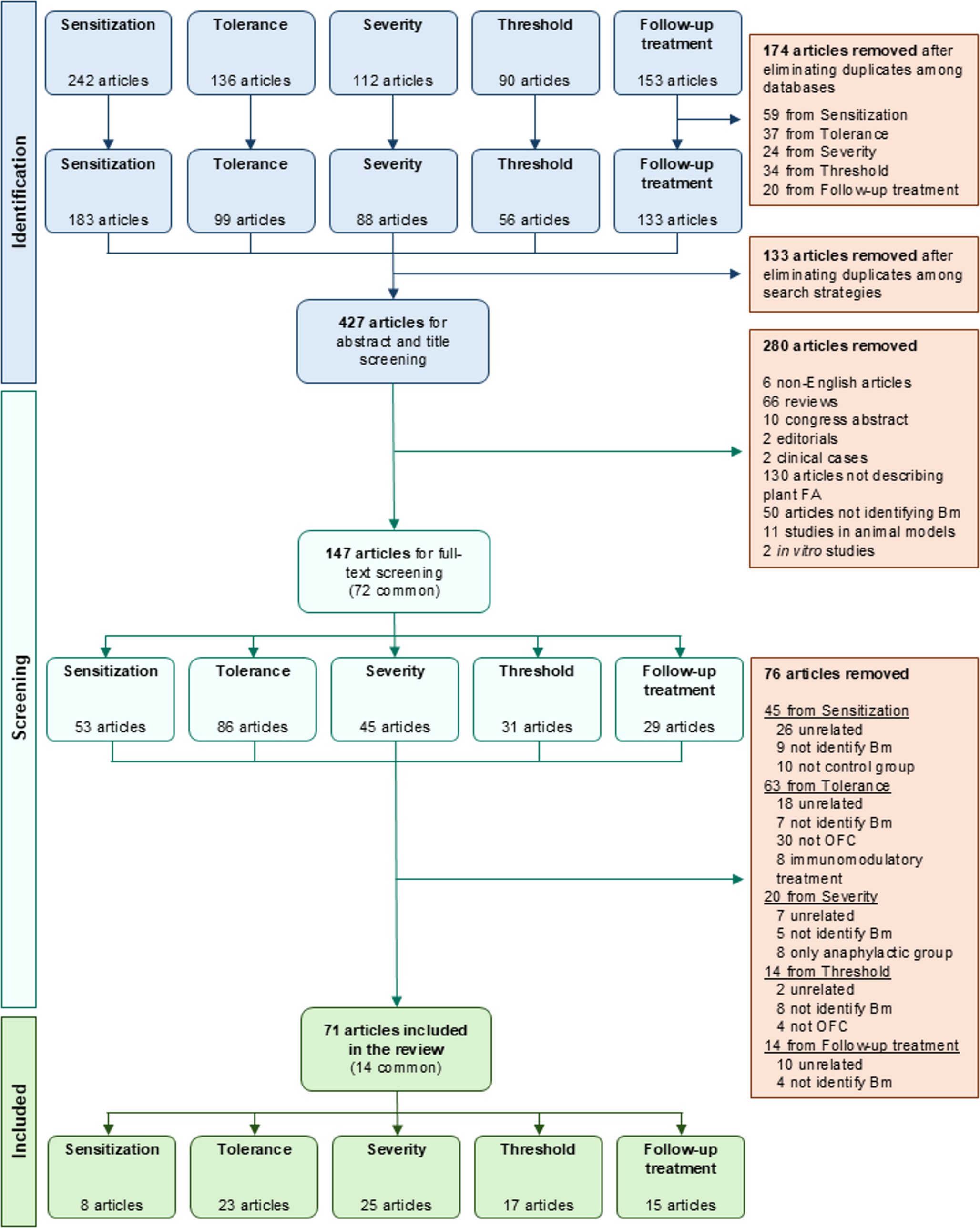

The initial search identified a total of 733 studies. After removing duplicates across the various databases and search strategies, 427 unique articles were retained. Titles and abstracts were peer-reviewed, leading to the exclusion of 280 studies. At this stage, the main reasons for exclusion were the type of publication (e.g., reviews, case reports or editorials), unrelatedness to plant FA, and absence of Bm identification. The remaining 147 articles were assigned to the five predefined thematic sections, and their full texts were peer-reviewed. During this in-depth review, 76 additional articles were excluded, mainly due to the absence of Bm identification, lack of alignment with the objective of the respective thematic section, or issues related to the control group when applied (e.g., absence of OFC or control group, inclusion of patients undergoing immunotherapy, or inclusion of only anaphylactic cases). Ultimately, 71 articles were selected for data extraction (Fig. 1).
Fig. 1 The alternative text for this image may have been generated using AI.
Study selection process. From an initial pool of 733 articles, duplicates were removed, resulting in 427 unique references. After peer review of titles and abstracts, 147 articles were selected, with 72 of them overlapping across multiple thematic sections. Following full-text review, a total of 71 studies were included for data extraction, with 14 of them overlapping among different thematic sections (11 commons between 2 sections, and 3 commons among 3 sections). Biomarker, Bm; Food allergy, FA; Oral food challenge, OFC
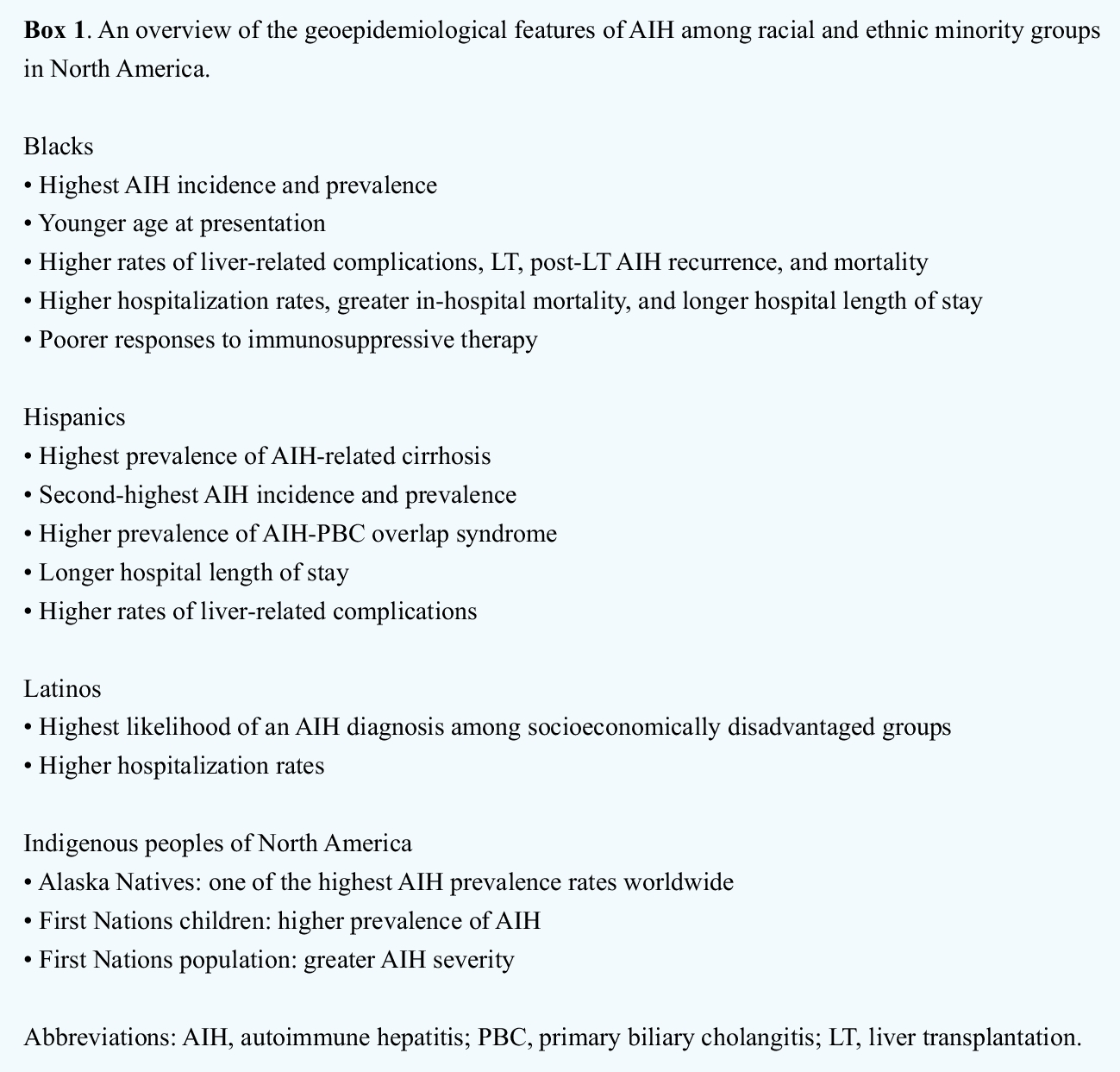
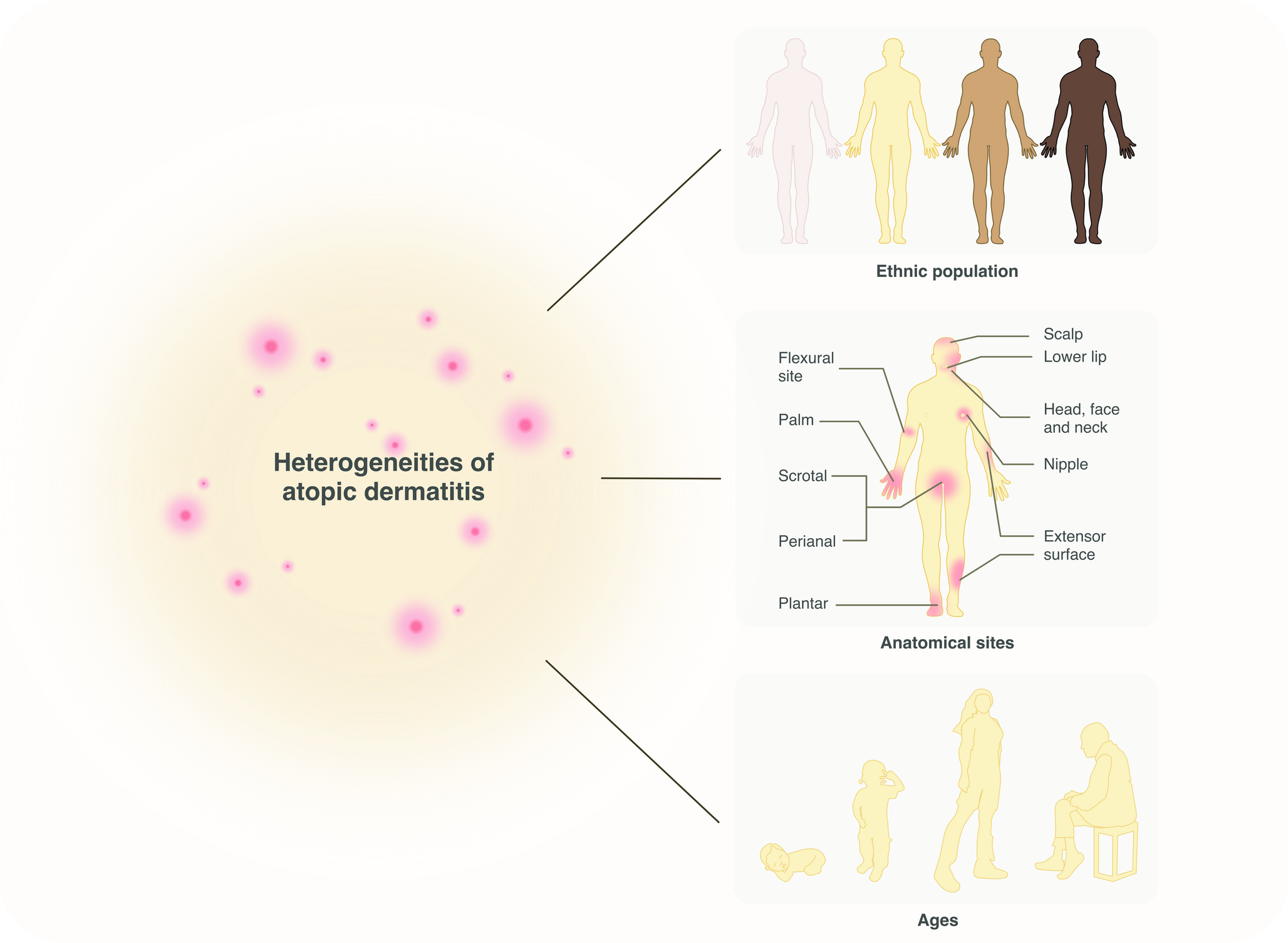
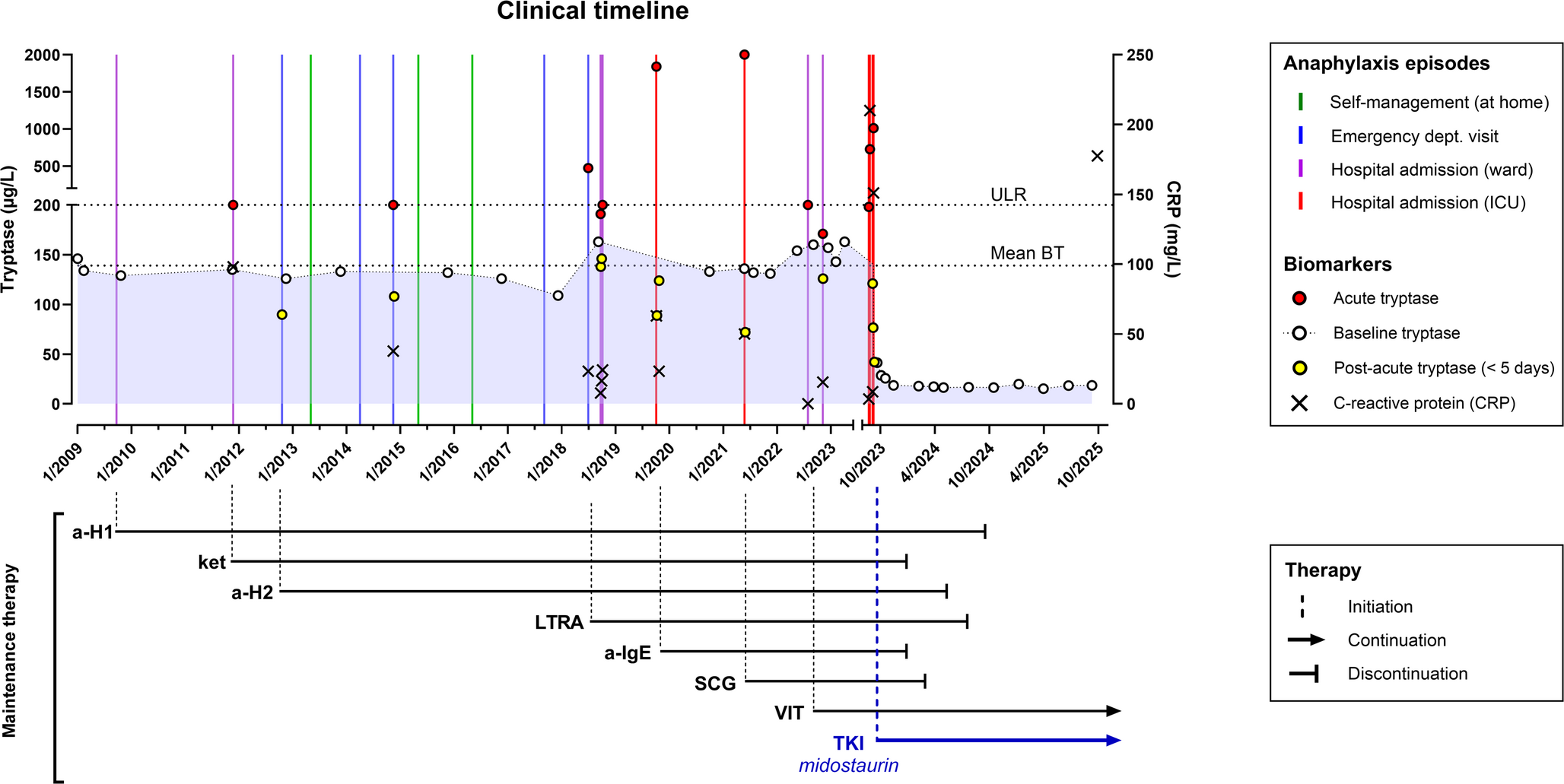
Characteristics of the StudiesAmong the 71 articles included, 72% (n = 51) were published in journals ranked in the first quartile of their respective categories (Journal Citation Report). Of these, 39 were in the first decile, reflecting a high level of quality and scientific relevance (Fig. 2A). The overall mean impact factor of the included articles was 8.6. In terms of subject areas, most publications fell under the categories of Allergy (n = 64) and Immunology (n = 58), followed by Pediatrics (n = 5) and other categories (n = 5), such as Nutrition & Dietetics, Food Science & Technology, Environmental Sciences, and Medicine, General & Internal.
Fig. 2 The alternative text for this image may have been generated using AI.
Characteristics of the 71 studies included in the review. (A) Distribution of articles by journal quartile. D1: first decile (top 10% of most cited journals in its category); Q1: first quartile (top 25%); Q2: second quartile (25 to 50%); Q3: third quartile (50% to 75%). (B) Number of articles published by six-month intervales, from July 2, 2019, to July 2, 2024. (C) Number of studies by continent of origin. Some articles included populations from multiple continents (n = 5). (D) Geographical distribution of studies by country. The size and color of each spot indicate the number of studies. Some studies included patients from multiple countries (n = 12). United States (n = 20); France (n = 9); United Kingdom (n = 9); Japan (n = 7); Netherlands (n = 7); Australia (n = 5); Germany (n = 5); Italy (n = 5); Spain (n = 5); Canada (n = 4); Israel (n = 4); Switzerland (n = 4); Bulgaria (n = 3); China (n = 3); Czech Republic (n = 3); Greece (n = 3); Iceland (n = 3); Ireland (n = 3); Lithuania (n = 3); Poland (n = 3); Sweden (n = 3); Finland (n = 2); Luxembourg (n = 2); Norway (n = 2); Austria (n = 1); Belgium (n = 1); Denmark (n = 1); Iran (n = 1); Kuwait (n = 1); Portugal (n = 1); Slovenia (n = 1); South Korea (n = 1); Turkey (n = 1); Vietnam (n = 1). Image created with Datawrapped.com. (E) Distribution of articles by the age group of the study population. Children are defined as individuals under 18 years old; adults are 18 years old or older. (F) Number of studies by plant food source. Some studies included multiple plant food sources (n = 10). Legumes: peanut and soya; Nuts: walnut, hazelnut, cashew, almond, and pistachio; Grains: wheat; Fruits: peach; Seeds: sesame. (G) Number of studies by specific plant food source. Some studies evaluated multiple sources (n = 13). (H) Number of studies by Bm type. Some studies assessed more than one Bm (n = 44). Skin prick test, SPT; basophil activation test, BAT; specific IgE, sIgE; total IgE, tIgE; specific IgG4, sIgG4
Despite the recognized importance of identifying effective Bms for plant FA, no consistent increase in the number of publications was observed between July 2019 and July 2024 (Fig. 2B). Geographically, most studies were conducted in Europe, followed by North America, Asia, and Oceania. No studies were identified from South America, Africa or Antarctica (Fig. 2C). The most represented countries were the United States of America (USA, n = 10), France, United Kingdom (n = 9), Japan, Netherlands (n = 7), Australia, Germany, Italy, and Spain (n = 5) (Fig. 2D).
Most of the included studies were conducted in pediatric populations (n = 52). In contrast, only a small number of studies included both children and adults (n = 12), while a minority focused exclusively on adults (n = 7) (Fig. 2E). In terms of the plant food groups evaluated, legumes (peanut and soy) were the most studied, followed by nuts (walnut, hazelnut, cashew, almond, and pistachio), grains (wheat), fruits (peach) and seeds (sesame) (Fig. 2F). Considering specific foods, peanut was the most frequently investigated, followed, although to a lesser extent, by wheat, hazelnut and walnut (Fig. 2G).
On the other hand, sIgE against both whole extracts and molecular components was the primary parameter analyzed across the included studies, underscoring the central role of this Bm in the diagnosis of FA. SPT and BAT were also widely used. Additionally, although less frequently, other Bms were assessed, such as sIgG4, peptide sIgE levels, and various ratios: sIgE to total IgE (tIgE) and sIgG4 to sIgE. Finally, a large and heterogeneous group of emerging Bms, still in the validation phase (n = 16), was identified: including proteins (n = 5), cellular platforms (n = 3), metabolites (n = 3), studies on other clinical parameters (n = 2), microbiota (n = 2), exhaled nitric oxide (FeNO, n = 1) and genetic factors (n = 1) (Fig. 2H).
SensitizationDespite efforts in recent years to identify risk factors for food allergies and to implement preventive measures in the general population, the number of articles included in the sensitization section has been surprisingly low, as most of the studies evaluated the development of allergy rather than sensitization, and only few of them identified clear Bms. We included a total of eight articles about Bms predicting plant food-sensitization acquisition where a total of 12 Bms were identified from 7,279 subjects (Table 1). Four studies were performed in America (50%) [27,28,29,30], three in Europe (37.5%) [31,32,33] and one in Asia (12.5%) [34]. All of them, except one [30], included pediatric subjects, and most of the articles were cohorts analyzed at predetermined time periods (62.5%) [27, 29, 31,32,33].
Table 1 Studies about biomarker (Bm) predicting plant food-sensitization acquisition (n = 8). Italics* indicate the specific study population for that Bm within the total cohort. A positive association is related to an increase in the Bm according to the pathology/condition evaluated, while an inverse association is linked to a decrease in the BmMost of the studies included atopic dermatitis subjects (50%) [28, 31, 32, 34], three of them studied diet/fecal characteristics (37.5%) [27, 29, 30] and one of them evaluated genetic factors (12.5%) [33]. Similarly, most of the studies analyzed multiple food allergen sensitization at the same time (62.5%) [27,28,29, 31, 33], while three articles were related exclusively to peanut (37.5%) [30, 32, 34] and one to almond (12.5%) [30].
ToleranceTolerance was the second section with most articles, with 45 Bms identified from 23 studies based on 3,176 patients (Table 2). Eleven studies were conducted in Europe (47.8%) [35,36,37,38,39,40,41,42,43,44,45], seven in Asia (30.4%) [46,47,48,49,50,51,52], four in America (17.4%) [37, 53,54,55], two in Australia (8.7%) [56, 57] and three were transcontinental (13%) [36, 37, 54]. Specifically, the Netherlands was the most frequent country (17.4%) [35, 40, 41, 45], followed by the United Kingdom (13%) [36, 37, 39].
Table 2 Studies regarding prediction of clinical reactivity (n = 23). Italics* indicate the specific study population for that biomarker (Bm) within the total cohort. A positive association is related to an increase in the Bm according to the pathology/condition evaluated, while an inverse association is linked to a decrease in the BmRegarding patients’ age, 17 studies were conducted in young children (74%) [36, 38, 40, 42,43,44,45,46,47,48,49,50,51,52,53,54, 56], three in children and teens up to 18 years old (13%) [44, 48, 57], and three in adults (13%) [35, 41, 55]. According to the number of patients included, they ranged from small cohorts (12 subjects) [35], focused on discovering new Bms [35, 43], to big study populations (981 subjects) [37], when studying contrasted Bms.
Apart from sesame [36, 48] and wheat [52], the majority of the studies were conducted in peanut (73.9%) [35,
Comments (0)