Norouzkhani N, Afshari S, Sadatmadani SF, Mollaqasem MM, Mosadeghi S, Ghadri H, et al. Therapeutic potential of berries in age-related neurological disorders. Front Pharmacol. 2024;15:1348127.
Article
CAS
PubMed
PubMed Central
Google Scholar
Augustine R, Dalvi YB, Nath VY, Varghese R, Raghuveeran V, Hasan A, et al. Yttrium oxide nanoparticle loaded scaffolds with enhanced cell adhesion and vascularization for tissue engineering applications. Mater Sci Eng, C. 2019;103:109801.
Article
CAS
Google Scholar
Angraini N, Syarifuddin S, Rauf N, Tahir D. Advancements in bone tissue engineering: A comprehensive review of biomaterial scaffolds and freeze‐drying techniques from perspective global and future research. Artif Organs. 2025;49(8):1236–48. https://doi.org/10.1111/aor.14976
Article
CAS
PubMed
Google Scholar
Luo Y, Zhang H, Wang Z, Jiao J, Wang Y, Jiang W. Strategic incorporation of metal ions in bone regenerative scaffolds: multifunctional platforms for advancing osteogenesis. Regen Biomaterials. 2025;12:rbaf068. https://doi.org/10.1093/rb/rbaf068.
Article
CAS
PubMed
PubMed Central
Google Scholar
Megha M, Joy A, Mohan CC, Unnikrishnan G, Thomas J, Haris M, et al. Enhancement of osteogenic potential and surface wettability of polycaprolactone using hydroxyapatite co-doped with vanadium and yttrium. Ceram Int. 2025;51:20575–94.
Article
CAS
Google Scholar
El-Masry FA, Salama AA, Ghany NAA, Farag MM, Al Rashidy ZM. Aqueous electrophoretic deposition of yttrium-doped nanobioactive glass/collagen/chitosan orthopedic coatings on 316L SS. Mater Chem Phys. 2025;329:130059.
Article
CAS
Google Scholar
Zhu W, Shen L, Xu N, Kong J, Engle MA, Finkelman RB, et al. Rare earth elements and yttrium in Chinese coals: distribution and economic significance. Renew Sustain Energy Rev. 2025;212:115423.
Article
CAS
Google Scholar
Heimann RB. Materials science of crystalline bioceramics: a review of basic properties and applications. CMU J. 2002;1(1):23–46.
Google Scholar
Jiang G, Mishler D, Davis R, Mobley JP, Schulman JH. Zirconia to Ti-6Al-4V braze joint for implantable biomedical device. J Biomed Mater Res B Appl Biomater. 2005;72(2):316–21.
Article
PubMed
Google Scholar
Rachman A, Rantam FA, Bachtiar I, Fatchiyah F, Hakim L, Putri IL, et al. Biocompatibility of Yttria-tetragonal zirconia polycrystal seeded with human adipose derived mesenchymal stem cell. Acta Inform Med. 2018;26(4):249–53.
Article
PubMed
PubMed Central
Google Scholar
Rabel K, Nath AJ, Nold J, Spies BC, Wesemann C, Altmann B, et al. Analysis of soft tissue integration-supportive cell functions in gingival fibroblasts cultured on 3D printed biomaterials for oral implant-supported prostheses. J Biomed Mater Res A. 2024;112(9):1376–87.
Article
CAS
PubMed
Google Scholar
Nasarudin NA, Razali M, Goh V, Chai WL, Muchtar A. Expression of Interleukin-1β and histological changes of the three-dimensional oral mucosal model in response to yttria-stabilized nanozirconia. Materials. 2023;16(5):2027.
Article
CAS
PubMed
PubMed Central
Google Scholar
El Shafei SF, Raafat SN, Farag EA. Enhanced human periodontal ligament stem cell viability and osteogenic differentiation on two implant materials: an experimental in vitro study. F1000Res. 2023;12:447.
Article
CAS
PubMed
PubMed Central
Google Scholar
Iinuma Y, Hirota M, Hayakawa T, Ohkubo C. Surrounding tissue response to surface-treated zirconia implants. Materials (Basel). 2019;13(1):30.
Article
PubMed
PubMed Central
Google Scholar
Stanic V, NicoliAldini N, Fini M, Giavaresi G, Giardino R, Krajewski A, et al. Osteointegration of bioactive glass-coated zirconia in healthy bone: an in vivo evaluation. Biomaterials. 2002;23(18):3833–41.
Article
CAS
PubMed
Google Scholar
Li YL, Zhao WK, Zhang J, Xiang C, Chen Q, Yan C, et al. In vitro and in vivo evaluations of nano-hydroxyapatite/polyamide 66/yttria-stabilized zirconia as a novel bioactive material for bone screws: Biocompatibility and bioactivity. J Biomater Appl. 2020;35(1):108–22.
Article
CAS
PubMed
Google Scholar
Su B, Peng X, Jiang D, Wu J, Qiao B, Li W, et al. In vitro and in vivo evaluations of nano-hydroxyapatite/polyamide 66/glass fibre (n-HA/PA66/GF) as a novel bioactive bone screw. PLoS ONE. 2013;8(7):e68342.
Article
CAS
PubMed
PubMed Central
Google Scholar
Elbadawi M, Shbeh M. High strength yttria-reinforced HA scaffolds fabricated via honeycomb ceramic extrusion. J Mech Behav Biomed Mater. 2018;77:422–33.
Article
CAS
PubMed
Google Scholar
Kim HW, Noh YJ, Koh YH, Kim HE. Enhanced performance of fluorine substituted hydroxyapatite composites for hard tissue engineering. J Mater Sci Mater Med. 2003;14(10):899–904.
Article
CAS
PubMed
Google Scholar
CadafalchGazquez G, Chen H, Veldhuis SA, Solmaz A, Mota C, Boukamp BA, et al. Flexible Yttrium-stabilized zirconia nanofibers offer bioactive cues for osteogenic differentiation of human mesenchymal stromal cells. ACS Nano. 2016;10(6):5789–99.
Article
CAS
Google Scholar
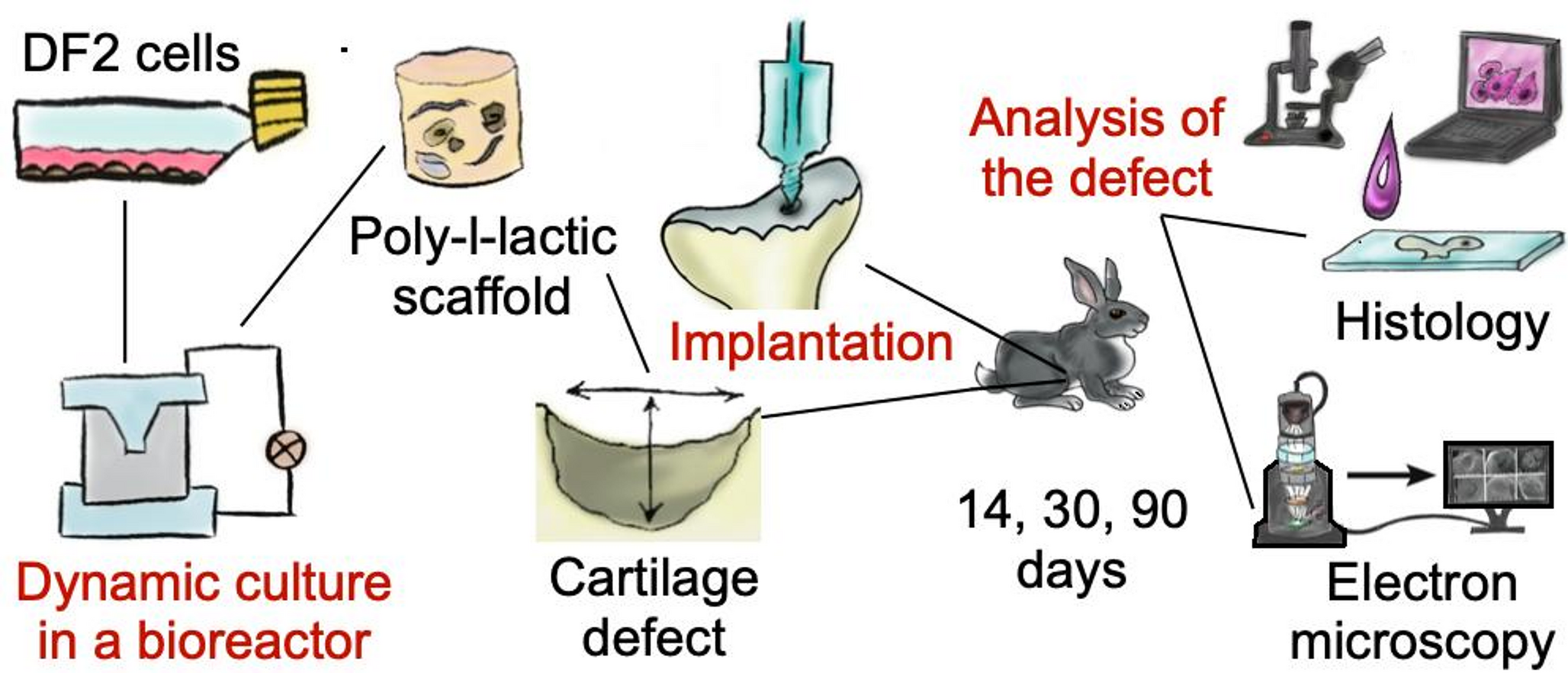
Sotoudeh A, Jahanshahi A, Takhtfooladi MA, Bazazan A, Ganjali A, Harati MP. Study on nano-structured hydroxyapatite/zirconia stabilized yttria on healing of articular cartilage defect in rabbit. Acta Cir Bras. 2013;28(5):340–5.
Article
PubMed
Google Scholar
Liu B, Liu J, Wang C, Wang Z, Min S, Wang C, et al. High temperature oxidation treated 3D printed anatomical WE43 alloy scaffolds for repairing periarticular bone defects: In vitro and in vivo studies. Bioact Mater. 2024;32:177–89.
CAS
PubMed
Google Scholar
Augustine R, Dalvi YB, YaduNath VK, Varghese R, Raghuveeran V, Hasan A, et al. Yttrium oxide nanoparticle loaded scaffolds with enhanced cell adhesion and vascularization for tissue engineering applications. Mater Sci Eng C Mater Biol Appl. 2019;103:109801.
Article
CAS
PubMed
Google Scholar
Kassem S, Arafa MM, Yehya MM, Soliman MAM. In vivo study of dose-dependent antioxidant efficacy of functionalized core-shell yttrium oxide nanoparticles. Naunyn Schmiedebergs Arch Pharmacol. 2022;395(5):593–606.
Article
CAS
PubMed
PubMed Central
Google Scholar
Yoshino T, Aoki A, Oda S, Takasaki AA, Mizutani K, Sasaki KM, et al. Long-term histologic analysis of bone tissue alteration and healing following Er:YAG laser irradiation compared to electrosurgery. J Periodontol. 2009;80(1):82–92.
Article
PubMed
Google Scholar
Fan Q, Chen J, Mishra A, Stewart A, Anees F, Chen TH, et al. Nanofluid-enhanced laser lithotripsy using conducting polymer nanoparticles. bioRxiv. 2025.
Yossri D, Din N, Afifi NS, Adel-Khattab D. Soft tissue response to titanium healing abutments treated by Er: YAG laser or plasma spray: a randomized controlled feasibility clinical study with SEM and histological analysis. Clin Implant Dent Relat Res. 2025;27(1):e13373.
Article
PubMed
Google Scholar
Zaitsev AE, Asanov ON. Erbium:yttrium aluminium garnet (Er:YAG) laser therapy versus sharp debridement in the management of chronic ulcers of the lower extremity: a randomised control trial. Int Wound J. 2025;22(6):e70688.
Article
PubMed
PubMed Central
Google Scholar
Akiyama F, Aoki A, Miura-Uchiyama M, Sasaki KM, Ichinose S, Umeda M, et al. In vitro studies of the ablation mechanism of periodontopathic bacteria and decontamination effect on periodontally diseased root surfaces by erbium:yttrium-aluminum-garnet laser. Lasers Med Sci. 2011;26(2):193–204.
Article
PubMed
Google Scholar
Htet M, Madi M, Zakaria O, Miyahara T, Xin W, Lin Z, et al. Decontamination of anodized implant surface with different modalities for peri-implantitis treatment: lasers and mechanical debridement with citric acid. J Periodontol. 2016;87(8):953–61.
Article
CAS
PubMed
Google Scholar
Takemura S, Mizutani K, Mikami R, Nakagawa K, Hakariya M, Sakaniwa E, et al. Enhanced periodontal tissue healing via vascular endothelial growth factor expression following low-level erbium-doped: yttrium, aluminum, and garnet laser irradiation: In vitro and in vivo studies. J Periodontol. 2024;95(9):853–66.
Article
CAS
PubMed
Google Scholar
Lin T, Yu CC, Liu CM, Hsieh PL, Liao YW, Yu CH, et al. Er:YAG laser promotes proliferation and wound healing capacity of human periodontal ligament fibroblasts through Galectin-7 induction. J Formos Med Assoc. 2021;120(1 Pt 2):388–94.

Comments (0)