A Single-Centre, Single-Blinded Randomized Control Trial Evaluating the Role of Distraction Therapy in Pain Management Following Major Abdominal Surgeries in Adult Cancer Patients
Distract Trial
In the post-operative period, analgesics are complemented with non-pharmacological methods (NPM). However, the evidence is limited.
Objectives
Randomised control trial aimed to determine the effectiveness of NPMs of pain management on the need for rescue analgesics following major abdominal oncology surgeries.
Methodology
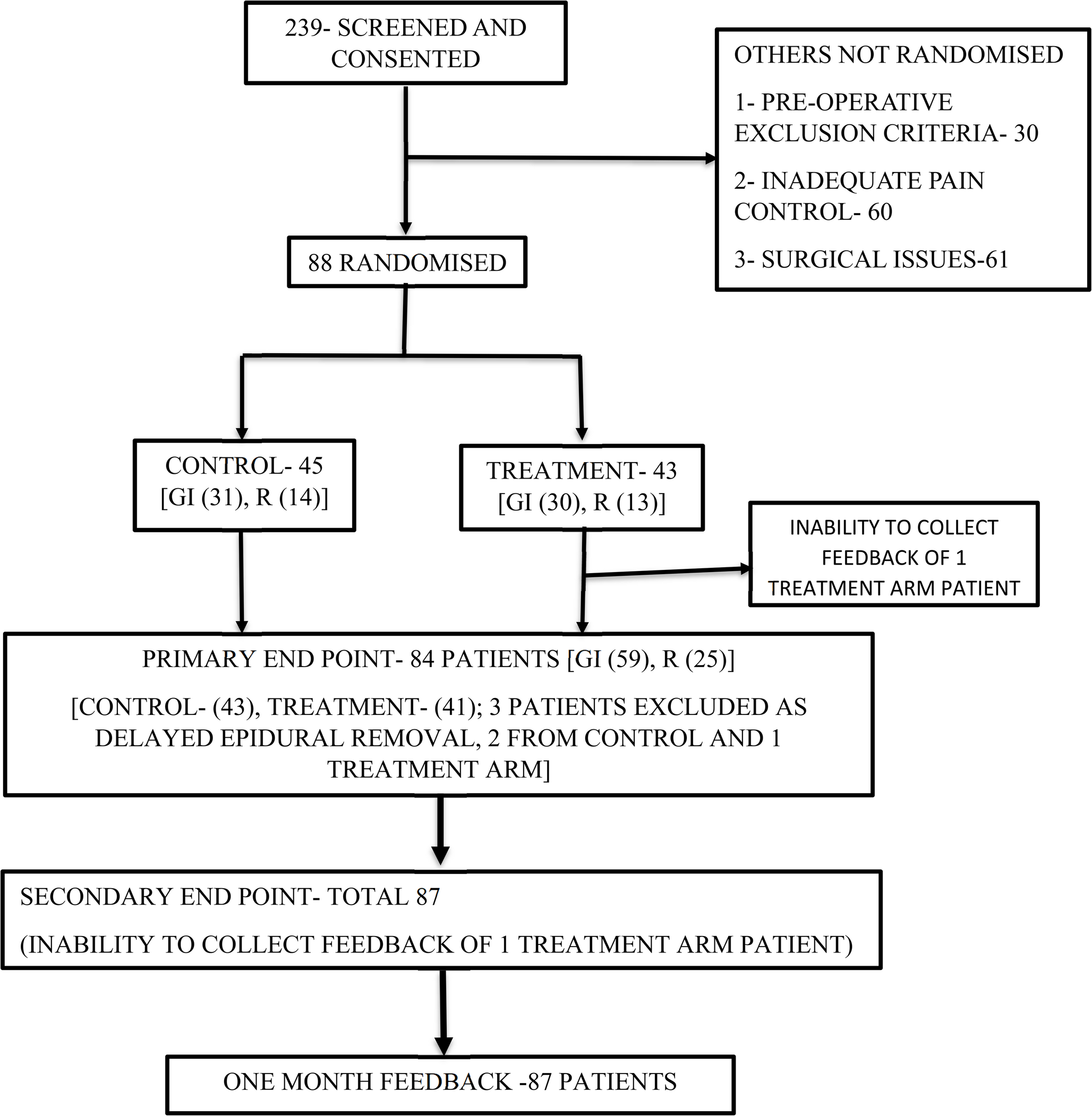
After approval from the hospital ethics board and registration of the trial, consented patients undergoing nephrectomy and hepatobiliary surgeries with planned epidural analgesia (EA) were randomised to the control/ intervention group. The control group had ongoing EA infusion with systemic paracetamol (1 g) thrice a day. Intravenous injection of tramadol (50 mg) was used as a rescue analgesic.
Intervention
Encouragement to perform distraction activities of their choice, like reading, listening to music, etc., along with the EA and systemic analgesics. Patient feedback was recorded according to the Revised American Pain Society Outcome Questionnaire (APSOQ). Need for rescue analgesics, along with pain scores, were recorded till discharge. At 1-month post-surgery follow-up, pain assessment was done using the Brief Pain Inventory (BPI).
Results
Analysis of 88 patients revealed an increase in time spent by the patient in self-distraction techniques in the intervention group in the immediate post-operative period (35.7% versus 90.4%, P < 0.001); No difference in the requirement of the rescue analgesics was found between the two groups (P = 0.16). The pain scores were comparable in the immediate post-operative period (p > 0.05) and also at the end of 1 month.
Conclusion
Self-motivated distraction therapy after major abdominal oncology surgeries did not reduce the perception of pain or the need for rescue analgesics.


Comments (0)