Differences in leadership ambition of women and men in their early academic career in cardiovascular research in the Netherlands
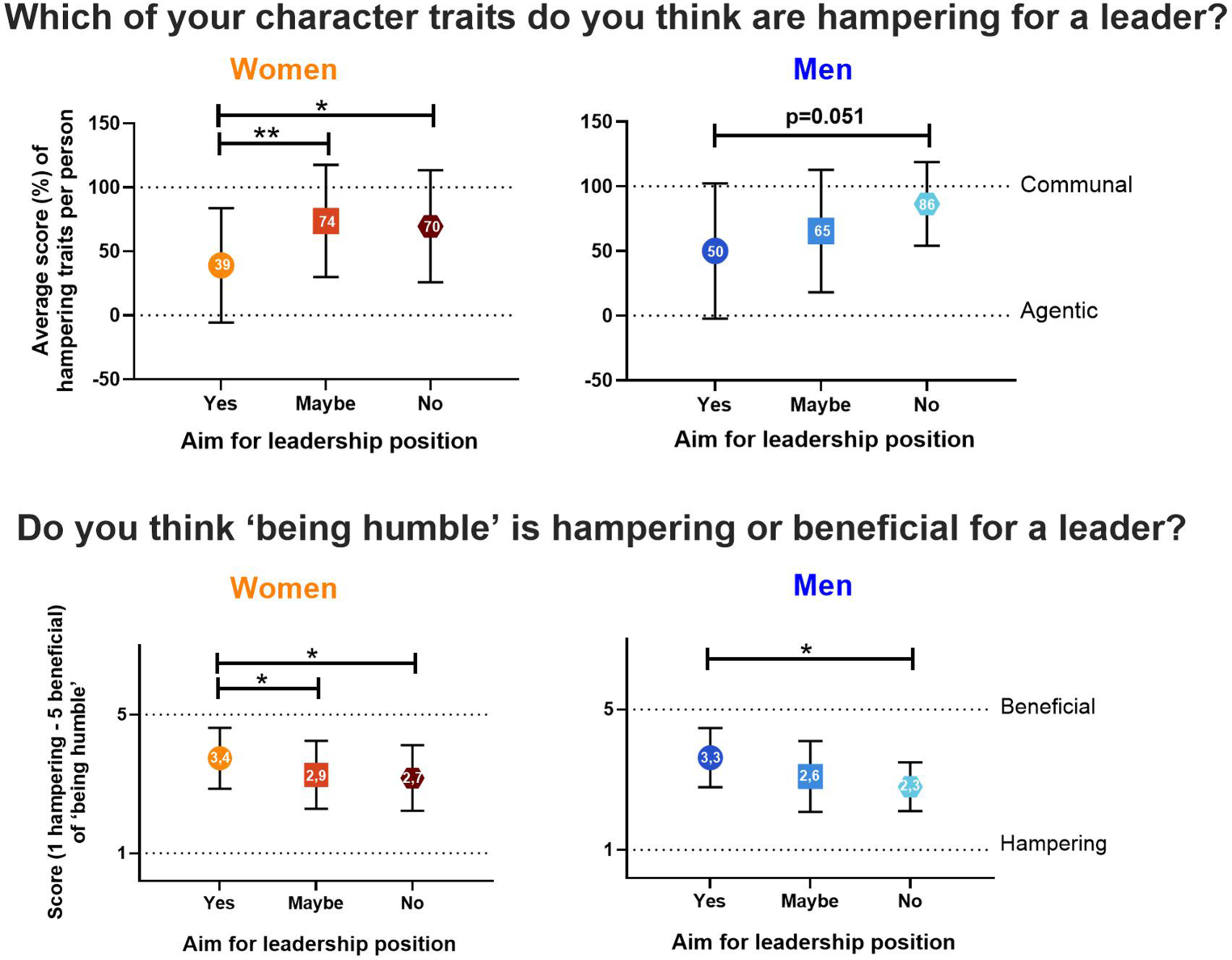
Our survey reveals that family planning does not seem to impact women’s leadership aspirations in the context of cardiology and cardiovascular research. Interestingly, in recent years, the potential impact of childcare support, such as free day-care, on parents’ health and work ambitions has been extensively researched. It has been shown on various occasions that this is especially important to low-income families and has great effects on the parents’ (mental) health, free time, and therefore professional ambitions [5, 6]. Of the female respondents, 12% would be encouraged by a female quota to pursue a leadership position. This is in line with a social experiment performed by Maggian and colleagues, where a female quota was only effective if women were already very far in the competition [7], highlighting the importance of gender salience (the self-awareness of one’s gender) in decision making. Part-time work appears hardly reconcilable with women’s leadership aspirations. This is very interesting given that the Netherlands holds the largest share of women working part-time in the European Union [4]. Interestingly, a generational change can be seen in the interest in alternative and individualized work options (e.g., part-time and remote) in many fields of work in Generation Z compared to former generations [8]. This might also apply to this study population. Women and men with limited leadership aspirations perceive their communal traits, e.g., being humble, as hampering, albeit women more prominently than men. These findings are in line with the literature, where leadership traits are perceived differently according to gender identity, e.g., a dominant attitude is acceptable for men but negatively connoted for women [9]. Differences among women can be explained by self-categorization theory, which suggests that self-stereotyping decreases when gender salience is low [10]. Therefore, if women realize that gender differences affect their career outcomes, this might increase their self-stereotyping. Although communal traits are considered as beneficial for a leader [11], the idea that men, who more frequently display agentic traits, are more suitable for leadership positions still prevails in society at large [12]. Fortunately, for instance, in the United States, women have been less prone to view management and leadership as the sole domain of men over the last decade [13], and women with a female manager or a high percentage of female leaders seem to value feminine managerial characteristics and female managers over male ones [14]. This underlines the importance of a mixed and diverse work floor.
Overall, the respondents’ replies confirm stereotypical professional attributes in the field of cardiology and cardiovascular research [15]. Gendered social role expectations like professional attributes should be contextualized, as cultural and professional environments are important moderators driving perception and behaviour. Our study highlights once more the importance of one’s awareness of these complex social structures as well as one’s personal influence and (self)perception. We therefore recommend that the education and training of future cardiovascular (bio)medical professionals and researchers emphasize the impact of these issues, promote awareness, and prioritize positive culture change.


Comments (0)