Reagents
Reagents were purchased from Sigma-Aldrich (St. Louis, MO, USA), unless otherwise stated.
Antibodies
To generate polyclonal anti-LACTB antibodies, we selected an 18-amino-acid target epitope close to the N-terminus of fully processed human LACTB (hLACTB) and rat LACTB (rLACTB) (Polianskyte et al. 2009) (Fig. S1, panel a). This epitope is part of a flexible segment located outside the beta-lactamase backbone (Bennett et al. 2022; Zhang et al. 2022). Previous analyses by mass spectrometry have indicated that this segment does not carry any post-translational modifications (Polianskyte et al. 2009). Amino acid sequence searches using the Basic Local Alignment Search Tool (BLAST, National Center for Biotechnology Information, Bethesda, MD, USA) revealed that the sequence was unique to LACTB. Immunization and antibody purification were performed by New England Peptide (Gardner, MA, USA). In brief, for each target epitope (hLACTB and rLACTB), two rabbits (New Zealand White) were immunized three times with synthetic peptides corresponding to the epitope sequences. Pre-immune serum was collected for each rabbit. Two bleedings of 50 mL antiserum were used for affinity purification against the immobilized target epitope.
Commercially purchased primary antibodies were as follows: anti-cytochrome oxidase subunit IV (COX-IV), Proteintech (66110-1-Ig; Proteintech Group, Inc, Rosemont, IL, USA); anti-carnitine palmitoyl transferase 1B (CPT1B), Proteintech (22170-1-AP); anti-glyceraldehydephosphate dehydrogenase (GAPDH), Cell Signaling Technology (Leiden, Netherlands); anti-isocitrate dehydrogenase 2 (IDH-2), Abcam (ab55271; Abcam, Waltham, MA, USA); anti-isocitrate dehydrogenase 3 (IDH-3), Proteintech (68199-1-Ig); anti-Ki-67, Abcam (ab279653); anti-laminin beta 1, Merck (Darmstadt, Germany) (MAB1921b), anti-myosin heavy chain 1 (MYH1), Proteintech (67299-1-Ig); anti-myosin heavy chain 2 (MYH2), Proteintech (66212-1-Ig); anti-myosin heavy chain 3 (MYH3), Invitrogen (PA5-72848; Invitrogen, Carlsbad, CA, USA); anti-myosin heavy chain 7 (MYH7), Invitrogen (TH81); anti-myosin heavy chain 8 (MYH8), Invitrogen (PA5-72,846); anti-myoblast determination protein 1 (MyoD1), Abcam (Ab16148); anti-paired box protein 7 (Pax-7), Abcam (ab218472); anti-phosphatidyl serine decarboxylase (PISD), Abcam (ab236405); anti-slow twitch skeletal muscle troponin T (TnnT1), Proteintech (68631-1-Ig); and anti-voltage-dependent anion channel 1 (VDAC1), Merck (MABN504). Commercially purchased secondary antibodies were as follows: anti-mouse immunoglobulin G (IgG) horseradish peroxidase (HRP), Invitrogen (G-21040); donkey anti-rabbit IgG HRP, Thermo Fisher Scientific (A16035); goat anti-rabbit IgG Alexa-647, Thermo Fisher Scientific (A21245); and goat anti-mouse IgG Alexa-750, Thermo Fisher Scientific (A21037). Validation of the commercially purchased antibodies was provided in the technical specifications insert for each antibody. Literature references to the antibodies and Research Resource Identifiers are listed in Supplementary Table S1.
Validation of anti-LACTB antibodies
To test the anti-hLACTB antibody, we used recombinant hLACTB protein added in incremental quantities to a protein extract of ML-1 human follicular thyroid carcinoma cells (Srinivasan et al. 2023). The results indicated that the anti-hLACTB antibody detected recombinant hLACTB protein added at quantities of 0.5, 1, and 2 ng, while the endogenous expression level of LACTB in ML-1 cells was below the detection limit (Fig. S1, panel b). Polymeric forms of LACTB could be seen as minor bands at higher molecular weight.
To test the anti-rLACTB antibody, mitochondria were prepared from rat heart, kidney, liver, brain, and skeletal muscle, after which proteins were separated by sodium dodecyl sulfate polyacrylamide gel electrophoresis (SDS-PAGE) for immunoblotting. The result showed that the anti-rLACTB antibody detected a band at about 54 kDa corresponding to the molecular mass of processed LACTB (Fig. S1, panel c). The apparent content of LACTB in heart and skeletal muscle was lower than that for the other tissues, probably because a substantial quantity of muscle mitochondria remains attached to the myofibrillar scaffold (Kelley et al. 2002). Bands were excised from SDS-PAGE gels at the position corresponding to 54 kDa and subjected to in-gel hydrolysis by trypsin, followed by analysis by mass spectrometry, which confirmed the presence of LACTB (Fig. S1, panel d).
Using the anti-rLACTB antibody on the recombinant hLACTB protein demonstrated no cross-reactivity against hLACTB. Likewise, using the anti-hLACTB antibody on mitochondrial proteins separated by SDS-PAGE revealed little or no cross-reactivity of the anti-hLACTB antibody for rLACTB protein (not shown).
To validate the expression data, we used a Multiple Tissue Expression Array to determine the relative levels of LACTB mRNA expression in 75 different human tissues and cancer cell lines. Hybridization with the 421-base-pair (bp) probe encompassing the catalytic -SISK- motif revealed that LACTB mRNA was expressed in all adult tissues (Fig. S1, panels e and f, Supplemental Table S2). The highest LACTB mRNA expression levels were found in the heart, skeletal muscle, liver, and kidney, while the lowest levels were found in the uterus, thyroid gland, and ovary. Fetal tissues contained lower levels of LACTB mRNA than the corresponding adult tissues. In agreement with findings from other studies (Keckesova et al. 2017), cancer cell lines contained low levels of LACTB mRNA (Supplementary Table S2).
Preparation of tissues for immunohistochemical staining
Paraffin-embedded sections of human skeletal muscle were purchased from TissueArray.Com LLC, USA (Derwood, MD, USA). The catalogue numbers were as follows: HuFPT075 (normal human skeletal muscle), MC245c (normal human skeletal muscle), and BE01014a (normal human fetal tissue).
To collect rat tissue samples, male Wistar rats (200 g) under CO2 sedation were killed by decapitation, whereupon the musculus vastus lateralis was excised and fixed by immersion in a fixative containing 4% paraformaldehyde, 1% dimethyl sulfoxide (DMSO) in phosphate-buffered saline (PBS), pH 7.4. Fixation was allowed to proceed for 24 h at room temperature (RT). The samples were then transferred in a graded ethanol series to a final concentration of 70% ethanol and embedded in paraffin using a Logos Processing machine (Milestone, Valbrembo, Italy) with the standard program for tissues up to 5 mm thickness. Sections (4 µm) were cut using a Microm HM355S microtome (Thermo Fisher Scientific, Waltham, MA, USA).
Immunohistochemical staining and digitization of images
Sections were incubated at 60 °C for 15–30 min to ensure proper adhesion. Sections were then deparaffinized and rehydrated in xylene and descending alcohol series. Heat-induced epitope retrieval was performed in 10 mM Tris-1 mM EDTA pH 9 for 20 min at 99 °C using the PT Module (epredia, Kalamazoo, MI, USA). Before applying the primary antibodies, the tissue sections were blocked with 10% goat serum in Tris-buffered saline containing 0.05% Tween 20 (TBST) for 15 min at RT.
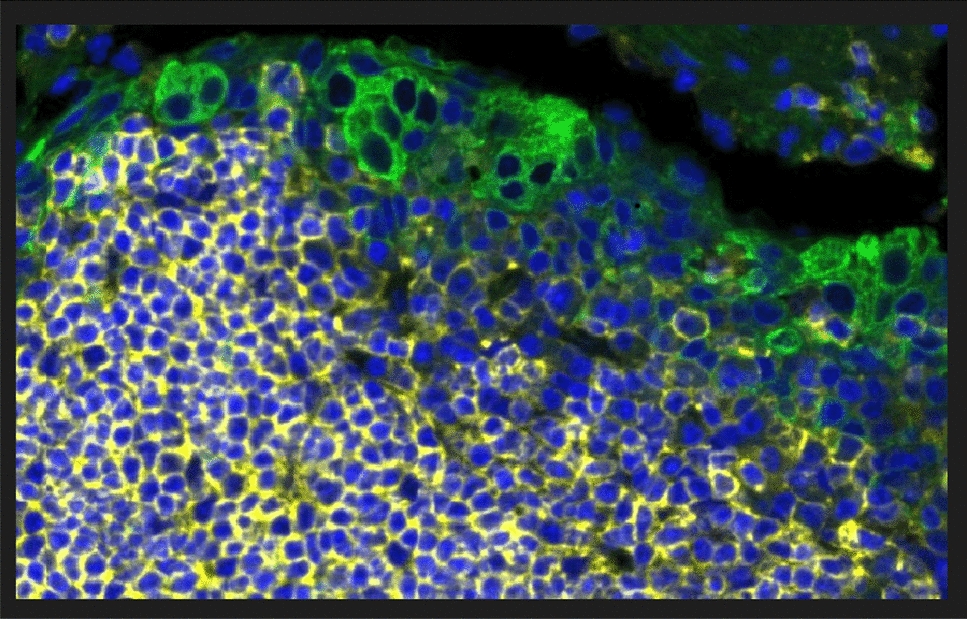
Primary antibodies for single or double labeling experiments were diluted in 10% goat serum in TBST, whereupon tissue sections were incubated for 1 h at RT. Primary antibodies were visualized using secondary antibodies conjugated to the Alexa Fluor 647 or Alexa Fluor 750 fluorescent dye. Secondary antibodies were diluted 1:300 in TBST, and tissue sections were incubated for 30 min at RT. When indicated, 4′,6-diamidino-2-phenylindole (DAPI) was added together with the secondary antibody at a concentration of 1.6 µg/mL. ProLong Gold (Thermo Fisher Scientific) was used as an anti-fading mounting medium. 3,3’-Diaminobenzidine (DAB) was obtained from Thermo Fisher Scientific. Digital images of stained tissues were acquired using a whole-slide Pannoramic 250 FLASH III Digital Scanner (3DHISTECH Kft, Budapest, Hungary) equipped with a plan apochromat objective ×20 (NA 0.8) and a scientific sCMOS camera (PCO.edge 4.2, Excelitas Technologies Corp, Pittsburgh, PA, USA), resulting in a final pixel size of 0.325 μm. Fluorescent filters suitable for wavelengths of 365 nm (DAPI), 647 nm, and 750 nm were used. Figures were assembled using Microsoft PowerPoint (Microsoft, Redmond, WA, USA).
Confocal microscopy
The images and z-stack series were captured using a Leica STELLARIS 8 FALCON (Leica Microsystems GmbH, Wetzlar, Germany) system equipped with HyD S detectors and an HC PL APO CS2 ×63/1.40 oil objective (Leica Microsystems) using the 647 and 750 nm laser lines. Parameter settings were kept the same during all the imaging processes. Images were captured and analyzed using Leica Application Suite X Software v.4.8.1.29271 (Leica Microsystems) and formatted using Fiji ImageJ software (v.2.1.0/1.53c; National Institutes of Health).
Preparation of mitochondria
Mitochondria were prepared from rat tissues as described previously (Johans et al. 2005). Briefly, tissues of interest were resected and placed in isolation buffer containing 250 mM sucrose, 10 mM Hepes-K, and 1 mM EGTA, pH 7.4. Samples were cut into pieces and homogenized in a tight-fitting pestle for 1–2 min. Heart and skeletal muscle samples were homogenized with a T10 basix Ultra-Turrax disperser (IKA-Werke GmbH & Co., Staufen, Germany) for 30 s before homogenization. The resulting tissue homogenates were centrifuged at 750×g for 7.5 min, whereupon the supernatant was collected and re-centrifuged at 10,000×g for 10 min. The pellet was resuspended in isolation buffer and centrifuged for 10 min at 10,000×g. The resulting mitochondrial pellet was collected and resuspended in an approximately equal volume of isolation buffer. All preparative steps were performed at +4 °C. Protein concentration was measured by colorimetry using the Protein Assay Dye Reagent Concentrate (Cat# 3500-0006, Bio-Rade, Hercules, CA, USA). Mitochondria were solubilized in 4 M urea, and bovine serum albumin was used as the standard.
Cell culture
C2C12 mouse myoblasts (ATCC CRL-1772, American Type Culture Collection, Manassas, VA, USA) were maintained in growth medium (pyruvate- and phenol red-free, high-glucose Dulbecco’s modified Eagle medium [DMEM] supplemented with GlutaMax, penicillin/streptomycin, and 20% fetal calf serum). For differentiation into myotubes, the cells were seeded on ultra-compliant gelatin hydrogels prepared as described by Jensen et al. (2020). Two days after plating, upon reaching confluency, differentiation medium (DMO; pyruvate- and phenol red-free, high-glucose DMEM supplemented with L-glutamine, penicillin/streptomycin, 2% heat-inactivated horse serum, and 10% Opti-MEM I) was added. Cells were differentiated for up to 14 days with daily medium changes. C2C12 cells were harvested for protein samples at the myoblast stage and at different time points during differentiation.
Confluent L6 rat myoblasts (ATCC CRL-1458) were differentiated in DMEM medium containing 2% FCS, supplemented with IGF-1, retinoic acid, and cytosine-1-β-D-arabinofuranoside (AraC) for 6 days. L6 cells were harvested after reaching confluence and at different time points during differentiation.
Human ML-1 follicular thyroid carcinoma cells (Schönberger et al. 2000) were grown in DMEM supplemented with 10% fetal bovine serum (FBS), 1% penicillin/streptomycin, and 1% L-glutamine. Cells were harvested for protein samples at 80% confluence.
The protein concentration of cultured cells was determined as described for isolated mitochondria.
SDS-PAGE and immunoblotting
Isolated mitochondria or cultured cells were solubilized at a concentration of 4 µg protein/µL in Bolt sample buffer (Thermo Fisher Scientific) supplemented with 5% 2-mercaptoethanol. Samples containing 20 µg protein were heated for 10 min at 60 °C and loaded onto Bolt™ 5–14%, Bis–Tris Plus WedgeWell™ gels (Invitrogen, Carlsbad, CA, USA) and run for 60–90 min at 160 V. Proteins were transferred onto nitrocellulose membrane using a Bio-Rad Trans-Blot Turbo machine. Blots were incubated with primary antibodies for 12 h at 4 °C, followed by three washes for 10 min each with TBST, and incubation with secondary antibodies for 2 h at RT. Visualization of the antibodies was performed with the ECL Plus Western Blotting Substrate (Thermo Fisher Scientific). Immunoblots were scanned on a Bio-Rad ChemiDoc™ Touch Imaging System scanner.
Mass spectrometry
Immunoreactive protein bands were excised from nitrocellulose membranes, reduced, and alkylated before trypsin digestion essentially as described in Vaarala et al. (2014). In brief, reduction and alkylation of proteins in excised bands was performed by incubation in a solution containing 5 mM tris (2-carboxyethyl) phosphine, 50 mM iodoacetamide, and 200 mM ammonium bicarbonate for 30 min in the dark. Sequencing Grade Modified Trypsin (Promega Corporation, Madison, WI, USA) dissolved in 50 mM ammonium bicarbonate was added to excised samples at a ratio of 1:50 (µg trypsin to µg sample protein) and incubated overnight at room temperature with continuous shaking. The resulting peptide mixture was diluted to 100 µL with 0.3% trifluoroacetic acid and concentrated using Pierce™ C18 reversed-phase tips (Thermo Fisher Scientific). Elution of peptides from the reversed-phase tips was performed with a solution containing 50% acetonitrile and 0.3% trifluoroacetic acid in double-distilled H2O. Eluted peptides were dried under vacuum and stored at −80 °C. Dried peptides were resuspended in 10 µL 0.3% TFA (solution A) and sonicated in a water bath for 1 min before injection into the mass spectrometer. Peptides were analyzed using nano-LC-Thermo Q Exactive HF (Thermo Fisher Scientific), as described in Srinivasan et al. (2025) with minor changes. After trapping, peptides were separated with a linear gradient of 60 min comprising 30 min from 3% to 30% of solution B (0.1% formic acid/80% acetonitrile), 5 min from 30% to 40% of solution B, and 4 min from 40% to 95% of solution B. Liquid chromatography–tandem mass spectrometry (LC–MS/MS) data acquisition was performed with the mass spectrometer resolution set to 140,000 and 15,000 for MS and MS/MS scans, respectively. Secondary ions were isolated with a window of 1.2 m/z. Maximum injection time values were set to 50 and 80 ms for MS and MS/MS, respectively.
Following LC–MS/MS data acquisition, raw files were analyzed by Proteome Discoverer version 2.5 (Thermo Fisher Scientific). Protein identification was performed against the reviewed UniProtKB/SwissProt protein database with taxonomy limited to rat and mouse sequences (releases 2023_01 with 8180/17139 entries) using the built-in SEQUEST HT and Mascot engines (Matrix Science Limited, London, UK). The following parameters were used in the searches: 5 ppm and 0.02 Da tolerance for MS and MS/MS, respectively; trypsin as digesting enzyme with one missed cleavage allowed; carbamidomethylation of cysteines as fixed modification; and oxidation of methionine oxidation and asparagine/glutamine deamidation as variable modifications; false discovery rate was set to less than 0.01; and a peptide minimum length of six amino acids.
Oligonucleotides and dot blot analysis
Human LACTB complementary DNA (cDNA) (clone BC067288: pCMV-SPORT6.1-hLACTB) was purchased (I.M.A.G.E.). The human LACTB insert was amplified by polymerase chain reaction (PCR) with Phusion DNA-polymerase (Thermo Fisher Scientific), using the forward primer 5’-CACCATGTACCGGCTCCTGTCAAG-3’ and the reverse primer 5’-GTCAGCTCTGTCTTTATCAAATTC-3’. The purified PCR products were cloned into a linearized pENTR/SD/D-TOPO vector according to the manufacturer’s instructions (Invitrogen). All inserts were confirmed by sequencing. For dot blot analysis of tissue expression, a 421-bp DNA segment encompassing the -SXXK- signature motif (-SISK- in human LACTB protein) was amplified from the pENTR-hLACTB plasmid using the forward primer 5’-CACCATGAGAGCCATCGAGAGCAG-3’ and the reverse primer 5’-TTTCACCATCTTCAGGGCTTT-3’.
The 421-bp PCR product encompassing the -SXXK- signature motif was randomly labeled with [α-32P]dCTP using the Multiprime Labeling Kit (GE HealthCare Finland Oy, Helsinki, Finland). The resulting probe was hybridized with immobilized mRNA on a Multiple Tissue Expression Array (BD Clontech) containing samples from different human tissues and cancer cell lines. Poly A+ RNA samples on each Multiple Tissue Expression Array were normalized to the mRNA expression levels of eight different housekeeping genes. Hybridization was performed using the ExpressHyb kit according to the manufacturer’s instructions (BD Clontech, now Takara Bio, San Jose, CA, USA). The hybridized array was exposed to a phosphorimager plate, and radioactivity was quantified using the MacBAS v2.5 software package (Fujifilm Nordic AB, Espoo, Finland).





Comments (0)