
Remember me
It seems undisputed that arousals are a concomitant phenomenon of periodic breathing. But do these respiratory arousals in central apneas disrupt sleep structure in the same way that their counterparts in obstructive apneas do? While obstructive apneas often last 30 s or longer (up to a maximum of 5–6 min) and lead to significant arterial oxygen desaturation of 18% or more—which in turn causes a quite violent arousal reaction and oxidative stress accompanied by systemic muscle activation—central apneas in hypoxia-induced periodic breathing are significantly shorter and therefore lead to only minor desaturation and significantly lower arousal reactions (Fig. 4; [12]).
Fig. 4 The alternative text for this image may have been generated using AI.
Relatively flat desaturation curve for central apneas (figure Netzer) [12]. SaO2 oxygen saturation, Abd. abdomen
For some time now, there has been a growing conviction that the physiological or hypoxia-induced reaction of periodic breathing has no significant effect on sleep at altitude and is not primarily responsible for pathological symptoms such as acute mountain sickness (AMS) or high-altitude cerebral edema (HACE) but that these are rather due to the average low oxygen saturation at altitude. Measurements have also shown that the average arterial oxygen saturation during sleep is higher in phases with hypoxia-induced periodic breathing than in phases without [13,14,15].
This would also partly explain why sleep at high altitude is not as bad as it is subjectively perceived to be. In January 1993, I was able to use a battery-powered polygraph with one-channel electroencephalogram (EEG) as well as electrooculogram (EOG) and electromyogram (EMG) channels, in addition to the sensors for respiration and pulse oximetry already available in previous portable polygraphs, to perform polysomnographic measurements on three fellow climbers on Aconcagua on the Polish Route in the last high camp at 6400 m after the planned ascent to the summit at 6961 m, which had been interrupted because of a snowstorm shortly before the summit [16]. To my knowledge, this was the first polysomnography performed in the field at such an altitude, and like all field studies on mountains, it was quite adventurous, as the nickel–cadmium batteries in the polysomnograph and in the black-and-white laptop were of course not up to today’s standards. The devices had to be kept warm, and they also added a considerable amount of extra weight during the ascent. In terms of sleep structure and sleep efficiency, sleep was surprisingly good, despite the higher central apnea rate of 45/h in base camp at approximately 4200 m, as in Operation Everest II. Sleep efficiency had increased by another 10% compared to the baseline measurement at home in Schneizlreuth at 511 m and was 85%. This did not change in the measurements taken of three mountaineers (two males, one female) at an altitude of 6400 m, although the REM phase decreased significantly to only 3–5%/total sleep time (TST) compared to the base camp in favor of delta sleep and light sleep. However, it should be noted that the measurements were taken after the attempted summit ascent and that a certain acclimatization period had already taken place, although this should play a minor role at this altitude (Figs. 5, 6 and 7).
Fig. 5 The alternative text for this image may have been generated using AI.
Placing the electrodes at the base camp of Aconcagua on the Polish Route (4200 m)
Fig. 6 The alternative text for this image may have been generated using AI.
Setting up the first high-altitude camp at 5500 m on the Polish Glacier
Fig. 7 The alternative text for this image may have been generated using AI.
Sleep after failed summit attempt at 6400 m in the second high-altitude camp
Later studies at real and simulated altitudes confirmed that with relatively good sleep efficiency, only in REM sleep is a significant reduction observed at altitudes around 4000 m, with no reduction in deep sleep and lighter sleep; moreover, the reduction in REM sleep disappears again with increasing acclimatization [17]. Some studies tend to show a slight reduction in deep sleep (slow–wave sleep) and tend to see REM as stable [18], while other authors, such as Przybylowski, tend to see a slight reduction in REM sleep. However, none of the publications from the 21st century report a complete disruption of sleep structure as in severe sleep apnea.
In our 1996 theophylline study in Cabana Margarita (4458 m altitude), sleep efficiency in the placebo group without theophylline was even better, at 85% TST, than in the theophylline group in which periodic breathing was slightly suppressed by the effect of theophylline (Fig. 8; [13]). The REM sleep percentage was completely normal in both the placebo and theophylline groups, at 14.1% TST. There had only been 1–4 nights of acclimatization beforehand, including one night at the Gnifetti Hut on the ascent.
Fig. 8 The alternative text for this image may have been generated using AI.
Test subject wired up to Sidas’ polysomnograph at Cabana Margarita in 1996
The question remains whether complete suppression of hypoxia-induced periodic breathing could still significantly improve sleep at altitude. Such suppression is possible both by administering supplemental oxygen during sleep and by increasing the CO2 in the air we breathe. In a collaboration between our working group at the Institute for Alpine Emergency Medicine at Eurac in Bolzano and the Department of Neurology at the Medical University Hospital in Innsbruck, healthy test subjects were measured polysomnographically in the terraXcube (Eurac Research, Bozen, South Tirol, Italy) hypobaric altitude chamber at a simulated altitude of 4000 m while sleeping, without increasing the CO2 in the air they breathed and with an increase achieved by covering the upper body of the test subjects. Even when the CO2 in the air they breathed was increased to an average of 1.76%, their breathing completely normalized. However, this had practically no significant effect on sleep structure, with an average sleep efficiency of 54% [19]. However, measurements in the terraXcube are limited by the fact that the airflow generated by the vacuum pumps causes a certain amount of noise pollution. The suppression of periodic breathing also has no significant influence on the degree of fatigue in the morning after altitude sleep, as determined by pupillography [20].
It can be said that although sleep at altitude is perceived as being poor, it is quite stable despite the hypoxia-induced periodic breathing and many arousals; otherwise, climbing to the summit, which requires concentration, would be virtually impossible. Nevertheless, the oxygen deficiency in arterial blood at altitude, which is even more pronounced during sleep than when awake, appears to affect the central nervous system, and this increases with altitude, as sensory responsiveness is significantly reduced after such nights, especially in the initial phase of a stay at altitude before acclimatization has taken place [21]. The total duration of sleep, which was simulated here in normobaric hypoxia at an altitude of 5500 m without prior exhaustion from a strenuous ascent, decreases again on average, albeit with significant individual differences. In 11 subjects, it ranged from 40 min to over 6 h in this normobaric hypoxia, partly with normal REM and delta sleep and partly with total suppression of these sleep stages that are so important for cognitive restoration.
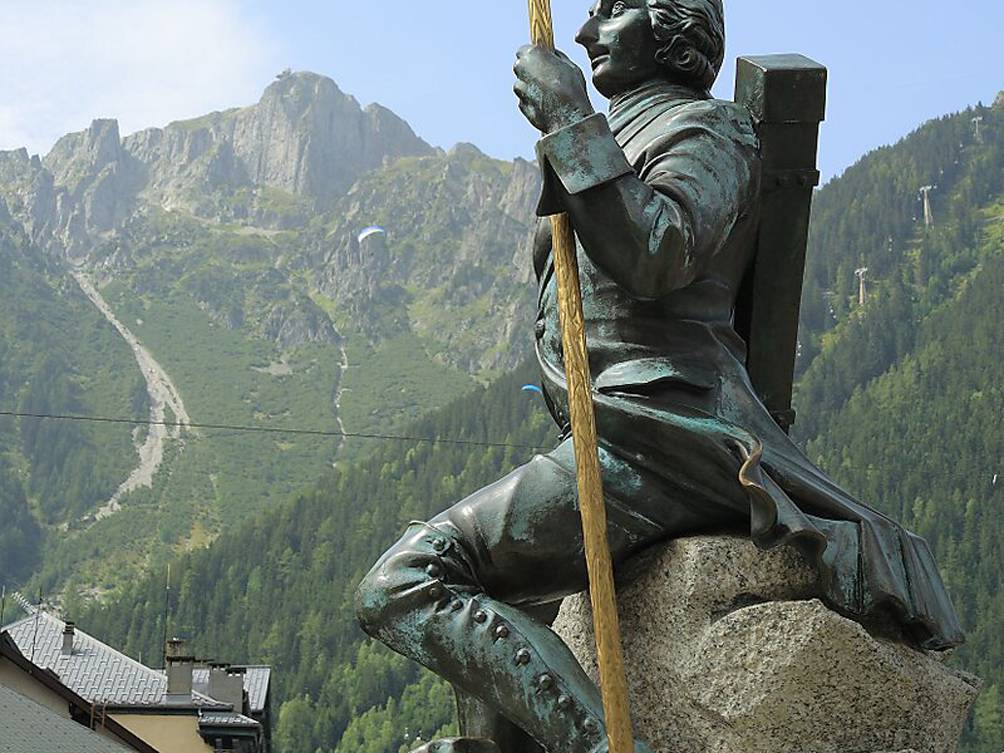
In summary, it can be said that different studies of sleep at altitude have come to very different conclusions and that sleep at altitude is probably also of very different quality depending on the individual. Environmental factors play a role that should not be underestimated in either field measurements or at simulated normobaric and hypobaric altitudes. The timing of the measurement—before, during, or after acclimatization—also plays an important role. These contradictions will not be resolved in the future unless an extremely costly long-term study is conducted over a period of years with the same cohort of test subjects in the same setting, with sufficient breaks between measurements, with different acclimatization times, and with different environmental influences. The question arises as to whether this effort is worthwhile or whether we should simply follow our colleagues Paccard and Alexander Humboldt and say that we usually sleep better in our own beds at home in the valley.
Comments (0)