
Remember me

In total, 1,060,000 results were returned by Google; however, after screening the first 180 pages, the results were no longer connected to sleep coaching for children. Therefore, we chose the first 180 pages for further analysis. In a further step, we identified 180 websites based on the criteria mentioned above. Each of the authors reviewed about 30 pages. After looking at the results, 27 were removed as they were about sleep-furniture stores, platforms regarding life recommendations, or book pages, thus resulting in a total of 153 coaching websites.
All of the sleep coaches were female (100%).
Educational backgroundOf the sleep coaches, 32.8% had a medical or health-oriented background (for details see Table 1), such as midwives, who represented 5.9% of the sleep coaches. The majority (72.5%) did not have such a background. In detail, 35.9% did not report their education and 13.1% had no previous health care or pedagogical education.
Table 1 Educational background of the pediatric sleep coaches and exemplary professionsTable 2 Costs for sleep consultingTaking a closer look at the health-related background, we found that five psychologists and two pediatricians claimed to also be pediatric sleep coaches (together 4.6%).
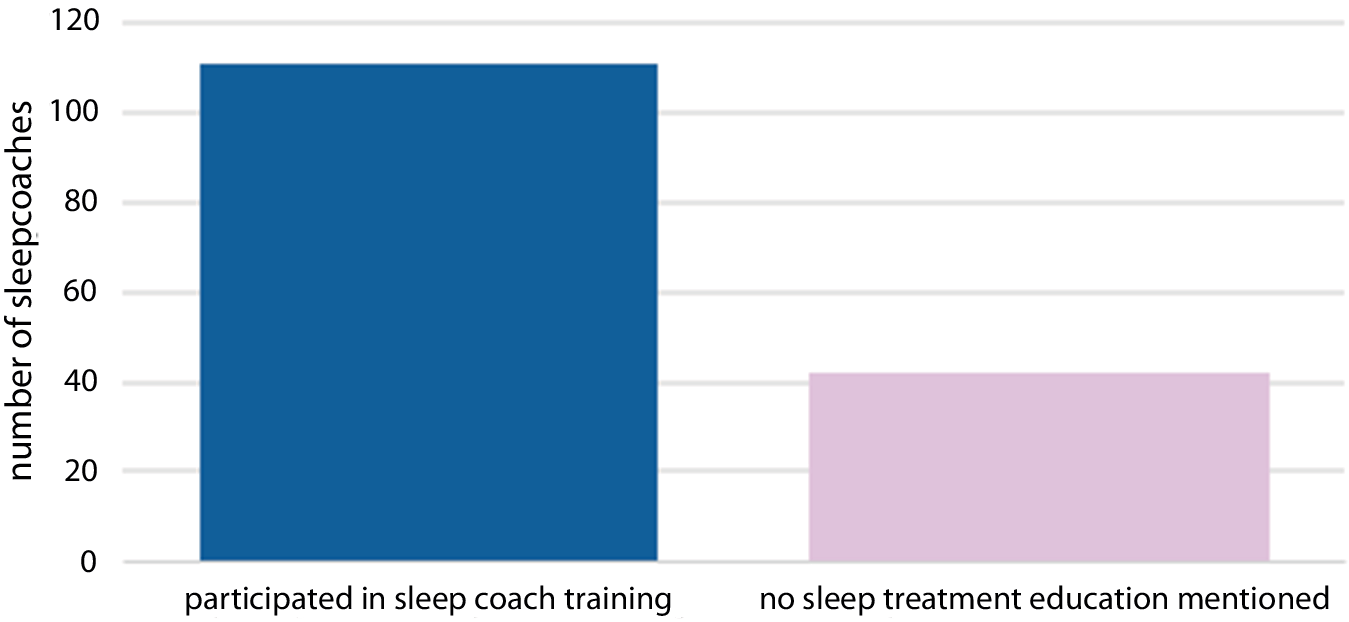
Sleep-related education of coaches and certificatesConcerning sleep-related training, 72.5% (n = 111) of the pediatric sleep coaches reported having participated in a sleep coach training, whereas 27.5% did not mention any form of sleep-treatment education (Fig. 1).
Fig. 1 The alternative text for this image may have been generated using AI.
Sleep-specialized education as a sleep coach
Looking at the certification, we found that 50 (32.7%) of the 153 pediatric sleep coaches claimed to have some kind of sleep coach certification. However, in 9.8% of these cases, the origin of the certificate was not stated, and 97 (63.4%) mentioned no certificate (Fig. 2). Only two coaches were certified by the University of Vienna.
Taking a closer look at these two subgroups, we found that 79 (71.2%) of the persons, that completed a sleep coach training (n = 111), had no medical or health-oriented background, whereas only 32 persons (28.8%) who absolved a sleep coach training had a medical or health-oriented background (Fig. 3). However, these differences were not significant (χ2 = 8.35, df = 1, p = 0.33).
Fig. 2 The alternative text for this image may have been generated using AI.
Certification of sleep coaches in absolute numbers
Fig. 3 The alternative text for this image may have been generated using AI.
Sleep coach training and educational background
Train the trainerFive (3.27%) of the pediatric sleep coaches also offered to educate other persons as sleep coaches.
Addressed sleep problemsNone of the pediatric sleep coaches named specific sleep disorders or subtypes of disorders that they treat. Nearly all described or paraphrased problems using terms such as “problems falling asleep” or “waking up during the night” or “crying in bed.” Further sleep-related problems or disorders like nightmares, sleep-related rhythmic movement disorder (RMD), and obstructive sleep apnea (OSA) were most often not described. Sleep problems as a symptom of other problems such as dysregulation, anxiety disorder, or other disorders were only mentioned by 5.88% of the pediatric sleep coaches.
Screening, diagnosis, and treatment of specific sleep disordersSleep logs were the only screening tool referred to on the websites.
Neither differential diagnosis of sleep disorders as a special competence nor any further diagnostic procedures besides sleep logs were mentioned. Moreover, information on healthy sleep was not addressed on the pages.
Target age groupsMost of the pediatric sleep coaches focus on babies and children. In detail, 149 of the screened pages named babies, 53 children, and only one adolescents as the target populations (Fig. 4).
Fig. 4 The alternative text for this image may have been generated using AI.
Typical age groups for sleep coaching
Services offeredAs shown in Fig. 5, most of the coaches offered single sessions (n = 144; 94.1%), and 17% (n = 26) also provided group sessions. Additionally, 28.1% offered their services in digital form, online or by telephone. Some of the coaches also provided lectures (n = 14; 9.2%), seminars (n = 12; 7.8%), or workshops (n = 34; 22.2%). Four did not provide any information about the outline of their sessions.
Fig. 5 The alternative text for this image may have been generated using AI.
Services offered by the sleep coaches
CostsThe average price of in-person consultations per hour was 84.09 € (SD = 32.81; median = 75), the online average was 84.90 € (SD = 33.7; median = 85; Table 2). The price of packages, which differed considerably in terms of the services provided and duration, varied from 5 to 2900 €.
Further external presentation, e.g., social media presenceOverall, 54.9% of the coaches were active on social media platforms such as Instagram (22.9%) and Facebook (17.7%) or on blogs (22.9%; Figs. 6 and 7).
Fig. 6 The alternative text for this image may have been generated using AI.
Media presence of sleep coaches in percent
Fig. 7 The alternative text for this image may have been generated using AI.
Social media presence in percent
Comments (0)