
Remember me
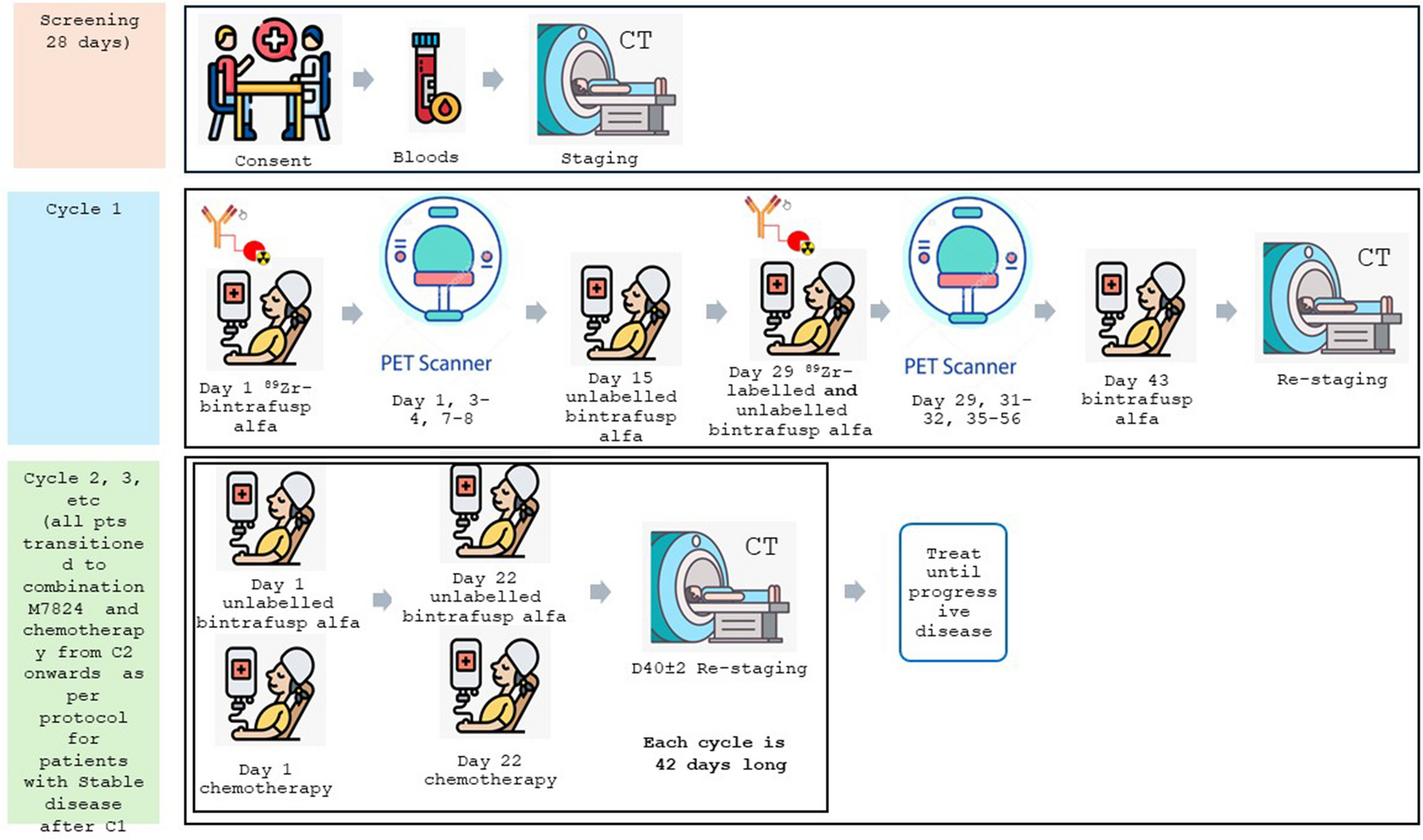
Two groups of non-human primates (NHPs) from the Biomedical Primate Research Centre (BPRC) breeding colony were used in this study: one group (n = 4) for dynamic PET imaging with [18F]DPA-814 and another group (n = 4) for comparing [18F]DPA-814 to [18F]DPA-714 for whole body inflammation imaging following SARS-CoV-2 infection. These animals were part of a broader study on the immunological and pathological effects of SARS-CoV-2.
For dynamic PET imaging with [18F]DPA-814, two healthy naïve female rhesus macaques (Macaca mulatta; aged 17 and 20 year and weighing 7.5 and 9.8 kg) and two healthy naïve female cynomolgus macaques (Macaca fascicularis; aged 15 and 17 year and weighing 4.4 and 5.5 kg) were selected. For the comparison of [18F]DPA-814 with [18F]DPA-714 in SARS-CoV-2 infected animals, four healthy female rhesus macaques, aged 8–10 year and weighing 9.4–11.1 kg, were selected.
Prior to inclusion, all animals were confirmed healthy, based on physical examination by a veterinarian and evaluations of haematology and serum chemistry. They were socially housed in pairs and provided with a daily diet of commercial monkey pellets (Ssniff, Soest, Germany), supplemented with vegetables and fruit. Homemade and commercially available enrichment products were provided daily. Drinking water was available ad libitum through an automatic watering system. Animals were monitored at least twice daily for appetite, general behaviour and stool consistency. Animals designated for SARS-CoV-2 infection were transferred to a Biosafety Level 3 facility five weeks prior to infection for acclimatization. After infection, special attention was paid to clinical symptoms related to an airway infection such as sneezing, coughing, dyspnea, and breathing frequency. All necessary precautions were taken to ensure the animals’ welfare and minimize any discomfort.
All experimental procedures, including intratracheal and intranasal infection, nasal and tracheal swab collections, PET-CTs, and dynamic PET imaging were conducted under sedation (Fig. 1). Animals were sedated via intramuscular injections of ketamine (10 mg/kg ketamine hydrochloride; Alfasan Nederland BV, Woerden, Netherlands) combined with medetomidine (0.05 mg/kg medetomidine hydrochloride; Sedastart; AST Farma B.V., Oudewater, Netherlands). After the procedures, upon the macaques’ return to their home cage, atipamezole (0.25 mg/kg atipamezole hydrochloride; Sedastop, ASTFarma B.V., Oudewater, Netherlands) was administrated intramuscularly to antagonize medetomidine.
Fig. 1 The alternative text for this image may have been generated using AI.
Study design. The study comprised two groups. The first group included two rhesus macaques and two cynomolgus macaques, which underwent 90-min dynamic PET imaging with [18F]DPA-814 (red radiotracer) following tracer injection. The second group included four rhesus macaques, which underwent multiple experimental procedures: [18F]DPA-814 PET-CT, [18F]DPA-714 PET-CT (purple radiotracer), nasal and tracheal swab collection (blue droplet), SARS-CoV-2 infection (virus), and whole-body tissue collection (grey rhesus macaque)
All procedures, husbandry, and housing were performed in accordance with Dutch law and international ethical and scientific standards and guidelines (EU Directive 63/2010). The study involving SARS-CoV-2-infected animals was conducted as part of a larger study under project license AVD5020020209404 authorized by the national competent authorities under Dutch law, with additional approval from the institutional animal welfare body. BPRC is accredited by the American Association for Accreditation of Laboratory Animal Care (AAALAC) International.
Virus Infection and DetectionFour rhesus macaques were infected with the SARS-CoV-2 strain UVE/SARS-CoV-2/2023/FR/GGR (Omicron variant, lineage EG.5.1.1, European Virus Archive) as part of a broader study. They were inoculated with a dose of 1 × 10⁵ TCID50 diluted in 5 ml PBS, administrated via combined intratracheal, just below the vocal cords, (4.5 ml) and intranasal (0.25 ml in each nostril) route. The detection of SARS-CoV-2 RNA in the swabs was conducted as previously described [17].
PET-CTRadiosynthesis of [18F]DPA-714Radiosynthesis of [18F]DPA-714 was performed using previously described procedures [4]. [18F]DPA-714 was synthesized with a molar activity of 207 ± 28.6 GBq/μmol (mean ± SD), a radioactivity concentration of 233 ± 41.8 MBq/mL (mean ± SD), and a radiochemical purity of at least 98%.
Radiosynthesis of [18F]DPA-814Radiosynthesis of [18F]DPA-814 was performed using previously described procedures [2]. [18F]DPA-814 was synthesized with a molar activity of 87 ± 29.8 GBq/μmol (mean ± SD), a radioactivity concentration of 205.6 ± 45.7 MBq/mL (mean ± SD), and a radiochemical purity above 95%.
Scan AcquisitionsAnimals were fasted overnight before PET-CTs, in accordance with standard procedures [7, 8, 21, 22]. PET-CTs were obtained pre-infection to obtain a baseline value. PET-CTs were obtained using a MultiScan Large Field of View Extreme Resolution Research Imager (LFER) 150 PET-CT (Mediso Medical Imaging Systems Ltd., Budapest, Hungary) as described before [23]. Animals were positioned head-first supine with the arms up.
Static PET-CT ImagingFollowing a scout-view, an intravenous bolus (1–2 ml) of 103 ± 27.3 MBq (mean ± SD) [18F]DPA-714 or 179 ± 27.2 MBq (mean ± SD) [18F]DPA-814 was administered. Three PET images of 10 min, each covering a single field of view (FOV) of the head, thorax and abdominal area, were obtained 10 min after injection, starting with the abdominal area, followed by the head and thorax region. Additionally, a CT of the three FOVs was acquired to use for anatomical information and attenuation correction. The main scan parameters applied for the CTs used in this manuscript were 80 kV, 720 μA and an exposure time of 0.09 s.
Dynamic PET ImagingA CT scan was acquired just before tracer administration for attenuation correction. Each animal received an intravenous bolus (1–2 ml) of 128.3 ± 19.7 MBq (mean ± SD) [18F]DPA-814. A dynamic PET study was conducted for 90 min immediately following tracer administration, covering a single FOV of the head. The scans were acquired and rebinned into the following frame sequences: 10 s for first 3 min, 2 min for first 30 min, and 5 min for entire 90 min.
PET-CT ReconstructionCT covering the thorax area was retrospectively gated in the expiration phase and afterwards reconstructed following a filtered back projection protocol with a RamLak filter and an isotropic voxel size of 321 μm [24]. The CTs covering the head and abdominal area were reconstructedμ following the same filtered back projection, RamLak filter and isotropic voxel size of 321μm. The emission data were iteratively reconstructed (OSEM3D, 8 iterations and 9 subsets with an isotropic voxel size of 0.8 mm) into a single frame PET image normalized and corrected for attenuation, scatter, and random coincidences using the CT, and corrected for radioactive decay.
PET-CT AnalysisPET-CT analysis was performed with VivoQuant 4.5 (Invicro, Boston, USA). Volumes of interest (VOIs) were manually delineated for representative areas of the liver and spleen with a size of at least 70 cm3 for the liver and 2.6 cm3 for the spleen. Whole brain VOIs were generated using an existing macaque brain template and adjusted for each animal based on individual size and shape. The necessary adjustments were based on both the PET and CT data. Lungs were defined via an automatic contouring tool on the thorax CT using a density range of −1000 to −400 Hounsfield units (HU), and lung lesions were identified using a density range of −400 to 1000 HU. Tracer uptake in the VOIs were quantified by the mean and peak standardized uptake values (SUVs).
Necropsy and Tissue SamplingThe SARS-CoV-2-infected animals were sacrificed at 12 months post-infection to evaluate long-term pathological and immunological effects of infection as part of a broader study. Animals were anesthetized intravenously with a combination of ketamine (10 mg/kg) and medetomidine (0.5 mg/kg) and subsequently euthanized intravenously with Euthasol® (pentobarbital sodium and phenytoin sodium) (60 mg/kg). Necropsies were conducted following a standard protocol.
The brains were separated into two hemispheres as previously described for subsequent analyses, including immunofluorescent staining [7, 25]. The right hemisphere was fixed in 10% neutral buffered formalin for 72 h, then transferred to 0.1% PFA in PBS. The cerebrum, cerebellum and pons were subsequently dissected into 0.5 cm thick coronal parts anatomically dissected, processed and afterwards embedded in paraffin blocks. Multiple consecutive 5 μm sections were cut using a microtome (HistoCore MULTICUT R, Leica) for immunofluorescent staining.
ImmunofluorescenceImmunofluorescent staining for TSPO was performed on brain tissue sections of the pituitary gland, frontal cortex, and striatum. Sections were deparaffinized, rehydrated and subsequently quenched with 0.1% w/v glycine in PBS. For antigen retrieval, slides were incubated in citrate buffer (pH = 6.0) for 30 min at 98 °C. After cooling down and washing with PBS, slides were incubated in 3% v/v donkey serum (VWR) in PBS for 30 min at room temperature. Subsequently, slides were incubated overnight at 4 °C with the primary antibody rabbit-anti-TSPO (1:1000, Abcam, ab109497) diluted in universal antibody dilution buffer (U3510, Sigma-Aldrich). The slides were then washed with 0.05% v/v Tween-20 (Sigma-Aldrich) in PBS and incubated with the secondary antibody donkey-anti-rabbit (Alexa Fluor 594, IgG, Jackson ImmunoResearch, 711–585-152) diluted in universal antibody dilution buffer for 2 h at room temperature. After washing with 0.05% v/v Tween-20 (Sigma-Aldrich) in PBS, slides were incubated with Hoechst (1:2500) in PBS for 10 min at room temperature. Slides were washed with PBS and mounted with fluoromount G (SouthernBiotech; 0100–01). Fluorescent images were acquired using a whole slide scanner microscope (Olympus VS200). ZEN Microscopy software (Zeiss) was used for picture analyses.
Comments (0)