3.1 Vignette Development3.1.1 Development of Draft Vignettes
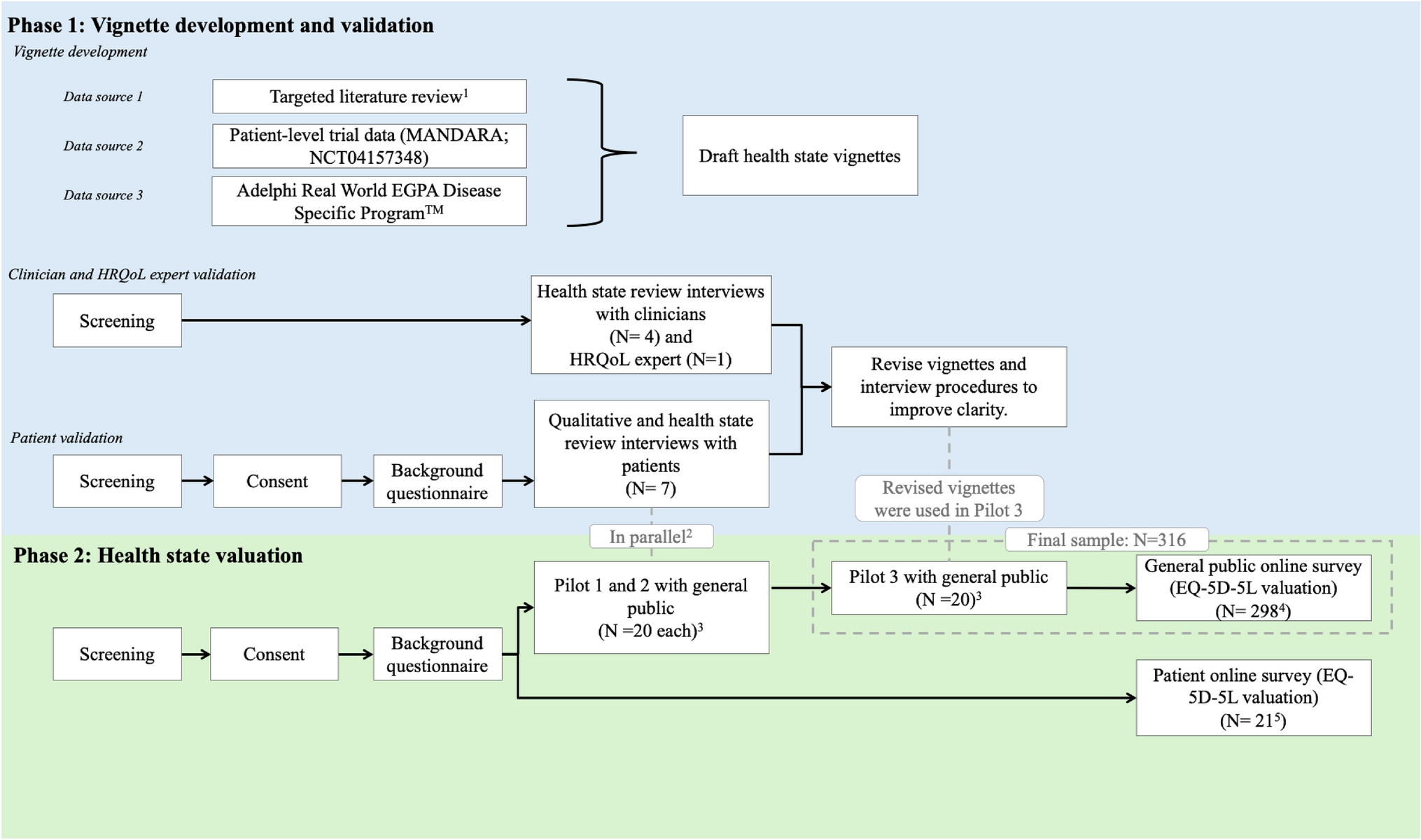
Four relevant published studies describing the HRQoL burden in EGPA [7, 26,27,28] were reviewed, in addition to unpublished information from patient advisory board meetings, patient stories published by relevant patient groups, and a qualitative interview study conducted within the context of the MANDARA trial [7, 9, 29, 30]. This evidence review highlighted the significant symptomatic and HRQoL burden associated with EGPA. Key issues included asthma symptoms (e.g., shortness of breath, wheezing, cough) [7, 27,28,29], sinonasal symptoms (e.g., blocked or runny nose) [7, 27], fatigue [7, 27,28,29,30], and sleeping difficulties [7, 28]. Less frequent symptoms included skin manifestations (e.g., rash, thinning of the skin, bruising) [7, 28]; digestive issues, including weight/appetite loss, constipation/diarrhoea, and nausea/vomiting [7, 28]; and pain due to muscle/joint aches and sinus issues [7, 28, 29]. Functional impairments, such as difficulty with mobility and physical activity [7, 28], were described, as well as emotional impacts including depression, anxiety, and frustration [7, 26,27,28]. There was very little evidence regarding differences in symptoms or HRQoL between the health states from the literature review. Difficulties with mobility and physical activity due to shortness of breath were described in one study to be at their peak during relapses [7].
Data from the MANDARA trial and Adelphi real-world data supported these findings [13, 21, 22]. Data from the SNOT-22, ACQ-6, and SF-36 from MANDARA highlighted the most prominent symptoms (i.e., respiratory and nasal symptoms, fatigue, pain) and impact of EGPA (e.g., sleep, depressive symptoms, limitations to mobility and usual activities such as work), and provided additional information on the severity (e.g., impacts on ability to walk more than 1 mile) and context of the symptoms and impact (e.g., pain due to headaches and numbness in extremities). These data suggested that patients’ symptoms were highly variable, likely due to the range of organs involved in EGPA, leading to different experiences among patients. The study vignettes were designed to capture the range of patient experience in each health state.
Item and response language from the PRO items presented in Table 2 were reflected in the draft vignettes to ensure content validity, with minor adjustments to capture the overall perspective of a concept, and for comprehension and consistency. For example, Item 3J from the SF-36 was used to help develop content regarding problems with self-care activities such as washing or dressing yourself. Where response patterns varied, the vignettes aimed to represent average or typical responses, by identifying the modal response for each PRO item per health state (Table 2). This informed the severity and/or frequency of each symptom and impact in the draft vignettes. For example, for items relating to feeling nervous, downhearted and depressed, the modal responses for patients in remission were “a little of the time” and “none of the time”. To reflect this modal response in the draft vignette for remission, the following text was included: “You experience mild problems with feeling depressed and anxious a little of the time”. Additional HRQoL aspects, such as digestive and skin issues not captured by PROs, were also included to provide a holistic view. The language of these additional aspects was aligned with language from the PROs. These draft vignettes served as a foundation for further refinement through expert and patient feedback to ensure they accurately represented the EGPA experience across health states.
Table 2 Most frequent (or modal) response to PRO items from the SF-36, SNOT-22, and ACQ-6 for patients classified into three sub-groups3.2 Vignette Validation3.2.1 Clinician/HRQoL Expert Interview Results
Clinicians highlighted the variability in patients’ experience of EGPA, driven by factors such as organ involvement, comorbidities, and symptom severity. The vignettes were refined to capture this variability; for example, remission was characterised by mild symptoms, whereas relapse and refractory states featured more severe symptoms (e.g., nasal and respiratory problems, pain, fatigue) as well as greater impacts on mobility and psychological health. Clinicians described how long-term side effects due to corticosteroid exposure were experienced in many states. To address feedback, differences in symptom severity across health states were emphasised, and unnecessary or overly technical text was removed to improve clarity for a lay audience.
Clinicians and the HRQoL expert provided further contextual information to add to the vignettes, including text to describe the nature of each health state and treatments, to clarify symptoms and impacts, such as explaining how tingling can affect the entire limbs or how facial pressure arises from blocked sinuses. Less relevant symptoms (e.g., sneezing, loss of appetite) were removed, and additional terms like ‘flare-up’ were used to describe relapse. The revised vignettes, incorporating this feedback, were used in subsequent patient validation interviews, with a tabular summary of changes provided in Online Resource 2 (see ESM).
3.2.2 Patient Interview Results to Explore Content Validity
Seven patients with EGPA (mean age 61 years, 71% female) were interviewed. All patients reported their disease as being under control, with two in clinical remission. All patients had experience of taking both OCS and IS to manage their EGPA. Three patients (43%) had previously been hospitalised due to EGPA. More in-depth socio-demographic and clinical characteristics are provided in Online Resource 3 (see ESM).
Patients highlighted the dynamic nature of the disease. The word "currently" was therefore added to the description of each state to reflect this variability. While agreeing that remission was the least severe and refractory the most severe state, patients emphasised that symptoms varied widely among individuals. To capture this, ‘and’ was replaced with ‘or’ when listing multiple symptoms. Statements about digestive symptoms were removed, as none of the patients had experienced these, while a general statement about weight changes was added to capture weight gain and loss. Feedback also led to revisions clarifying symptom locations (e.g., numbness or tingling) and adjusting overstated impacts, such as changes in taste or smell, ensuring greater accuracy in the vignettes. The summaries of these revisions and final health state vignettes are provided in Online Resources 2 and 4 respectively (see ESM).
3.3 Vignette Valuation3.3.1 Pilot Data
In phase 2, three pilot studies were conducted with 20 participants each from the UK general public (total N = 60) to ensure the clarity, validity, and reliability of the vignettes and utility measurement process. The first pilot showed that, while participants reported no difficulties with task comprehension, utility scores for the refractory state were very low (just above 0). This prompted revisions to the vignettes to clarify that not all symptoms and impacts occur simultaneously (see Online Resource 2 in the ESM). To test the impact of these changes and further assess consistency, two subsequent pilots were conducted, both of which also resulted in equally low value scores for the refractory state. The consistent findings across all three pilot studies provided reassurance regarding the refractory state vignette’s face validity. As no further changes were required after the third pilot, its data were pooled with those from the main study sample for the final analysis.
3.3.2 Study Participation
As part of phase 2, the main study recruited 339 participants, comprising 318 members of the public and 21 patients diagnosed with EGPA. Two participants from the public sample were excluded for failing the survey attention checks, and one from the patient sample was excluded based on researcher feedback that they were not paying attention to the task, resulting in final sample sizes of 316 and 20, respectively.
3.3.3 Socio-Demographic and Clinical Characteristics
The public sample (N = 316) closely matched UK census data for sex, ethnicity, and geographic distribution (Table 3). The patient sample (N = 20) was older (mean age: 59.0 years), White (100%), and reported a wide range of EGPA-related symptoms and comorbidities, including asthma (80%), neuropathy (60%), and pain (35%) (Table 4). Participants’ rating of their current health was represented as average EQ-5D VAS values of 76.2 for the public sample, and 65.3 for the EGPA patient sample.
Table 3 Socio-demographic characteristics of the public sample (N = 316)Table 4 Socio-demographic and clinical characteristics of the EGPA patient sample (N = 20)3.3.4 VAS Scores and EQ-5D Weights for Vignettes
The patient and public sample ranking of vignettes is presented in Table 5. VAS ratings ranged from 31.0 (patients) and 33.1 (public) for refractory to 67.2 (patients) and 56.7 (public) for remission. EQ-5D utility valuations ranged from 0.059 (patients) and 0.151 (public) for refractory, to 0.690 (patients) and 0.675 (public) for remission. The refractory state consistently received the lowest VAS and utility scores, reflecting its severe symptom burden and associated impacts. The highest scores were for remission, followed by the non-refractory state.
Table 5 VAS and EQ-5D weights for the EGPA health state vignettes from the public (N = 316) and patient samples (N = 20)Plots representing the range of EQ-5D-5L scores and their distribution can be found in Online Resource 5 for the patient sample and the public sample (see ESM). For both the patient and public samples, a wider variation in utility scores was observed for the refractory state compared with other health states (Online Resource 5). Compared with the patient sample, the distribution of utility scores for the public across all health states was larger (Online Resource 5).

Comments (0)