Survival in Brazilian Patients with Friedreich´s Ataxia
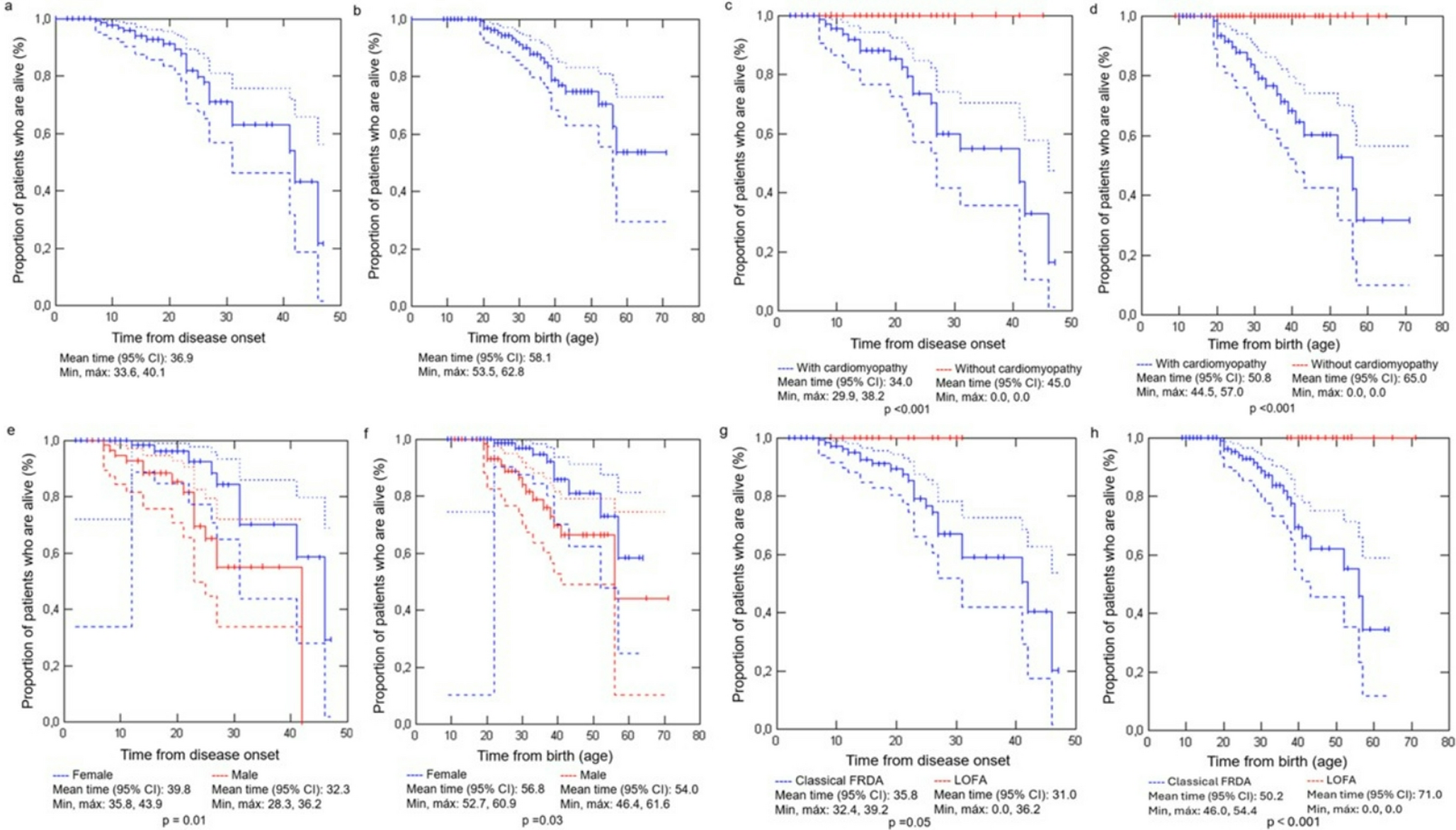
Friedreich’s Ataxia (FRDA) is a progressive condition leading to reduced life expectancy in European/North American cohorts, but little is known about Latin American cohorts. Herein, we assessed FRDA survival data from a large Brazilian reference center (UNICAMP). We conducted a retrospective study including patients with FRDA followed at UNICAMP between 1998 and 2025. For those patients who died, we recorded age at death. For those alive or lost to follow-up, we considered the age at last visit. Potential prognostic markers (sex, age at onset, presence of cardiomyopathy and diabetes) were explored. Statistics was carried out using Kaplan-Meier curves and log-rank tests. We gathered information on 151 patients, 24 of which died (15.9%), 125 were still alive (82.7%) and 2 were lost to follow-up (1.3%). For those who died, the mean age at death was 33 ± 10.7 years. The cause of death was known for 12 out of the 24 patients: cardiac in 7, pulmonary in 3, diabetic ketoacidosis in 1 and sepsis in 1. Shorter life expectancy was found: in men relative to women (Mean age: 54.0 yo vs. 56.8 yo, p = 0.03), in patients with classical relative to late-onset (Mean age: 52.2 yo vs. 71.0 yo, p < 0.01) and in patients with cardiomyopathy relative to those without it (Mean age: 50.8 yo vs. 65.0 yo, p < 0.01). FRDA impacts life expectancy and death is primarily from cardiac and pulmonary causes. Male sex, early onset and presence of cardiomyopathy are negative survival prognostic markers.

Comments (0)