Comparison of the value of VBQ scores for assessing abnormal bone mass based on DXA and QCT
Purpose
This study aimed to investigate the correlation between vertebral bone quality (VBQ) scores and bone mineral density (BMD) based on dual-energy X-ray absorptiometry (DXA) and quantitative computed tomography (QCT). The diagnostic efficacy of VBQ scores for predicting abnormal bone mass were compared.
Methods
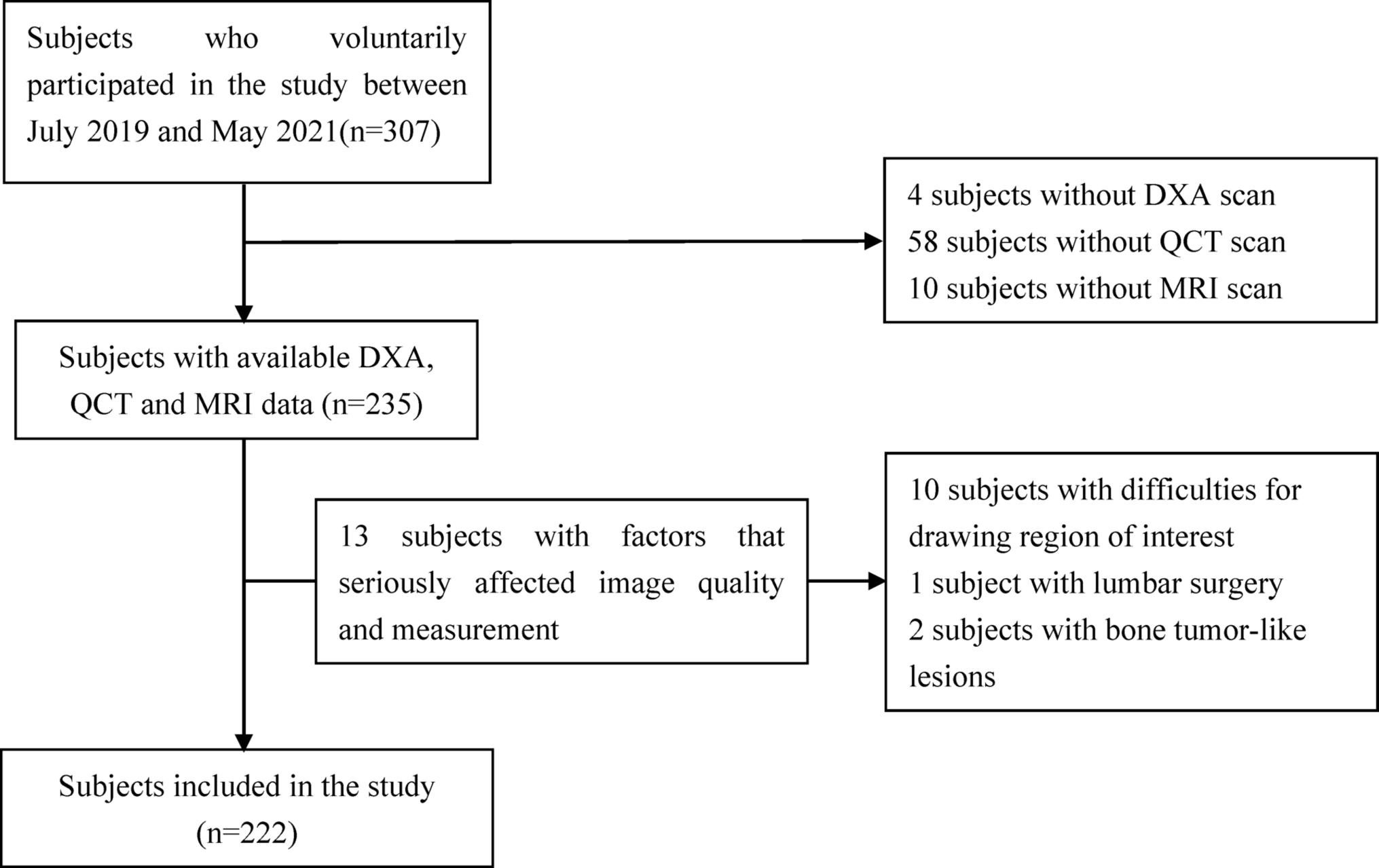
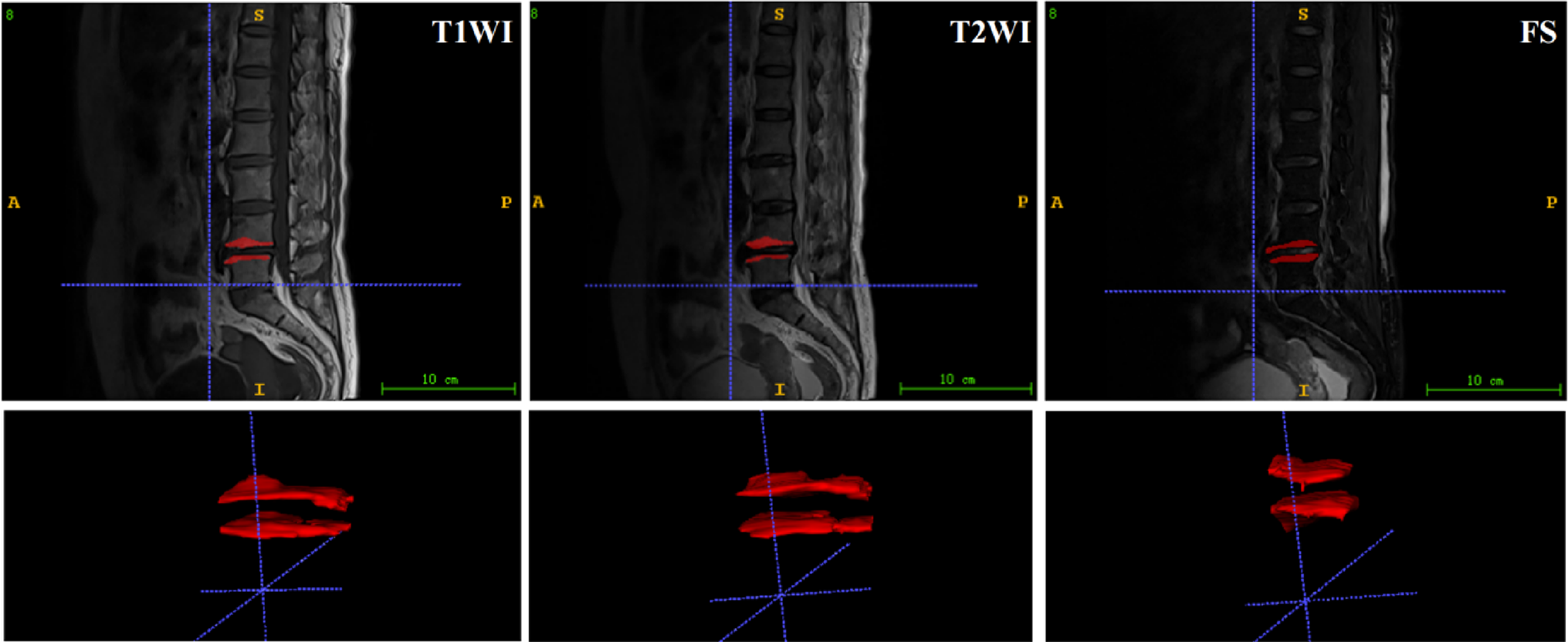
Totally 222 volunteers participated in this prospective study. All subjects were divided into normal, osteopenia and osteoporosis (OP) according to DXA and QCT standards, respectively. T1-weighted non-contrast MRI was performed to calculate VBQ scores. The differences in VBQ scores among three groups were analyzed. The receiver-operating characteristic (ROC) curves were performed to determine diagnostic efficiency of VBQ scores in predicting low bone mass (LBM) and OP.
Results
Whether DXA or QCT was chosen as the gold standard, there were significant differences in VBQ scores among three groups (all P ≤ 0.001), The predictive powers of VBQ scores for LBM and OP based on QCT were higher than that based on DXA. The diagnostic efficacy of single-level VBQ scores for abnormal bone mass was comparable to that of the overall VBQ score. Especially, the VBQL1 score demonstrated the best diagnostic performance.
Conclusion
VBQ score is a relatively effective screening tool for LBM and OP. The powers of VBQ scores in predicting LBM and OP based on QCT standard were higher than that based on DXA. VBQL1 score may be an ideal imaging marker for predicting LBM and OP.

Comments (0)