Strain Gauge Analysis of Three Different Sagittal Split Ramus Osteotomy Modifications
Introduction
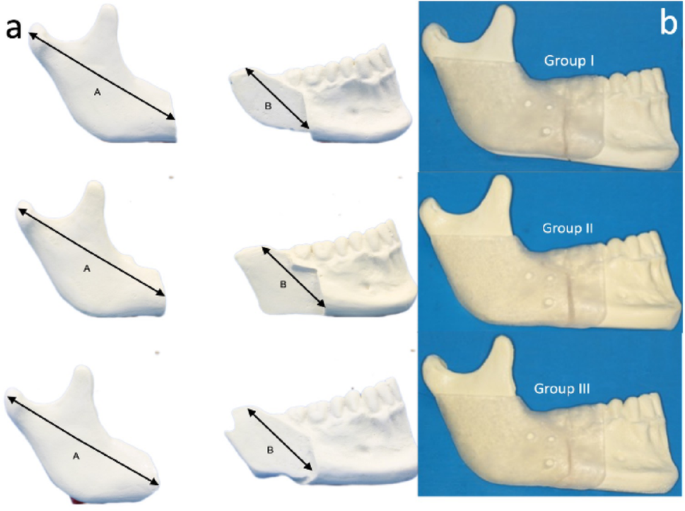
This study aims to analyze the deformation of screws under vertical load across three different sagittal split osteotomy designs proposed by Epker, Wolford, and Wyatt.
Materials and Methods
Thirty polyurethane hemimandibles were separated into three groups (n = 10) according to osteotomy design. All specimens received standardized fixation with three positional titanium screws in an inverted L configuration. Strain gauges were bonded to each screw head to record deformation during vertical loading (1 mm/min) until failure. Peak load and deformation were measured. Data were analyzed using the Kruskal–Wallis test (α = 0.05).
Results
The Wolford design (Group II) had the highest mean load and most even stress distribution, indicating better stability. The Epker design (Group I) showed stress at screw 1, while the Wyatt design (Group III) had lower load resistance, more variability, early failure, and stress at screw 3. Screw 2 was most stable across all groups with the lowest deformation.
Conclusion
SSRO design affects force distribution. Techniques maintaining proximal segment thickness (Groups I and II) improve load dissipation. Group III modification shows less stability with inverted-L fixation. Strain-gauge analysis reveals stress patterns, with screw 2 as a key mechanical zone. Surgical planning should consider osteotomy design and anatomy to enhance fixation stability and minimize failure risk.

Comments (0)