T cell-derived extracellular vesicles promote antitumour immunity through horizontal gene transfer
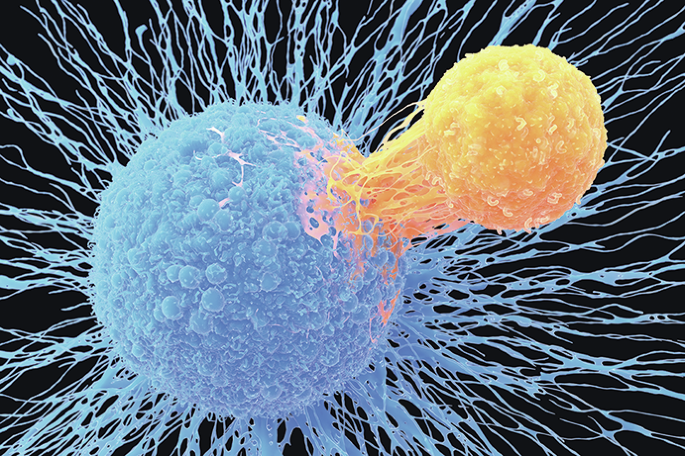
The poor immunogenicity of many tumours results in part from their downregulation of the antigen processing and presentation (APP) machinery, including MHC molecules, in both tumour cells and tumour-associated dendritic cells (DCs). Extracellular vesicles (EVs) — membrane-bound nanoparticles released by living cells that contain protein, lipids and nucleic acids — have been shown to facilitate intercellular communication in a range of settings. Hu et al. now show that EVs derived from activated T cells can restore APP in tumour cells and DCs through DNA transfer, thus overcoming immune evasion.
AT-EVs were shown to contain higher levels of DNA than NT-EVs. Whole-genome sequencing indicated that T cell-derived EVDNA is largely of nuclear origin, and pulse-chase experiments showed that it is derived from newly synthesized DNA with genome-wide coverage. DNA from AT-EVs had increased copy number of APP genes compared with DNA from NT-EVs, including entire gene regions with their respective promoters. DNase pre-treatment abolished AT-EV-driven upregulation of APP genes in DCs in vitro, and impaired subsequent allogeneic T cell proliferation, showing that EVDNA is required for the immunostimulatory effects of T cell-derived EVs.




Comments (0)