Kurtz, S., Mowat, F., Ong, K., Chan, N., Lau, E., & Halpern, M. (2005). Prevalence of primary and revision total hip and knee arthroplasty in the United States from 1990 through 2002. Journal of Bone and Joint Surgery. American Volume, 87(7), 1487–1497.
PubMed
Google Scholar
McHugh, G. A., & Luker, K. A. (2012). Individuals’ expectations and challenges following total hip replacement: A qualitative study. Disability and Rehabilitation, 34(16), 1351–1357.
Article
PubMed
Google Scholar
Vissers, M. M., Bussmann, J. B., Verhaar, J. A., Arends, L. R., Furlan, A. D., & Reijman, M. (2011). Recovery of physical functioning after total hip arthroplasty: Systematic review and meta-analysis of the literature. Physical Therapy, 91(5), 615–629.
Article
PubMed
Google Scholar
Blakeney, W. G., & Kuster, M. (2023). Advances in hip replacement surgery. Journal of Clinical Medicine. https://doi.org/10.3390/jcm12103439
Article
PubMed
PubMed Central
Google Scholar
Cetinkaya Eren, O., Buker, N., Tonak, H. A., & Urguden, M. (2022). The effect of video-assisted discharge education after total hip replacement surgery: A randomized controlled study. Scientific Reports., 12(1), 3067.
Article
CAS
PubMed
PubMed Central
Google Scholar
Jäppinen, A. M., Hämäläinen, H., Kettunen, T., & Piirainen, A. (2017). Postoperative patient education in physiotherapy after hip arthroplasty: patients’ perspective. Musculoskeletal Care, 15(2), 150–157.
Article
PubMed
Google Scholar
Johansson, K., Nuutila, L., Virtanen, H., Katajisto, J., & Salanterä, S. (2005). Preoperative education for orthopaedic patients: Systematic review. Journal of advanced nursing., 50(2), 212–223.
Article
PubMed
Google Scholar
Bastable, S. B. (2016). Essentials of patient education. Jones & Bartlett Learning.
Can, F. (2013). Total kalça artroplastisi, rehabilitasyon. Totbid Dergisi., 12(1), 292–308.
Google Scholar
Brander, V., & Stulberg, S. D. (2006). Rehabilitation after hip- and knee-joint replacement. An experience- and evidence-based approach to care. American Journal of Physical Medicine & Rehabilitation, 85(11 Suppl), 98–118.
Article
Google Scholar
Mlinac, M. E., & Feng, M. C. (2016). Assessment of activities of daily living, self-care, and independence. Archives of Clinical Neuropsychology, 31(6), 506–516.
Article
PubMed
Google Scholar
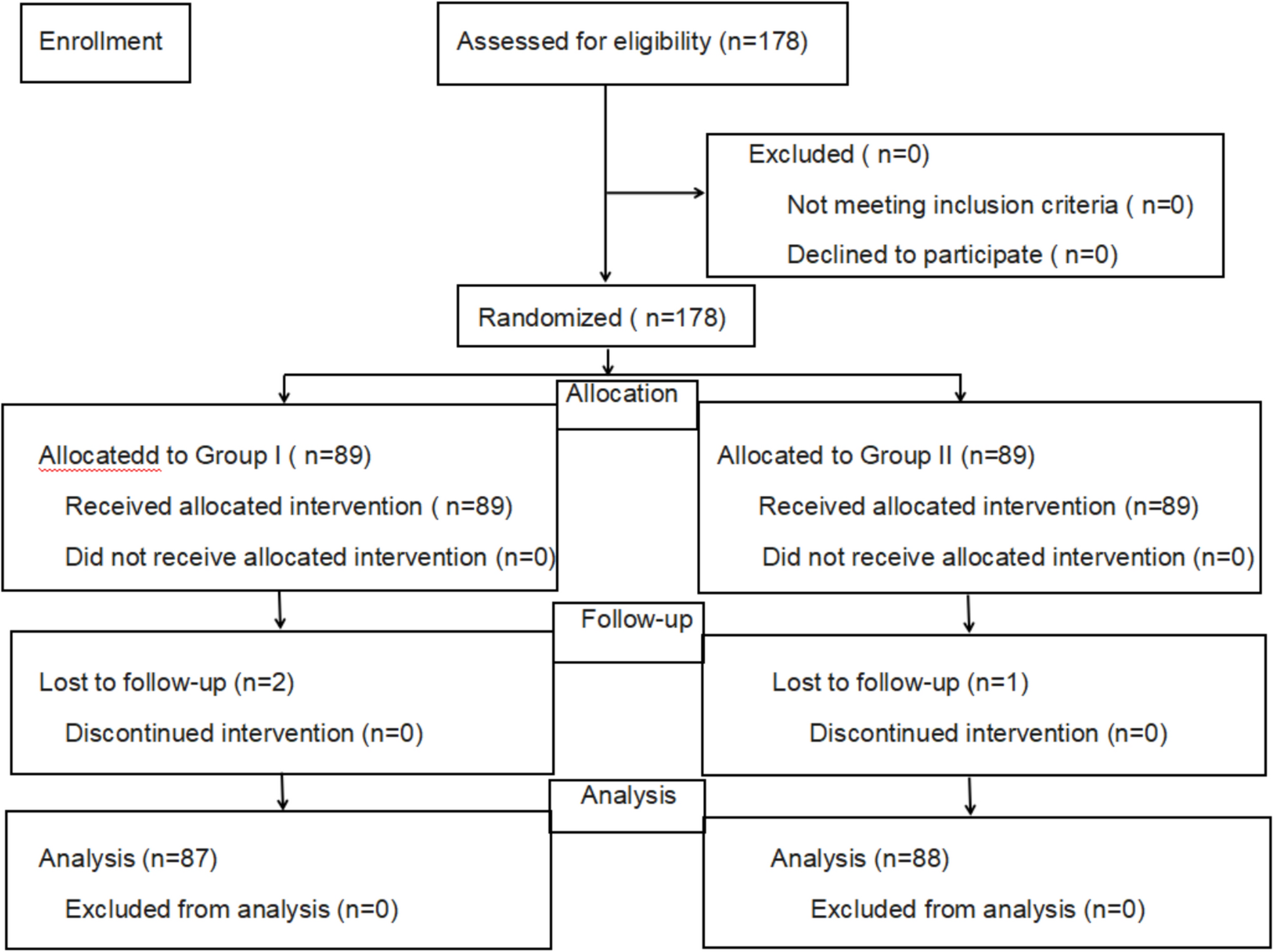
Schulz, K. F., Altman, D. G., & Moher, D. (2010). CONSORT 2010 statement: Updated guidelines for reporting parallel group randomised trials. BMJ, 340, Article c332.
Article
PubMed
PubMed Central
Google Scholar
Huskisson, E. C. (1982). Measurement of pain. Journal of Rheumatology, 9(5), 768–769.
CAS
PubMed
Google Scholar
Tüzün, E. H., Eker, L., Aytar, A., Daşkapan, A., & Bayramoğlu, M. (2005). Acceptability, reliability, validity and responsiveness of the Turkish version of WOMAC osteoarthritis index. Osteoarthritis and Cartilage, 13(1), 28–33.
Article
PubMed
Google Scholar
The WHOQOL Group. (1998). Development of the World Health Organization WHOQOL-BREF quality of life assessment. Psychological Medicine, 28(3), 551–558.
Article
Google Scholar
Lawton, M. P., & Brody, E. M. (1969). Assessment of older people: Self-maintaining and instrumental activities of daily living. The Gerontologist, 9(3), 179–186.
Article
CAS
PubMed
Google Scholar
Hansen, T. B. (2017). Fast track in hip arthroplasty. EFORT Open Reviews, 2(5), 179–188.
Article
PubMed
PubMed Central
Google Scholar
Kinkel, S., Wollmerstedt, N., Kleinhans, J. A., Hendrich, C., & Heisel, C. (2009). Patient activity after total hip arthroplasty declines with advancing age. Clinical Orthopaedics and Related Research, 467(8), 2053–2058.
Article
PubMed
PubMed Central
Google Scholar
Soever, L. J., Mackay, C., Saryeddine, T., Davis, A. M., Flannery, J. F., Jaglal, S. B., et al. (2010). Educational needs of patients undergoing total joint arthroplasty. Physiotherapy Canada, 62(3), 206–214.
Article
PubMed
PubMed Central
Google Scholar
Chang, K. C., Hershfeld, B. E., White, P. B., Cohn, R. M., Mont, M. A., & Bitterman, A. D. (2024). Knee’d to know basis: Informed consent in total hip and knee arthroplasty. The Journal of Arthroplasty, 39(1), 1–5.
Article
CAS
PubMed
Google Scholar
Jäppinen, A. M. P. T., Hämäläinen, H. M., Kettunen, T. P., & Piirainen, A. P. (2020). Patient education in physiotherapy in total hip arthroplasty (THA)—The perspective of physiotherapists. Physiotherapy Theory and Practice, 36(8), 946–955.
Article
PubMed
Google Scholar
Makabe, S., Kume, Y., Akagawa, Y., Wakasa, M., Ito, K., & Kijima, H. (2023). Discharge planning and challenges for patients with Asian lifestyles following total hip arthroplasty: National survey design in Japan. Orthopaedic Nursing, 42(2), 115–122.
Article
PubMed
Google Scholar
Heikkinen, K., Salanterä, S., Suomi, R., Lindblom, A., & Leino-Kilpi, H. (2011). Ambulatory orthopaedic surgery patient education and cost of care. Orthopaedic Nursing, 30(1), 20–28.
Article
PubMed
Google Scholar
Huang, S.-W., Chen, P.-H., & Chou, Y.-H. (2012). Effects of a preoperative simplified home rehabilitation education program on length of stay of total knee arthroplasty patients. Orthopaedics & Traumatology: Surgery & Research, 98(3), 259–264.
Google Scholar
Jan, M. H., Hung, J. Y., Lin, J. C., Wang, S. F., Liu, T. K., & Tang, P. F. (2004). Effects of a home program on strength, walking speed, and function after total hip replacement. Archives of Physical Medicine and Rehabilitation, 85(12), 1943–1951.
Article
PubMed
Google Scholar
von Hertzberg-Boelch, S., Fuchs, K., Schubring, J., Rak, D., List, K., Horas, K., et al. (2025). An informational video for informed consent improves patient comprehension before total hip replacement-a randomized controlled trial. International Orthopaedics, 49(6), 1303–1308.
Article
Google Scholar
Dekkers, T., Melles, M., Groeneveld, B. S., & de Ridder, H. (2018). Web-based patient education in orthopedics: Systematic review. Journal of Medical Internet Research, 20(4), Article e143.
Article
PubMed
PubMed Central
Google Scholar
Yahia, E. A., & Ali, S. R. (2023). Evaluation of nurse-led patients education using telehealth and artificial intelligence on selected outcomes among orthopedic patients with restricted mobility. Assiut Scientific Nursing Journal, 11(37), 14–21.
Google Scholar
Ritter, S., Dannenmaier, J., Jankowiak, S., Kaluscha, R., & Krischak, G. (2017). Total hip and knee arthroplasty-utilization of postoperative rehabilitation. Die Rehabilitation, 57(4), 248–255.
PubMed
Google Scholar

Comments (0)