Study population
We conducted an ambispective study in adult patients (≥ 18 years) who underwent anterior urethroplasty surgery in the University Hospital of Navarra between 2020 and 2023. The study followed the Good Clinical Practice guidelines and the principles of the Declaration of Helsinki. The study protocol was reviewed and approved by the Navarra Research Ethics Committee (CEIm) on July 15th, 2024 (approval code CEIm 2024/49).
Patients included should have at least 2 years of follow-up after urethroplasty surgery. We included only male patients, who underwent open surgeries for anterior urethral strictures -including anastomotic urethroplasties using transecting or non-transecting techniques and augmented urethroplasty using buccal mucosa grafts (BMG) or preputial grafts. Patients with an incomplete follow-up time, who underwent perineal urethrostomy, or had surgeries for posterior urethral stenosis (pelvic fractures or re-do vesico-urethral anastomosis) were excluded.
Follow-up protocol
The follow-up assessments included urine cultures, uroflowmetry, and questionnaires at 3, 6, 12, 24 and 60 months postoperatively. In addition, we performed a urethro-cystoscopy -using a flexible 17 F cystoscope- or a retrograde urethrogram (RUG) at 6, 24 and 60 months to all patients.
The patients were asked to collect a urine culture 1 week before the visit, therefore, the day of the visit the culture was checked. During the same clinical appointment, the patients were asked to complete two questionnaires (self-administered): Spanish validated versions of Urethral Stricture Surgery Patient-Reported Outcome Measure (USS-PROM) [8] and International Index on Erectile Function (IIEF-5) [9]. Uroflowmetry and either RUG or urethro-cystoscopy were performed during the same appointment. The choice between the two tests for assessing anatomical success was offered to the patient.
The USS-PROM questionnaire was scored using 3 values: a first item calculated from the addition of questions 1 to 8 (minimum score 8); a second item “quality of life” (QoL) which ranges from 0 (worst health status imaginable) to 100 (best health status imaginable); and a third item “satisfaction” where 1 means “very satisfied”, 2 is “satisfied”, 3 is “unsatisfied” and 4 is “very unsatisfied” [10]. For erectile function assessment the patient completed the IIEF-5 questionnaire, getting a final score between 5 and 25.
Definition of success
We evaluated urethroplasty success based on four criteria: (1) Anatomical success: passage of a flexible cystoscope 17Ch with no resistance, or lack of any signs of recurrence in the RUG. (2) Functional success: uroflowmetry with a maximum flow rate (Qmax) over 10 ml/s, performed with a voided volume of > 120 mL. (3) Symptoms: no sign of urinary infection in urine culture, or complain about low urinary stream either on self-administered questionnaires or during direct clinical interview with the patient. (4) No need of any further procedure, including placing indwelling urethral or suprapubic catheters, urethral dilatation, internal urethrotomy, or repeated urethroplasty. We added a final overall success percentage, defined by not presenting any of the previous failure criteria.
Published literature applied a broad range of Qmax thresholds to define functional success - using cut-off values of 15 mL/s or 12 mL/s, as recommended by the EAU [5]. However, uroflowmetry results may be influenced by operator variability, benign prostatic obstruction (BPO)/lower urinary tract symptoms (LUTS), bladder dysfunction, and differences in bladder capacity evidence. Furthermore, studies indicated that up to 20% of patients undergoing urethroplasty fail to reach Qmax of 14 mL/s despite having a patent urethra [11]. For these reasons, we adopted a less strict definition of functional success, defining it as a Qmax greater than 10 mL/s.
Data collection
Demographic data (age, diabetes mellitus, arterial hypertension, Chronic Obstructive Pulmonary Disease (COPD), smoking), stricture data (stricture etiology, location in the anterior urethra, and stricture length) and previous surgeries were collected from patient hospital charts. Baseline questionnaires and flowmetry values were obtained and recorded during preoperative workout.
Statistical analysis
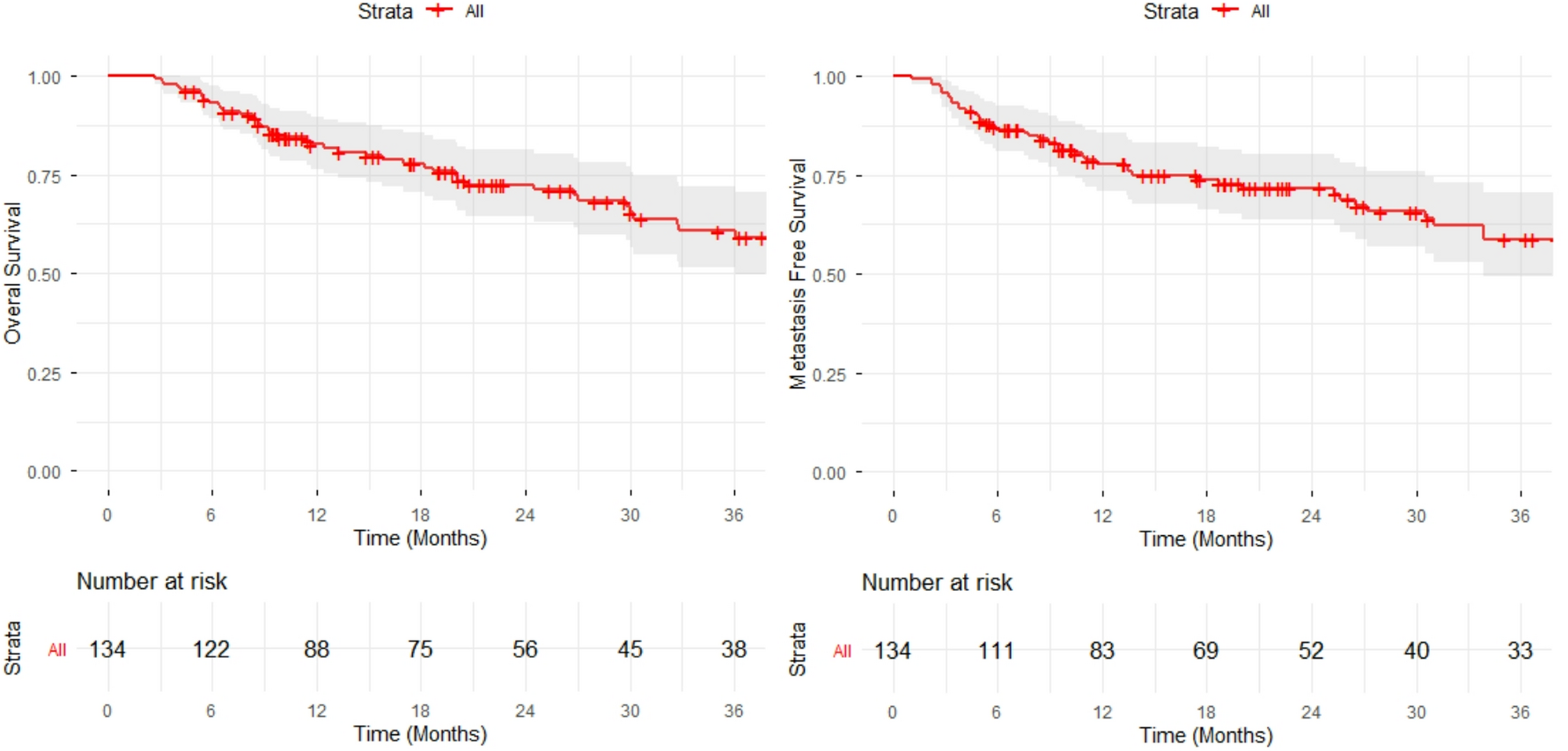
Descriptive analysis was performed for main clinical and surgical variables. Quantitative variables were assessed for normality using Shapiro-Wilk test, and therefore described as mean ± standard deviation (SD), or median and interquartile range (IQR) and qualitative variables as number (percentage). Survival analysis of urethroplasty accumulative incidence of failure was expressed by a Kaplan-Meier curve. Analysis was conducted using STATA 13 software (StataCorp, College Station, TX, USA) for Mac.


Comments (0)