
Remember me
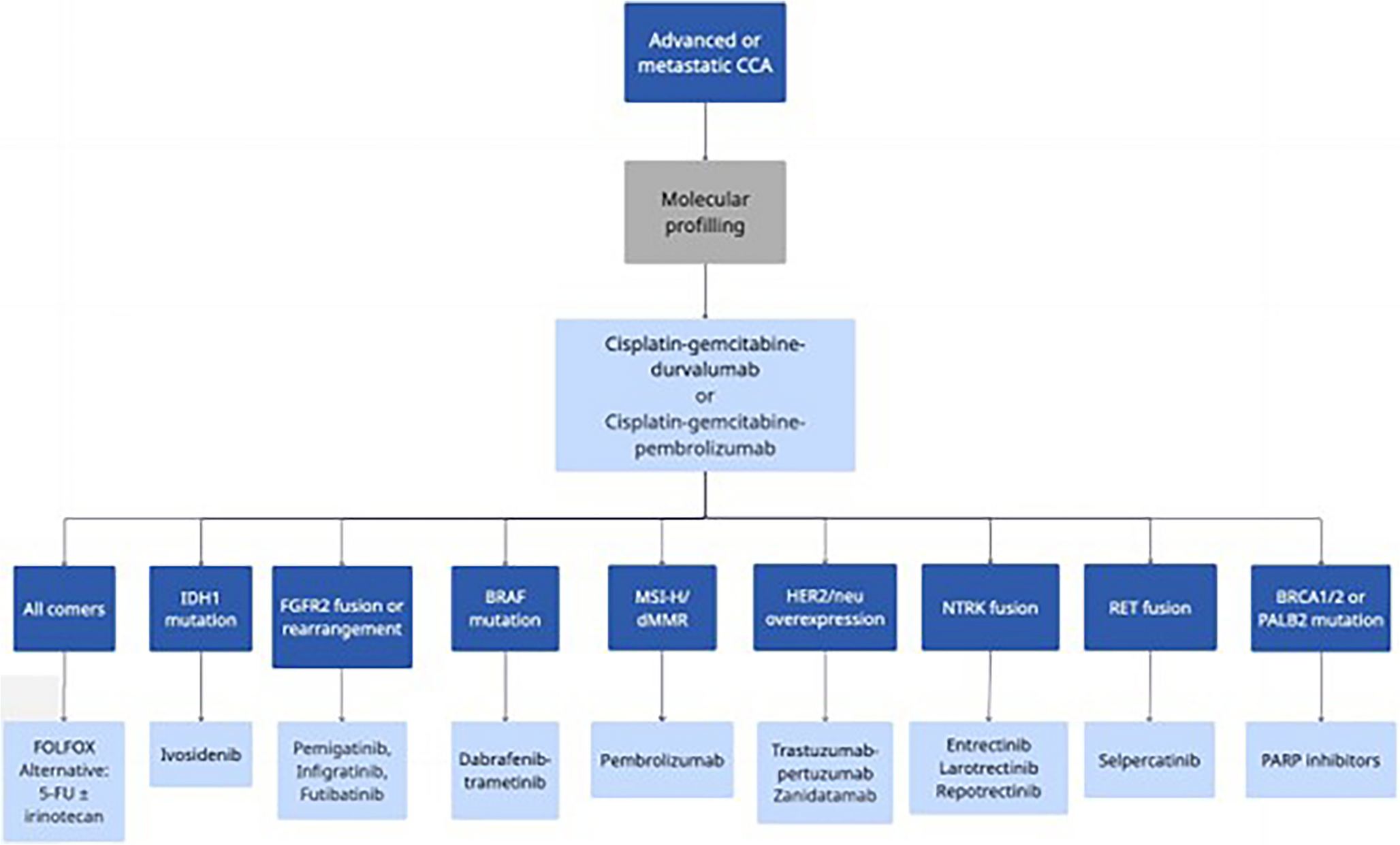

An alternative for second-line treatment is irinotecan-based chemotherapy. For the NALIRI regimen (liposomal irinotecan in combination with fluorouracil and leucovorin), however, there are inconsistent clinical data on its anti-tumor efficacy. In the NIFTY trial (Phase IIb, NCT03524508), with a median follow-up of 33.2 months, there was a significant improvement in mPFS - as assessed by an independent central review - in favor of NALIRI compared to 5-FU alone in patients with advanced cholangiocarcinoma previously treated with gemcitabine and cisplatin (mPFS: 4.2 months, 95% CI: 2.8–5.3 vs. 1.7 months, 95% CI: 1.4–2.6). mOS was 8.6 months (95% CI: 5.4–10.5) in the NALIRI group, vs. 5.3 months (95% CI: 4.7–7.2) in the control group. In contrast, the NALIRICC trial (phase II, NCT03043547) found no advantage for NALIRI over 5-FU - the reported median OS was 6.9 months in the NALIRI group versus 8.21 months in the group receiving only 5-FU. Therefore, the efficacy of NALIRI as a second-line therapy remains to be determined [17, 30, 31].
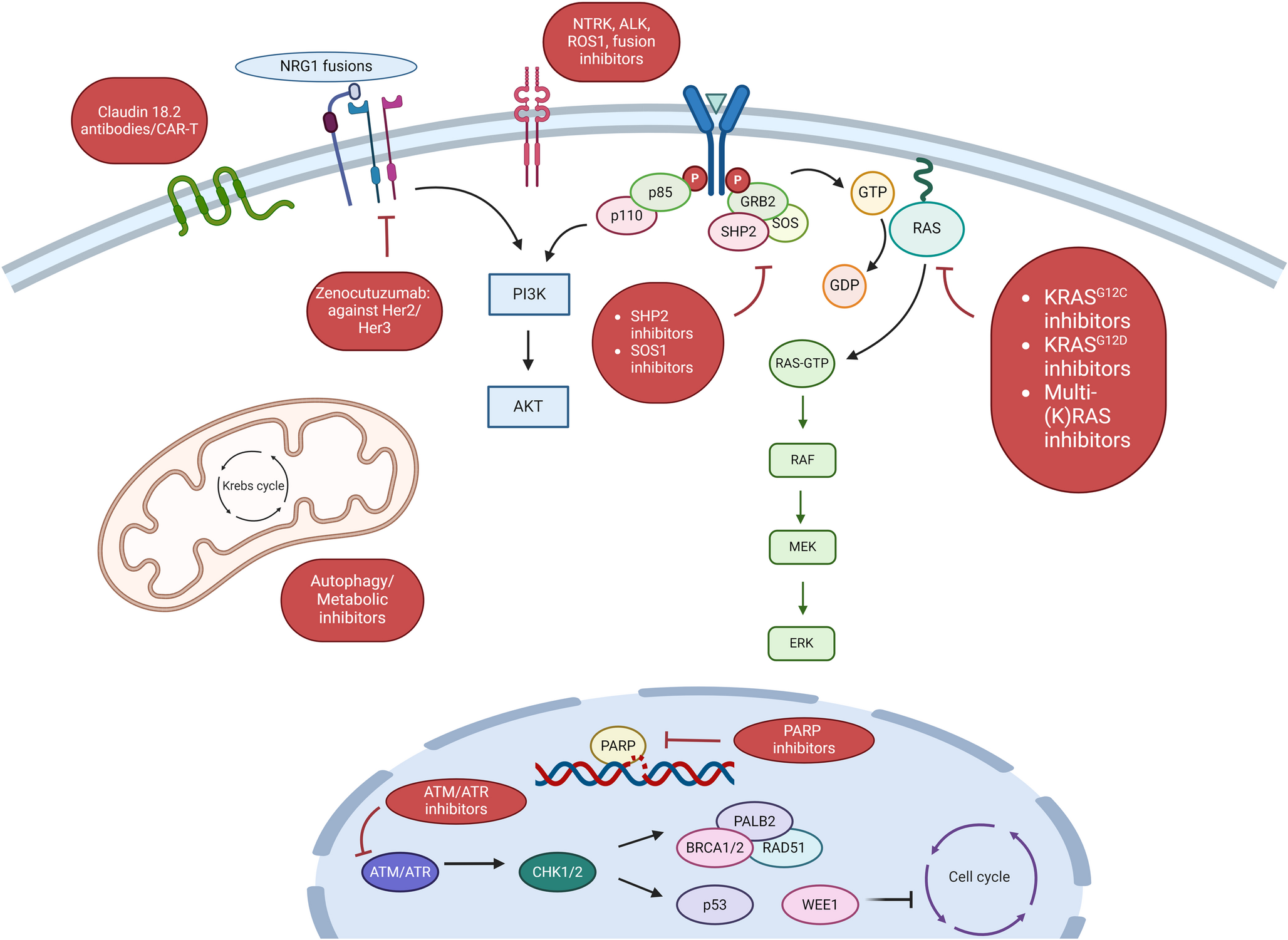
Targeted TherapySeveral clinical trials of targeted therapies are currently underway to confirm their safety during use and efficacy (Table 1). A synopsis of the mechanisms of action of the substances utilized in targeted therapy for cholangiocarcinoma is presented in Fig. 2. Phase I and II trials of several small molecules are ongoing to target therapies for patients with IDH1, IDH2, and pan-IDH1/2 mutations (see Table 2 for details). In a completed phase II study with dasatinib (NCT02428855) in patients with advanced or metastatic biliary tract cancer (CCA) with IDH1/2 mutations, mPFS was 8.7 months and mOS was 37.9 months. Analyses of the results of phase I/II trials with olutasidenib (NCT03684811) and enasidenib (NCT02273739) in patients with advanced or metastatic CCA with IDH1 or IDH2 mutations are ongoing.
Table 1 Completed clinical trials of targeted Inhibition in CCA. ORR – Objective response Rate; mPFS – median Progression-Free Survival; mOS – median overall survivalFig. 2
The mechanism of action of targeted therapies discussed in the above chapters. FGFR2 – Fibroblast Growth Factor Receptor 2; HER2 – Human Epidermal Growth Factor Receptor 2; EGFR – Epidermal Growth Factor Receptor; VEGFR – Vascular Endothelial Growth Factor Receptor; ROS – Reactive Oxygen Species (ROS1 receptor tyrosine kinase); RET – Rearranged during Transfection; PI3K – Phosphoinositide 3-Kinase; Akt – Protein Kinase B; mTORC1 – Mechanistic Target of Rapamycin Complex 1; RAS – Rat Sarcoma virus oncogene homolog; Raf – Rapidly Accelerated Fibrosarcoma kinase; MEK – Mitogen-Activated Protein Kinase Kinase; ERK – Extracellular signal-Regulated Kinase; IDH1 – Isocitrate Dehydrogenase 1; IDH2 – Isocitrate Dehydrogenase 2; D-2HG – D-2-Hydroxyglutarate; BAP1 – BRCA1-Associated Protein 1; DDR – DNA Damage Response
Table 2 Ongoing targeted therapy trials in CCAFor CCAs without the BRAF V600E mutation, the phase II BEAVER trial (NCT03839342) is analyzing the combination of binimetinib with encorafenib. On the other hand, the phase II BELIEVE study evaluated the efficacy of dabrafenib plus trametinib therapy in patients with advanced solid tumors with or without BRAFV600E/R mutation. The study reported a clinically relevant response rate (ORR) of 28%. Among the 77 participants, 94% had the BRAFV600E mutation, and 3 had other BRAF variants. In the entire group of patients, mPFS was 6.5 months (95% CI: 4.2–7.2), while mOS reached 9.7 months (95% CI: 7.5–12.2). Participants included 2 patients with gallbladder tumor or extrahepatic bile duct cancer (GB/eCCA) and 4 with intrahepatic cancer. Survival data in these subgroups are still being analyzed [17, 32].
NTRK type 1–3 gene fusions are among the driving mutations that cause sustained activation of the kinase signaling pathway. In response to these findings, the U.S. FDA granted accelerated marketing approval in 2018 and 2019 to two targeted drugs - entrectinib (which acts on tyrosine receptor kinase (TRK), ROS protooncogene (ROS1), and anaplastic lymphoma kinase (ALK)) and larotrectinib - for patients with solid tumors containing NTRK gene fusions. These decisions were based on the results of a basket-type Phase I study (STARTRK-1 and ALKA-372-001), which demonstrated entrectinib’s significant antitumor efficacy (ORR of 57%) and its favorable safety profile - Grade 1 and 2 side effects, mainly fatigue and taste disorders, predominated. The three basket trials - NAVIGATE (Phase II, NCT02576431), SCOUT (Phase I/II, NCT02637687), and the Phase I safety study (NCT02122913) - enrolled a total of 55 patients with solid tumors containing the NTRK gene fusion who received larotrectinib 100 mg twice daily. Participants included patients with 17 different types of TRK-positive tumors, including 2 patients with biliary tract cancer (CCA). The ORR was 75% (95% CI: 61–85) by independent assessment and 80% (95% CI: 67–90) by investigators. Importantly, treatment responses were durable, with a median of 10 months for entrectinib, while the median for larotrectinib has not yet been reached. Further studies are currently underway, including the international, open-label, phase II STARTRK-2 basket study (NCT02568267), evaluating the efficacy of entrectinib in patients with solid tumors containing NTRK1/2/3, ROS1, or ALK fusions. Due to the rare occurrence of NTRK gene fusions in CCA, estimated at approximately 0.75%, and the small number of CCA patients included in the basket studies to date, further studies are needed to further define the clinical efficacy of larotrectinib and entrectinib in patients with advanced or metastatic CCA with the presence of an NTRK gene fusion [17, 33].
A multicenter, non-randomized phase II study (NCT02999672) aimed at evaluating the efficacy, safety, and pharmacokinetics of trastuzumab emtansine in patients with solid tumors overexpressing HER2, including CCA, after exhausting available treatment options, was prematurely terminated. The decision was made after five of seven patients with advanced pancreatic cancer, or CCA, experienced disease progression. Due to the limited efficacy of HER2-targeting monotherapy, phase I and II trials are currently underway to evaluate the safety and potential efficacy of trastuzumab in combination with other anti-cancer drugs, such as pembrolizumab, FOLFOX, or CAPOX (NCT04430738). In addition, a phase I study (NCT03219268) is underway to evaluate the safety and tolerability of the immune checkpoint inhibitor, tebotelimab, both as monotherapy and in combination with margetuximab, a chimeric IgG monoclonal antibody targeting HER2, in patients with advanced HER2-positive solid tumors [31]. The bispecific antibody zanidatamab, which targets the HER2 receptor, showed promising anti-tumor activity in the phase 2b study HERIZON-BTC-01 (NCT04466891), conducted among patients with locally advanced or metastatic cholangiocarcinoma (CCA) with HER2 amplification. The study included 87 subjects divided into two cohorts: cohort 1 (HER2-positive, IHC 2 + or 3+) and cohort 2 (IHC 0 or 1+). Participants received zanidatamab at a dose of 20 mg/kg intravenously every two weeks. Cohort 1 had an objective response rate (ORR) of 41.3% (95% CI: 30.4–52.8). It is also noteworthy that a beneficial effect of therapy was observed in patients with gallbladder cancer [34]. In a phase II study (NCT04722133), a treatment regimen based on mFOLFOX6 in combination with trastuzumab for second- or third-line therapy showed encouraging anti-tumor efficacy. mPFS was 5.1 months (95% CI: 3.6–6.7), and mOS reached 10.7 months (95% CI: 7.9- not reached). The KAMELEON trial (phase II, NCT02999672), which was designed to evaluate the efficacy of trastuzumab emtansine in patients with advanced HER2-positive CCA, encountered recruitment difficulties, thus not obtaining representative data on this group of patients. At the same time, another phase II study (NCT02675829) is underway that is analyzing the effect of trastuzumab emtansine in the treatment of solid tumors with HER2 overexpression [17]. Trastuzumab deruxtecan (T-DXd), which is a conjugate of an antibody and a cytotoxic drug, was evaluated in the DESTINY-PanTumor02 trial in patients with advanced solid tumors. The phase II study (NCT04482309) administered T-DXd at a dose of 5.4 mg/kg every three weeks to patients with locally advanced or metastatic HER2-expressing disease who had previously undergone at least one systemic treatment or had no other therapeutic options. Forty-one patients with biliary tract cancer were included in the study. Of these, 16 had high HER2 expression (IHC 3+) and 25 had moderate expression (IHC 2+). The ORR was 56.3% in the IHC 3 + group, while no response was observed in the IHC 2 + group (ORR 0%). The median progression-free survival was 7.4 months (95% CI: 2.8–12.5) in patients with HER3 + expression and 4.2 months (95% CI: 2.8–6.0.8.0) in HER2 + patients. In contrast, median overall survival was 12.4 months (95% CI: 2.8-none) and 6.0 months (95% CI: 3.7–11.7), respectively [35].
While more specific and more powerful FGFR2 inhibitors are being developed, current FGFR inhibitors continue to be studied both as monotherapy and in conjunction with chemotherapy. For example, the FIGHT-302 trial (NCT03656536) is evaluating the efficacy of pemigatinib compared to chemotherapy as first-line treatment in patients with advanced biliary tract cancer. At the same time, the FIGHT-101 trial (NCT02393248) is underway to analyze the safety, tolerability, and pharmacological effects of pemigatinib in monotherapy and in combination with drugs such as gemcitabine and cisplatin in patients with advanced cancers, including CCA. Currently available FGFR2 inhibitors show limited selectivity toward this receptor, resulting in a broader side effect profile. In addition, the development of FGFR2 resistance mutations poses a significant therapeutic problem. RLY-4008, which is the first highly selective FGFR2 inhibitor, is being tested in the ReFocus trial (Phase I/II, NCT04526106). Preliminary results from 17 patients treated with the recommended phase II dose showed high efficacy, achieving an ORR of 88% (95% CI: 63.6–98.5). In addition, teninotinib showed strong activity against resistance mutations in the initial CCA clinical trials [17, 33]. Erdafitinib is a tyrosine kinase inhibitor that potently inhibits FGFR1-4 receptors in a reversible manner. In addition to its action on FGFR, it also shows activity against other kinases such as ret protooncogene (RET), platelet-derived growth factor receptor (PDGFR) α/β, fms-related tyrosine kinase (FLT) 4, receptor tyrosine kinase (KIT), and vascular endothelial growth factor (VEGFR) 2. In a phase II study (NCT02699606) conducted in an Asian population, erdafitinib 8 mg orally once daily was administered to patients with FGFR abnormalities in whom previous systemic treatment had failed. The therapy yielded promising results – the ORR was 50%, the DCR was 83.3%, and the mPFS was estimated at 5.59 months (95% CI: 1.87–13.67) [17, 36, 37]. Derazantinib is a reversible multi-kinase inhibitor that potently blocks FGFR1, FGFR2, and FGFR3 receptors, in addition to affecting other tyrosine kinases such as RET, DDR2, VEGFR1, and KIT [36]. In the second cohort of the FIDES-01 trial (Phase II, NCT03230318), patients with cholangiocarcinoma had a mPFS of 7.8 months (95% CI, 5.5–8.3), an ORR of 6.8% (95% CI, 1.4–18.7) and a DCR of 63.6% (95% CI, 47.8–77.6). In contrast, cohort 1 of the same study, which included patients with iCCA and FGFR2 mutation or amplification, reported a mPFS of 8.3 months (95% CI, 3.5–16.7), an ORR of 22.3% (95% CI, 14.7–31.6) and a DCR of up to 75.7% (95% CI, 66.3–83.6). Currently, derazantinib has no registration for the treatment of cholangiocarcinoma with the presence of FGFR2 mutations or amplifications [17, 38]. A summary of pending clinical trials with targeted therapies is shown in Table 2.
ImmunotherapyImmune checkpoint inhibitors (ICIs) promote the body’s adaptive immune response against tumor cells by blocking the interaction of PD-L1 ligand with the PD-1 receptor or CTLA-4 protein with its receptors on antigen-presenting cells. These drugs are widely used to treat a variety of solid tumors, especially those characterized by positive PD-L1 expression, high microsatellite instability, deficient mismatch repair mechanism, or high mutational burden (TMB-H). In patients with CCA, PD-L1 expression ranges from 9.1% to 72.2% [39, 40]. Also, a phase 2 study involving 54 patients (NCT02829918) reported moderate efficacy of nivolumab, with an ORR of 47.8%, mPFS of 3.68 months, and mOS of 8.9 months [33].
Due to the limited efficacy of immunotherapy used alone, many completed and ongoing studies have focused on comparing its safety and efficacy with combination therapy, combining immunotherapy with chemotherapy (e.g., gemcitabine and cisplatin). It is assumed that such a combination has a synergistic effect - chemotherapy can increase the immunogenicity of tumor cells by stimulating the release of cytokines, damage-associated molecules (DAMPs), and enhancing the expression of human leukocyte antigens (HLA) class I molecules, as well as through other mechanisms [33, 41]. A phase 2 study (NCT03111732) completed in November 2021 evaluated the efficacy of the combination therapy of pembrolizumab with capecitabine and oxaliplatin (CAPOX) in 11 patients with advanced biliary tract cancer. The mPFS was 4.54 months, while the mOS was 43 weeks. There were no cases of complete response, while partial response was observed in 3 patients (27.3%).
The NCT03092895 trial evaluated the efficacy of the combination therapy of camrelizumab with gemcitabine and oxaliplatin (Cam-GEMOX) or with FOLFOX (Cam-FOLFOX) in Asian patients. Among the 92 patients analyzed, the overall response rate (ORR) was 16.3% (95% CI: 9.4–25.5), and disease control was achieved in 75.0% of patients (95% CI: 64.9–83.4). The mPFS was 5.3 months (95% CI: 3.7–5.7), and the mOS was 12.4 months (95% CI: 8.9–16.1). Comparing the two regimens, Cam-FOLFOX had a slightly lower ORR (10.3% vs. 19%), with similar median PFS and OS values [42]. The phase 2 study (NCT03796429), conducted among an Asian patient population, evaluated the efficacy of the PD-1 inhibitor toripalimab in combination with gemcitabine and the oral anticancer drug S-1 (containing tegafur, a prodrug of 5-FU, along with gimeracil and oteracil). Among the 48 participants, the ORR was 27%, mPFS was 7 months (95% CI: 5.5–9.1), and mOS was 16.0 months (95% CI: 12.1-no data available for the upper limit) [43]. Durvalumab, a PD-L1 inhibitor, was tested in combination with gemcitabine and cisplatin in the NCT03046862 trial, showing promising efficacy. The ORR of 73% was achieved, with a mOS of 18.1 months and a mPFS of 11 months. Interestingly, the addition of tremelimumab, a CTLA-4 inhibitor, to this regimen for dual blockade of PD-L1 and CTLA-4 yielded comparable results: ORR of 73.4%, mOS of 20.7 months and mPFS of 11.9 months [44].
The combination of durvalumab and tremelimumab, administered without chemotherapy, was evaluated in a phase 1 study (NCT01938612) in previously treated patients - the median was two lines of chemotherapy. Results were moderate, with ORRs of 10.8% and 8%, respectively, and mOS of 10.1 months (95% CI: 6.2–11.4) versus 8.1 months (95% CI: 5.6–10.1). Another approach based on simultaneous blockade of PD-1 and CTLA-4, the combination of nivolumab and ipilimumab, was evaluated in a phase 2 study (NCT02923934, CA209-538) in 39 patients with cholangiocarcinoma, 33 of whom were previously treated. The ORR was 24% - a response was achieved in 3 of 14 patients with iCCA and 1 of 10 with eCCA. Importantly, none of the responders had disease with microsatellite instability. Median OS and PFS were 6.1 and 3.1 months, respectively [45, 46].
A summary of completed clinical trials in CCA with immunotherapy is provided in Table 3. Ongoing studies using immunotherapy, meanwhile, are included in Tables 4 and 5.
Table 3 Completed immunotherapy clinical trials in CCATable 4 Ongoing clinical trials for immunotherapy in monotherapy or combination in CCATable 5 Ongoing clinical trials for immunotherapy in combination with cytostatic chemotherapy or other agents in CCA
Comments (0)