Search approach
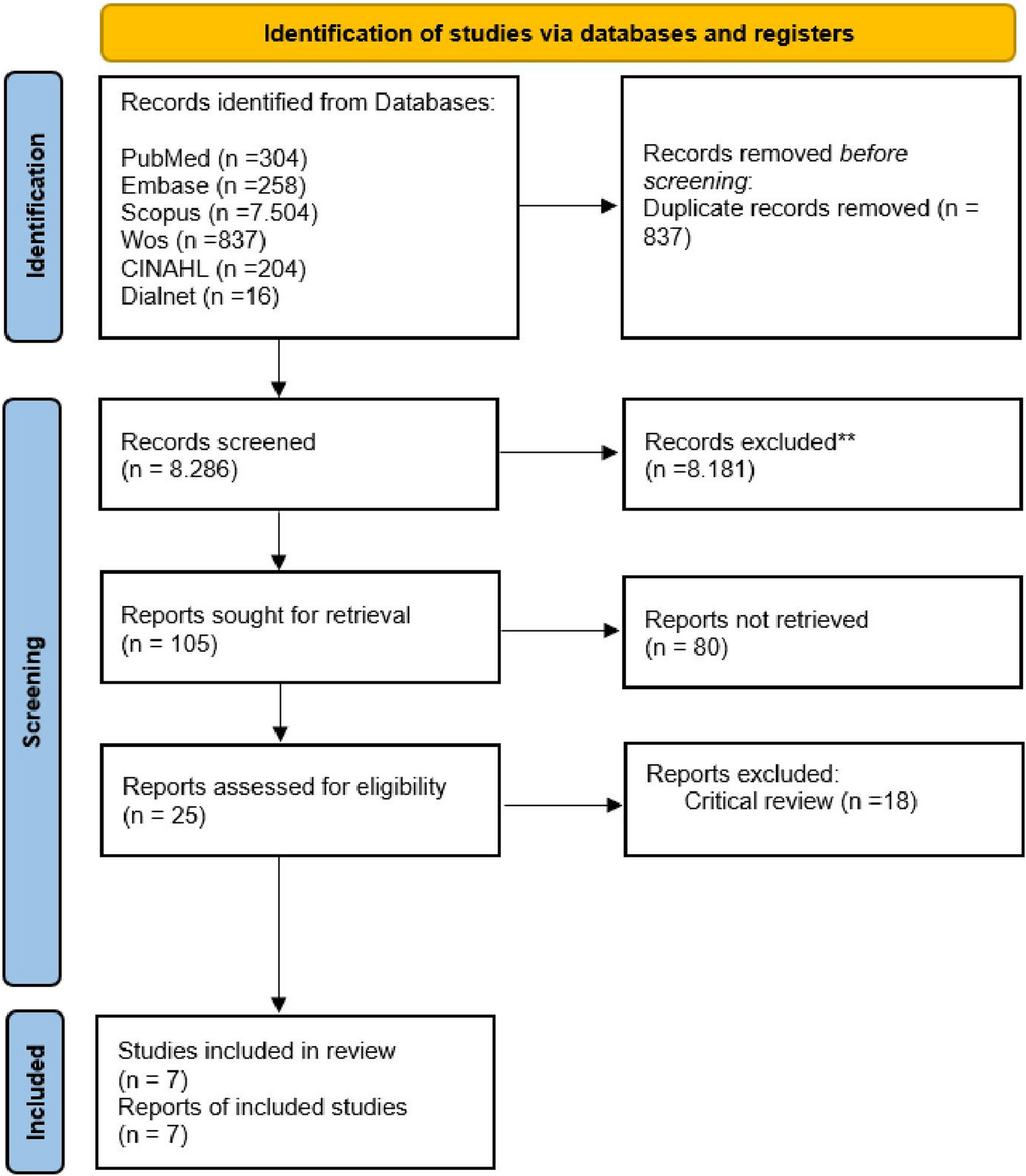
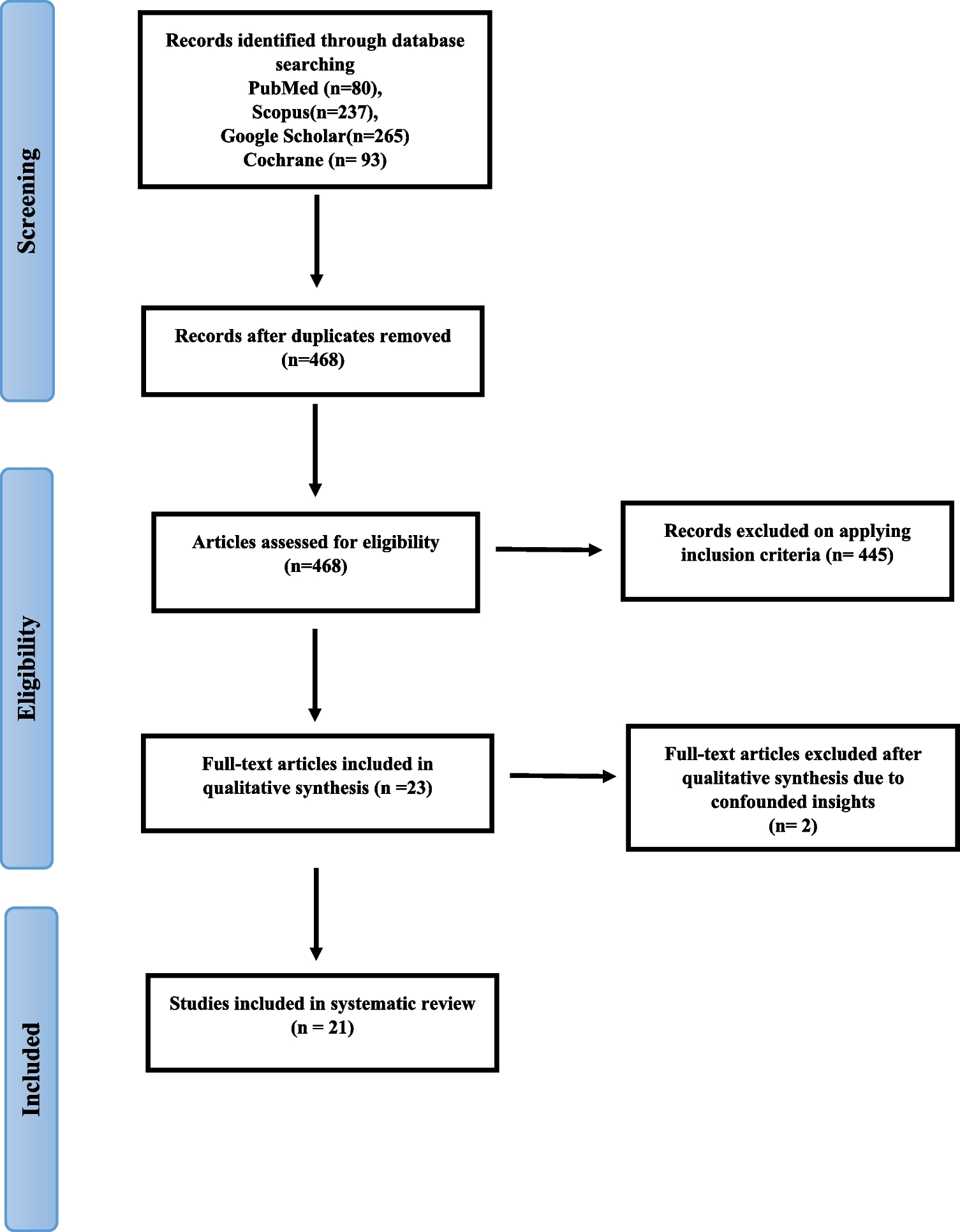
To performed this systematic review, we conducted an exhaustive search of the scientific literature in the databases PubMed, Embase, Scopus, Web of Science, CINAHL, and Dialnet Plus. We also explored the gray literature in specialized repositories and Google Scholar to minimize bias. The review was conducted in accordance with the Preferred Reporting Items for Systematic Reviews (PRISMA) guidelines. The systematic review was registered in the Open Science Framework (OSF) under the name: “Correlation between footprint and subjects’ height. A systematic review” Available at: https://archive.org/details/osf-registrations-3grdj-v1.
The research question followed the PICOS criteria (P-Patients: healthy adult population; I- Intervention: Measurement of the footprint length using the inked footprint technique and its correlation with the subject’s height; C- Comparison with paper pedigraphy and with a paper footprint outline; and O- Outcomes: Which is the most widely used footprint taking and measuring technique, which is most correlated and has the most scientific evidence).
To conduct the literature search, indexed descriptors and free text words related to the research objective were used. The selected terms were linked with Boolean operators (AND, OR, and NOT). Three search strategies were obtained in the different databases: (“foot length”) AND (“body height”); (“foot measurement”) AND (“body height”) OR (“foot measurement”) AND (“stature estimation”)); (“foot measurement”) AND (“body height”) AND (“forensic science”) OR (“reliability foot measurement”) AND (“body height”) AND (“forensic science”)). The search was carried out from January to March 2023.
Article selection
After eliminating duplicate articles, two independent reviewers reviewed the articles by title and abstract and proceeded to eliminate those that did not meet the inclusion criteria. If these two reviewers disagreed on the choice, a third reviewer intervened to reach a consensus.
The following inclusion and exclusion criteria were taken into account when selecting the articles. Inclusion Criteria: (1) documents published in the last 20 years (1993–2023), (2) Spanish or English language, healthy adult population of both sexes, (3) type of study: observational, descriptive, cross-sectional, experimental, systematic reviews, meta-analysis, randomized and non-randomized clinical studies, (4) studies in which the height of the subjects is estimated by taking and measuring the length, exclusively, of the footprints of both feet and (5) studies with living subjects with intact feet and without macroscopic deformity. On the other hand, the following were excluded: (1) studies with subjects with foot or spinal disease or deformity, pregnant women, orthopedic problems, physical impairments, growth-related diseases, and physical disabilities; (2) studies with cadavers; (3) studies that estimated subjects’ height by measuring: length of the metatarsals, hands, and feet simultaneously, a single foot, stride length during walking, through shoe measurement, or by measuring more than one anthropometric measurement of the foot (width, scaphoid height, etc.) or the lower limb (hip, leg); and (4) studies where the sample included only one sex.
Data and study features extraction
The analysis involved extracting data from each study. From each of the selected articles, the following information was extracted: author(s) name, study title, year of publication, type of design, objectives, method and duration of the study, footprint length measurement technique, population, results, conclusions, and study quality.
Quality assessment
The studies included in this systematic review were observational, descriptive, and cross-sectional in design [15,16,17]. To assess the quality of the scientific evidence, we applied the classification system of the Canadian Task Force on the Periodic Health Examination [18], which categorizes evidence according to study design and methodological strength.
According to this scale, all included studies were classified as Level III evidence, which corresponds to evidence obtained from non-experimental, descriptive studies such as comparative, correlation, or case-control studies. This rating is consistent with the methodological characteristics of the included articles, which did not involve randomized interventions but rather correlation analyses between footprint dimensions and height in population samples.
Each study was evaluated for key methodological components, including: clarity of inclusion and exclusion criteria, sample size and demographic description, footprint measurement techniques, height measurement protocols, use of appropriate statistical analyses (correlation coefficients, regression models), reporting of results and statistical significance.
Although none of the studies involved blinding or randomization (as expected in this type of research), they were generally methodologically sound for their observational design. No study was excluded based on quality, as all met the minimum criteria for descriptive observational research and addressed the review’s PICO question adequately.



Comments (0)