
Remember me

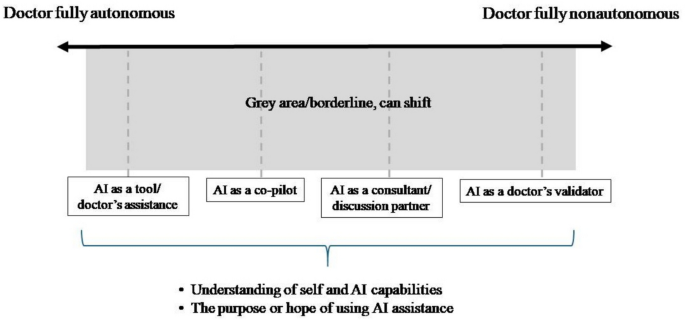
This study revealed several aspects of DPRs and DMS in clinical settings in China and Japan. First, diverse models of DPRs coexist in a mosaic-like fashion in both China and Japan; decision-making is carried out in various styles, and the ethical principles which are prioritized differ. The paternalistic model also appeared to be the predominant model in both countries (Fig. 2). Second, there were gaps both between ethical and legal ideals, which recommend guaranteeing a patient’s right to self-determination and SDM, and between the actual situation in China and Japan. There were obstacles to the realization of these ideals at various levels, including the individual, clinical, and medical environmental levels. Third, there was a gap between the superficial attitudes of Japanese doctors towards their patients and their feelings towards decision-making. While doctors may act in accordance with the SDM model on the surface, their true feelings are paternalistic, and this inner tendency gives rise to manipulative communications with patients. Fourth, there were generational and cultural differences that affected DPRs and DMS. The mode of DPR referred to as the “teacher-and-student relationship” in both Japan and China was more similar to the paternalistic model than to the deliberative model or SDM model proposed by Emanuel and Emanuel (1992). Fifth, there was a perception that a friendship was established between doctors and patients in both Japan and China, with long-term DPRs potentially leading to feelings of trust and friendship. Some Chinese doctors noted that, although mutual trust between doctors and patients could change the consumerist relationship into a friendship, the consumerist model can also become a boss-servant relationship in which patients are the boss.
Fig. 2 The alternative text for this image may have been generated using AI.
A spectrum of doctor-patient relationships based on the degree of paternalism
Based on the perspectives of doctors from both countries on DPRs and DMS, we focus the subsequent sections on the following topics: paternalism, the consumerist model, SDM, and similarities and differences between these in China and Japan.
Paternalism Taken for Granted by DoctorsDoctors in both countries agreed that they are the authority on medicine and knowledge, often leading to a high patient dependence and low autonomy in medical decision-making. Doctors in both countries also indicated that the higher the patient compliance, the better the medical outcomes. Thus, although paternalism is increasingly challenged in contemporary clinical settings, doctors take the practice of paternalism for granted in medical decision-making.
However, we believe that paternalism being the norm in clinical settings is problematic for at least the following reasons. First, that a patient’s dependence and obedience in medical decision-making is usually a passive or forced choice is easily overlooked by doctors. The background of patients, including their personal desires, personalities, and cultural environment, as mentioned by Japanese doctors, together with the various social rules and rules of interpersonal relationships, not to mention having to deal with the diseases, is enough to make patients passive, dependent, and submissive. For example, Japan has five psychocultural-social tendencies—“surmise"(Sontaku), “self-restraint” (Jishuku), “air” (atmosphere or mood, Kuuki), “peer pressure” (or tuning pressure, Docho-Atsuryoku), and “community” (Seken). And these are considered characteristics of the present-day Japanese population and may negatively affect the ideal practice of SDM in clinical settings (Asai et al. 2022) and increase the opportunity for doctors to implement paternalistic practices.
Second, a patient’s dependence and compliance can change over time. Japanese doctors noted that the era of paternalism will eventually pass. With the development of social economy, information technology, and refinement of the social division of labor, modern interpersonal relationships have been characterized by “increasing autonomy and decreasing dependence”(Guan and Xin 1988). Thus, increased patient autonomy and decreased dependence appear to be contemporary features of modern DPRs.
Third, doctors from both countries indicated that the higher the patient compliance, the better the outcomes. However, to the best of our knowledge, there is no conclusive evidence that higher patient compliance leads to better medical outcomes. Moreover, ethics and laws tend to enrich and strengthen patients’ rights, and the concept of commercialization of healthcare has simultaneously fueled the desire of patients for better (or even perfect) medical treatment. Indeed, according to the literature, there is a tendency to measure the effectiveness of medical outcomes using patient-reported outcomes (PRO) (Hua 2025).
Finally, when practicing paternalism, doctors of the present study always considered the relevant laws and ethics in medical decision-making. In particular, Chinese doctors noted that the conflict between law and ethics is an obstacle to practicing paternalism. For example, paternalism is described in Table 1 as follows: “Doctors decide which treatment is best and talk to the patient only for their consent, and in extreme cases, just inform the patient of the intervention to be carried out.” We often think about what the optimal choice is and how a patient’s true consent can be obtained. However, the law provides a clear—albeit controversial—measure for determining what is right, wrong, and best. Through informed consent, the law grants patients the right to make decisions and imposes on doctors the duty to disclose relevant information. In this manner, laws resolve the question of what constitutes the “best choice” and how to obtain consent, although whether it is reasonable or not is a topic for further discussion. In both China and Japan, there are countless cases of doctors being held liable in court for the failure to properly obtain informed consent (Hui et al. 2024; Masaki et al. 2014; Ohira 2023), making doctors who adopt paternalism feel wronged and forced to admit their negligence.
DPRs and the dominant role of doctors in medical decision-making have largely changed historically (Childress and Childress 2020). The modern era has introduced new dynamics into DPRs, characterized by increasing patient autonomy and a growing need for a legal framework to regulate and guide the behaviors and ethics of both doctors and patients. As a result, the ethical foundations of paternalism face mounting challenges, and the consumerist model has emerged in response to these challenges.
The Controversial Consumerist Model (Patient-Informed Choice Model)The consumerist model (Table 1) is present in both countries. Both Chinese and Japanese doctors indicated that under this model, doctors should strictly adhere to full information disclosure and fully respect patient autonomy. However, attitudes toward this model were not very positive in both countries due to various factors that are detrimental to DPRs.
First, Chinese doctors indicated that the consumerist model violates interpersonal trust and medical ethics and hinders SDM. They noted the near complete lack of trust between doctors and patients with this model. The consumerist model is also perceived to be at odds with medical professional ethics. Chinese doctors often exhibit certain behaviors that are commonly regarded by their peers or patients as unethical, including accepting bonuses, taking drug rebates, prescribing excessively, engaging in overtreatment, and accepting “red envelopes” (monetary gifts from patients). Such practices are frequently cited as the main reasons for the stigmatization of Chinese doctors (Wang et al. 2019). However, these unethical behaviors in the “Chinese-style” consumerist model are essentially absent in current Japanese clinical settings. This may have to do with improvements in the Japanese healthcare system, drug management system, legal regulatory system, and other systems (Xu et al. 2024). The consumerist model as perceived by Japanese doctors takes on a different form—patients with a consumer mindset often are simply seeking medication or temporary relief.
Second, in the consumerist model, DPRs extend far beyond a simple buyer–seller dynamic, placing broader and more demanding expectations by patients on doctors. In addition to the difficulty of meeting patient expectations, as Japanese doctors noted, doctors face the challenge of accepting the reality that their authoritative status and respected image in the paternalistic model have been replaced, as noted by Chinese doctors. In the consumerist model, we argue that healthcare services are viewed as something akin to commodities. The importance of healthcare quality is undeniable for both patients as consumers and medical institutions as providers of healthcare services. The WHO evaluates healthcare quality using indicators that include treatment outcomes, patient safety, and patient experience (such as costs, adequate consultation time, clear explanations, opportunities to ask questions, and participation in decision-making). To improve healthcare quality, doctors naturally must bear the burden of greater pressure. Respecting patient rights, considering medical costs, ensuring patient safety, and improving treatment outcomes require doctors to have more effective communication skills, more accurate risk assessment abilities, advanced professional expertise, and higher ethical qualities, which are often difficult to achieve consistently.
Third, the lack of or failure to obtain informed consent is increasingly becoming an issue in the adjudication of medical dispute cases. Doctors perceived that the consumerist model is nearly identical to patient-informed choice (informative model) (Table 1). While correlations between paternalism, the consumerist model, and the incidence of disputes related to inadequate informed consent remain unclear, cases arising from the failure to obtain informed consent are on the rise in China (Masaki et al. 2014; Zhang et al. 2025).
In summary, the introduction of the consumerist model into DPRs, together with the various issues it raises, is often regarded as a “deviation from ethics.” In the consumerist model, doctors generally hope to mitigate their medical responsibility by fulfilling their duty of informed consent. However, their responsibilities have not diminished; rather, the pressures of medical practice have intensified.
SDM, the Seemingly Ideal ModelCompared to the paternalistic and consumerist models, SDM has been more readily accepted by doctors from both countries. However, doctors also noted that SDM has been achieved only in limited cases, and its realization takes time.
First, to achieve SDM, Chinese and Japanese doctors indicated that DPRs need a longer duration to be more effective. Japanese doctors also stressed the importance of DPRs to undergo a qualitative transformation, whereby both doctors and patients adapt to and redefine their roles in medical decision-making. This role transformation and adaptation aim to bring both parties closer to equal standing. As noted by Japanese doctors, such role shifts would be extraordinarily challenging for both doctors and patients and cannot be accomplished in a short period. For example, a situation in which a father suddenly becomes a friend to his child or a student immediately treating a teacher as a peer on their first meeting could be challenging and even inconceivable.
Second, cultural background plays a crucial role in practicing SDM. Cultural differences between the East and the West influence the interpretation and acceptance of SDM. Our interviews suggest that, in Japan and China, the teacher-student relationship is usually categorized as more of a paternalistic model than SDM. This categorization sharply differs from that suggested by Emanuel and Emanuel in 1992. In the East, traditional culture assigns a “teacher” the same status as that of a parent. “Once a teacher, always a father (Chen and Wang 2019).” “To treat your teacher is like treating your parent” (Jin 1998). Teachers should be treated with the same respect as a father, and a father’s order cannot be resisted. Therefore, it would be difficult for patients in both China and Japan to accept teachers and parents as friends or colleagues, and patients may experience guilt in doing so.
Third, according to Japanese doctors, unavoidable inequality in DPRs, such as disparities in professional knowledge and status, pose significant barriers to the adoption of SDM. However, China’s situation differs from Japan’s, and many of the factors that deepen doctor-patient inequalities are human-induced. In China, issues such as high medical costs, the prevalence of “red envelopes,” and incidents of violence against healthcare workers have distorted DPRs and deepened the inequality between doctors and patients (Li et al. 2025). Furthermore, the degree and nature of doctor-patient inequality vary across countries due to differences in clinical environments, and this also influences the implementation of SDM. Thus, the achievement of SDM appears to be a long way off in both countries. Maintaining long-term stability and equality can facilitate role transitions and adaptations, which is conducive to the practice of SDM. Additionally, differences in characteristics of both traditional culture and healthcare background unique to each country also significantly influence the practical application of SDM.
LimitationsThe present study has several limitations. First, the examples provided in Table 1 may have influenced the respondents’ comments and could have prevented them from discussing DPRs and DMS in their own words. If we had simply asked what the mainstream DPR in current clinical settings is like without providing specific examples, respondents may have raised completely new metaphors and/or models. Second, although the present study was qualitative and exploratory in nature, only limited generalizations can be made based on our results. Our results cannot be generalized to other countries and are far from conclusive, even when considering only the two targeted countries. Indeed, the state of DPRs described here may be specific to only the Far East, and DPRs in other countries may take on a completely different form.
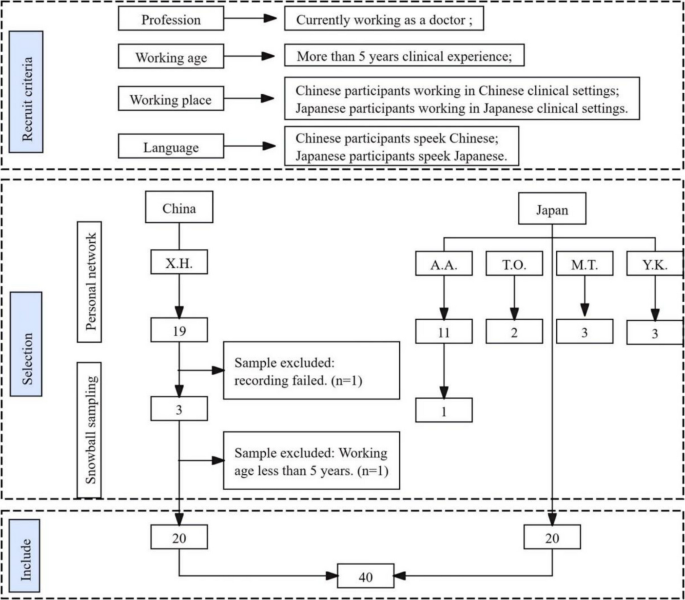
Third, differences in background between physicians from both countries (e.g., hospital type and age) may also have affected the validity of our comparisons. We cannot rule out the possibility that differences in the types of medical institutions where our participants in China and Japan worked, their specialties, and the proportion of male and female participants (there were more male participants than female participants) may have influenced the results of the present study. However, due to the exploratory qualitative nature of this study, it is difficult to discuss statistical correlations between respondents and their responses. Compared to qualitative research, quantitative research has stricter standards regarding sampling methods and bias prevention (Li 2017a; Li 2017b; Pyo et al. 2023). On the other hand, we primarily relied on our personal networks to recruit participants for specific purposes and did not perform random sampling or sample size calculations beforehand to control for bias and error. We also did not establish any hypotheses to be verified in advance.
Based on the findings of this study, however, there appear to be no significant differences in opinions between male and female respondents. In the chronic care setting where the doctor-patient relationship is long-term, friendship may have developed between doctors and patients, or a more equal relationship may have been established, compared to the acute care setting. Regarding the frequency of DPR models, Chinese participants mentioned consumerism more frequently than Japanese participants. All DPR models, as well as DMS, were mentioned by doctors from both countries.
Furthermore, according to recent review articles, it is unclear how the gender of doctors influences their decision-making processes (Champagne-Langabeer and Hedges 2021). Meanwhile, a recent study from Dubai suggested that female doctors, compared to their male counterparts, are more engaged in SDM with both male and female patients (Alameddine et al. 2022). Finally, to the best of our knowledge, there is no evidence that a physician’s specialty influences DPRs or DMS, at least in the case of physicians in China and Japan. However, a Japanese doctor argued that acute care is highly urgent, and paternalism on the part of doctors is acceptable, with patients tending to play a passive role; on the other hand, in chronic care, treatment decisions are largely left to the autonomy of patients who play an active role (Ito 2023).
There may also be regional differences within a country. Fourth, even within the same culture, individuals significantly differ in many ways. The differences in attitudes and ideas of the doctors may have resulted from differences in individual upbringing, life experiences, and discipline at home. Furthermore, different generations of doctors may have different attitudes and behavior patterns. Individuals can also significantly change their cultural perspectives as life progresses. Within the same culture, some aspects change over time, while others remain constant (Masaki et al. 2014). Fifth, this study only explores the DPR model and DMS from the perspective of doctors, and no patient perspective is included. We will provide our discussion in this regard in the conclusion to address the importance of patient centeredness. Finally, interviews were conducted in Chinese or Japanese, and then analyzed and presented in English. This process could have introduced translation issues, such as misunderstanding of the details and/or true meaning of the physicians’ comments. However, given the fluency of some of the researchers in Chinese, Japanese, and English, we were able to confirm the quality and authenticity of the English translation (Xu et al. 2024).
Comments (0)