Supportive or palliative? When words influence care more than guidelines
Background
Terminology used to describe cancer-related supportive services plays a critical role in shaping how both clinicians and patients perceive, access, and accept these interventions. In many low- and middle-income countries (LMICs), particularly in French-speaking contexts, terminological ambiguities may reinforce stigma and delay timely referral.
Methods
We conducted a nationwide, cross-sectional survey of 165 oncology professionals across Morocco to assess their preferences for three commonly used terms “soins de support” (supportive care), “soins de soutien” (support care), and “soins palliatifs” (palliative care). Participants rated the perceived emotional impact and referral likelihood associated with each term across four stages of the cancer trajectory. Quantitative analyses (multinomial regression, Wilcoxon tests) were complemented by thematic coding of free-text responses.
Results
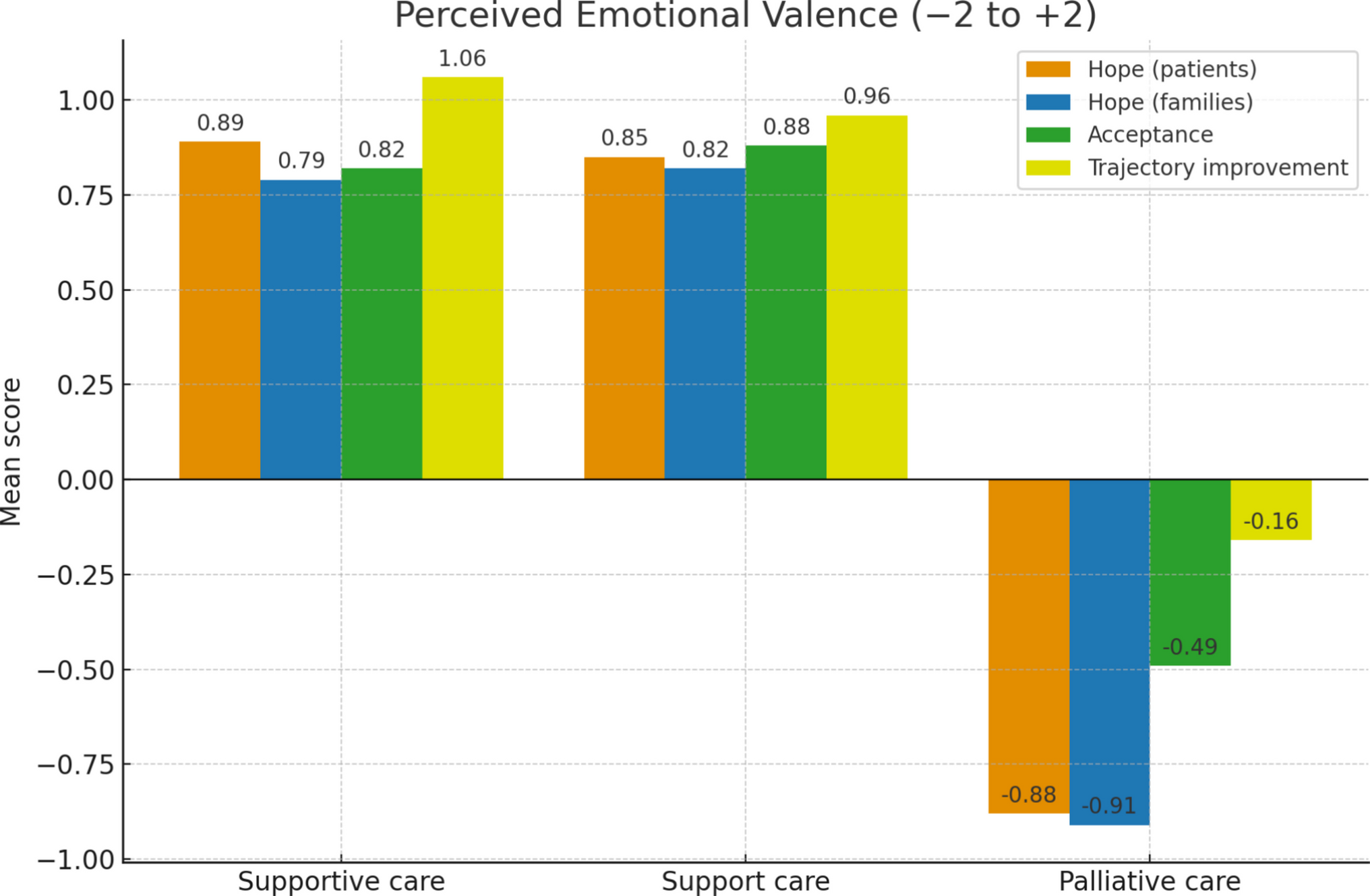
“Supportive care” was the preferred term for 68% of respondents, while only 10% favored “palliative care.” Referral to symptom management services was reported in only 21% of curative-phase cases but rose to 56% in advanced disease. “Supportive care” was consistently rated as more hopeful and acceptable to patients and families, while “palliative care” was strongly associated with increased distress. Medical specialty and practice setting significantly predicted terminology preference (p < 0.001).
Referral likelihood also varied by terminology across stages: at initial diagnosis, 62% (supportive care) and 61% (support care) vs 26% (palliative care) (p < 0.001); in remission, 44% and 50% vs 19% (p < 0.001); in advanced disease, 94% and 87% vs 77% (p < 0.001). At end-of-life, rates converged (87%, 85%, 89%; NS). Free-text responses confirmed that terminology influenced clinicians’ communication strategies and patient acceptance.
Conclusion
The choice of terminology is not merely semantic—it has measurable consequences on referral timing, patient engagement, and perceptions of care. Using labels such as “supportive care” encourages earlier referrals, while “palliative care” remains stigmatized and associated with terminal care. Standardizing terminology may facilitate earlier integration of these essential services and reduce inequities in cancer care.

Comments (0)