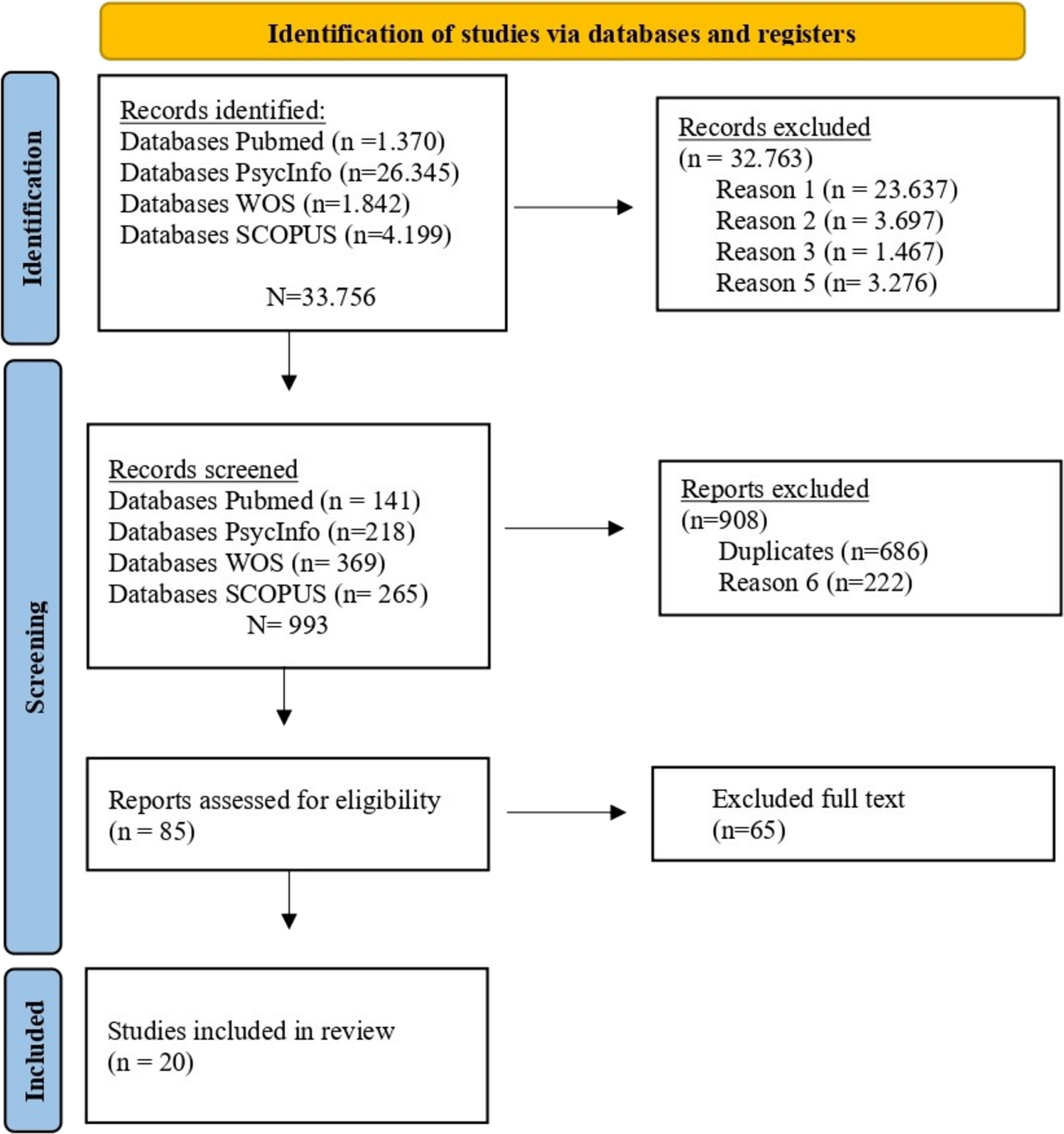
This systematic review aimed to evaluate the impact of MPH on attentional processes in rats by analyzing the existing scientific literature. The findings obtained from the selected articles, following the established search protocol, reveal a heterogeneous landscape regarding the effects of MPH on attentional and related tasks. This variability in results can be attributed to differences in the dosages used, administration methods, and behavioral tests employed across studies (Appendix C).
Dosage considerations for MPH in rodents are crucial due to their higher metabolic rates. The literature commonly classifies dosages as low (below 5 mg/kg), comparable to human clinical cases, moderate (5 mg/kg to 10 mg/kg), and high (above 10 mg/kg) (Barron et al. 2009; Yang et al. 2010). In this review, dosages were adaptively classified based on the reported results: low (0.1 - 3 mg/kg), moderate (4 - 8 mg/kg), and high (9 - 30 mg/kg). Numerous studies have demonstrated that behavioral responses in animals vary significantly with dosage (Broussard et al. 2019; Venkataraman et al. 2019). The dosage ranges used in the selected articles align with those in other animal studies involving MPH (Barron et al. 2009; Berridge et al. 2006; Broussard et al. 2019; Devilbiss and Berridge 2008a; Gomes et al. 2010; Gray et al. 2007; Lages et al. 2021; LeBlanc-Duchin and Taukulis 2009; Levant et al. 2010; Medina et al. 2022; Panfil et al. 2023; Rostron et al. 2013; Salman et al. 2019, 2021; Sloan et al. 2016; Sontag et al. 2011; Thanos et al. 2010, 2015; Tian et al. 2009; Van Der Marel et al. 2014; Venkataraman et al. 2019; Yang et al. 2010).
The route of drug administration also influences its effects, as pharmacodynamic differences exist between intraperitoneal, subcutaneous, and oral administration. Panfil et al.(2023) reported that peak plasma concentrations of MPH are higher in animals receiving intraperitoneal injections. In this review, 10 studies administered MPH via injection: 8 used intraperitoneal administration (Andrzejewski et al. 2014; Ding et al. 2018; Galizio et al. 2014; Higgins et al. 2020; Motamedi et al. 2019; Ravichandran et al. 2015; Rowan et al. 2015; Tomlinson et al. 2014), and 2 used subcutaneous injections (Comeau and Kolb 2020; Takahashi et al. 2018).
This systematic review highlights the variability of MPH effects across different cognitive domains. While the primary emphasis was on sustained attention, the roles of related executive functions such as working memory and behavioral flexibility were considered due to their close interactions with attentional processes. Some studies reported memory improvements with dosages between 0.25 mg/kg and 2.5 mg/kg (Haleem et al. 2015; Zhou et al. 2017), while others found no significant effects with 3 mg/kg (Alfadly et al. 2014). These data align with Sloan et al. (2016), which observed that memory is enhanced by low doses of MPH and impaired by higher doses (2.5 mg/kg to 10 mg/kg). Only one study in this review reported improvements in memory and learning in healthy subjects with dosages from 2 mg/kg to 10 mg/kg, with 5 mg/kg being most effective; however, this dose also increased neuronal death (Ravichandran et al. 2015). Three articles found no influence of MPH on learning (Alfadly et al. 2014; Galizio et al. 2014; Motamedi et al. 2019), consistent with Rostron et al. (2013), who reported no learning improvement in healthy subjects.
Regarding working memory, the results were also diverse. Spencer and Berridge (2019) found improvements after intracerebral administration of 0.125 µg, while Comeau & Kolb (2020) reported impairment with 0.5 mg/kg. Sontag et al. (2011) observed working memory impairment with high doses but enhancement with low doses, as did Salman et al. (2021). Differences in administration age might explain these results, as Comeau and Kolb (2020) reported impairment in executive functions, particularly working memory, when MPH was administered from PND 21 to PND 100.
Subject age is a significant factor in result variability, as the maturation of prefrontal and fronto-striato-cerebellar circuits during development makes executive functions—including attention, working memory, and cognitive flexibility—particularly sensitive to MPH administration (Guo et al., 2023). Bhattacharya et al. (2015) found that MPH affects adult and aged rats differently. Studies by Levant et al. (2010) reported behavioral response differences in periadolescent and adult rats. Medina et al. (2022) observed age- and dose-dependent differences in behavioral response. Low doses (0.6 mg/kg) sensitized both adults and adolescents, while high doses (10 mg/kg) induced tolerance in adults. The 2.5 mg/kg group showed no significant differences in sensitization and tolerance between adolescents and adults, suggesting this medium dose may be optimal for both age groups. Similar tolerance and sensitization results were reported by Barron et al. (2009), who also noted that chronic MPH administration had different effects in adolescent and adult spontaneously hypertensive rats (SHR), indicating that treatment onset and exposure duration significantly influence response.
These differential results were explained by changes in pharmacokinetics and the development of dopaminergic systems in the Central Nervous System (CNS) (Gomes et al. 2010; Levant et al. 2010) or by structural and functional brain changes across the lifespan (Van Der Marel et al. 2014). Gray et al. (2007) provided anatomical evidence that chronic therapeutic MPH doses in juvenile rats result in short-term changes in four brain areas involved in motivated behaviors, cognition, appetite, and stress, but no significant long-term neuroanatomical changes.
This systematic review found that the vast majority of studies analyzed reported no improvements in spatial memory after MPH administration (Alfadly et al. 2014; Galizio et al. 2014; Motamedi et al. 2019), even though Tian et al. (2009) found improvement. This difference may be due to strain differences; Alfadly et al. (2014), Motamedi et al. (2019) used Wistar rats, Galizio et al. (2014) used Sprague–Dawley, and Tian et al. (2009) used SHR, an animal model of ADHD. Other studies reported spatial and recognition memory impairment with 5 and 10 mg/kg in non-SHR strains (LeBlanc-Duchin & Taukulis 2009). Sontag et al. (2011) also reported spatial memory impairment in Wistar rats, suggesting higher sensitivity to MPH. Thanos et al. (2010) found differences in MPH sensitivity between Wistar-Kyoto (WKY) and SHR rats, with WKY being more sensitive to 5 and 10 mg/kg doses, leading to sustained attention impairment. Yang et al. (2010) found that SD rats are most susceptible to MPH, even at low doses, while WKY rats are susceptible to high doses, and SHR rats are least susceptible.
Regarding locomotion, the reviewed articles reported dose-dependent increases (Beaudin et al. 2024; Bhattacharya et al. 2015; Haleem et al. 2015; Kim et al. 2016; Zhou et al. 2017). Beaudin et al. (2024) and Bhattacharya et al. (2015) found that the highest doses (3 mg/kg and 10 mg/kg, respectively) increased locomotion. Lages et al. (2021) found that doses above 3 mg/kg led to cognitive impairment and increased behavioral agitation. Thanos et al. (2015) reported increased hyperactivity with high doses, consistent with these authors. However, Haleem et al. (2015), Kim et al. (2016) and Zhou et al. (2017) reported reduced hyperactivity with 0.5 mg/kg and 1 mg/kg.
Most studies reported attentional improvements with MPH (Andrzejewski et al. 2014; Beaudin et al. 2024; Bhattacharya et al. 2015; Chu et al. 2016; Higgins et al. 2020; Kim et al. 2016; Spencer & Berridge 2019; Takahashi et al. 2018; Tomlinson et al. 2014; Zubedat et al. 2015), with low doses being the most effective, albeit with exceptions. Bhattacharya et al. (2015) found that 6 mg/kg and 8 mg/kg doses improved attention in adult rats, and Chu et al. (2016) reported improvements with 8 mg/kg in groups with low baseline performance. The results of Devilbiss & Berridge (2008b) and Lages et al. (2021) align with these findings, showing that low doses improve cognitive performance and working memory. Salman et al. (2019) also reported attentional improvements with low MPH doses. Berridge et al. (

Comments (0)