Extracorporeal biventricular support through left mini-thoracotomy
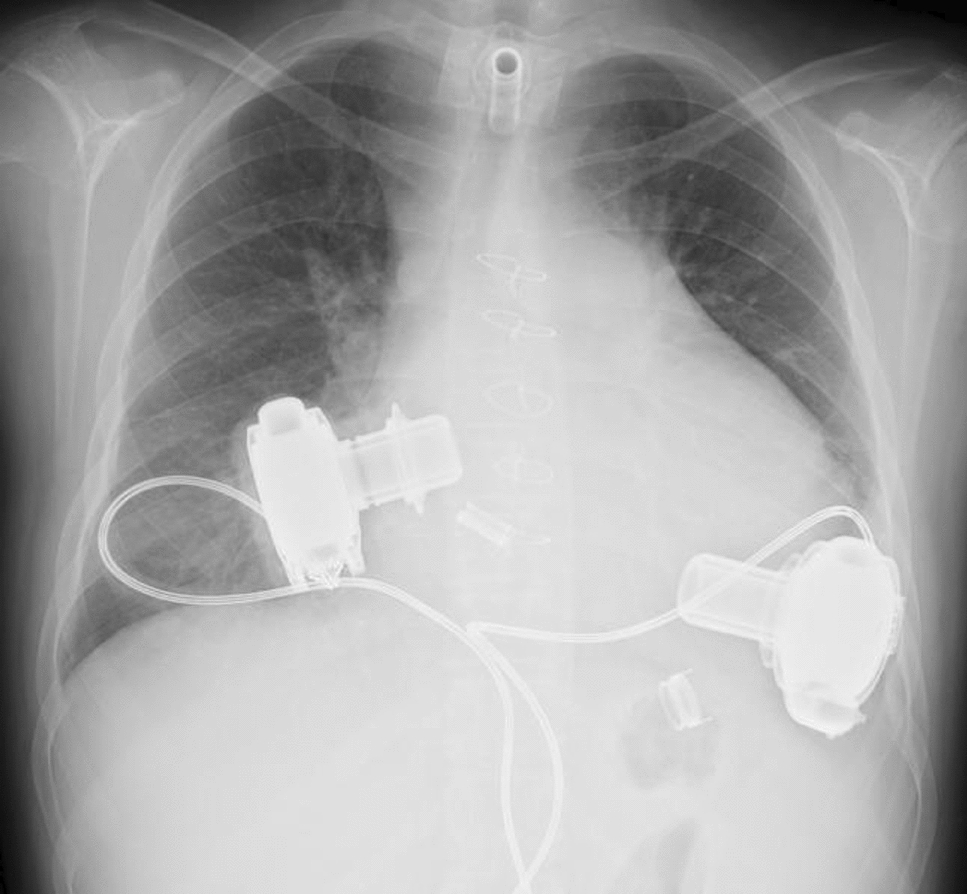
Herein, we present the case of a 23-year-old woman with fulminant myocarditis that led to severe biventricular failure and cardiogenic shock. Despite high-dose inotropes and mechanical support with venoarterial extracorporeal membrane oxygenation plus and Impella CP, the patient’s cardiac function did not recover. After upgrading to extracorporeal left ventricular assist device support, persistent right heart failure prevented weaning off venoarterial extracorporeal membrane oxygenation. Chest computed tomography revealed a leftward ascending aorta, prompting left mini-thoracotomy for extracorporeal biventricular assist device surgery, thereby preserving the sternum. Perioperatively, a large aortic thrombus was discovered and removed under deep hypothermic circulatory arrest. An extracorporeal left ventricular assist device was established by draining the left ventricle and perfusing the ascending aorta via the subxiphoid area, whereas the right ventricular assist device was drained from the right subclavian vein into the pulmonary outflow graft through the left second intercostal space. Ultimately, the patient underwent durable left ventricular assist device implantation with concurrent extracorporeal right ventricular assist device support via sternotomy. Preserving the sternum offers several advantages including reduced adhesion and simpler subsequent open procedures. Our experience indicates that extracorporeal biventricular assist device surgery through a left mini-thoracotomy is a viable option for selecting patients, particularly if future sternotomy is anticipated.

Comments (0)