This is the first study to describe the treatment patterns from the initial treatment of obstructive HCM in Japan. In the present study, the most common index medication was BB only (74.19%), followed by BB + SCB (10.42%), SCB (8.93%), BB + CCB (1.99%), CCB (3.72%), BB + CCB + SCB (0.5%), and CCB + SCB (0.25%).
In a database study conducted by Owens et al. in the U.S., 52.5% of patients with symptomatic obstructive HCM were treated with BB only, 17.7% with BB and CCB, 11.7% with CCB, and 2.4% with disopyramide [14]. A total of 15.7% of patients with obstructive HCM received nonpharmacological treatment [14]. A recent study conducted by Butzner et al. in the USA reported that 65.8% of patients with symptomatic obstructive HCM were treated with BB only, 11.9% with BB and CCB, 21.1% with CCB, and 1.2% with disopyramide [15]. Similarly, a German study conducted by Sedaghat-Hamedani et al. reported that among patients receiving all types of treatment, 46% were receiving first-line treatment with BB monotherapy, 23% were receiving CCB monotherapy, 9% were treated with a combination of BBs and CCBs, fewer than 1% were receiving a combination of BBs or a combination of CCBs, and 22% were not receiving any treatment for obstructive HCM [16]. Real-world data from England and Spain also showed that BBs were the most common initial treatment, followed by CCBs [17, 18]. In our study, 20.1% of patients were prescribed SCB as initial treatment, which is quite unique compared with that reported in the U.S. and German studies [15, 16]. The most probable explanation would be that cibenzoline is not available in the U.S. and Europe; however, in Japan, it is a widely used treatment for obstructive HCM [19]. Another possible reason for the high prescription rate of SCBs observed in our study is that SCBs are listed with the same level of evidence as BBs and CCBs in the JCS guidelines for the treatment of obstructive HCM [2]. As mentioned earlier, current Japanese treatment guidelines claim that treatment recommendation is based on small, nonrandomized, uncontrolled studies; the availability of limited evidence has resulted in a “by consensus” recommendation based on empirical use [2]. The mean ± SD age of patients included in this study was 75.5 ± 11.7 years, which was older compared with the age reported in the U.S. (58 ± 14 years), Italian (70 ± 14 years), and German (60 years) studies [14, 16, 20]. In addition, patients in the present study had more comorbidities; the frequency of hypertension was 88.6%, which was higher compared with 69.4% in the U.S. study [14]. In the present study, the number of patients who had received any change to their treatment during the first 12 months was 30.5%, which was lower compared with that reported in the U.S. study (43.8%) [14]. Notably, treatment discontinuation rates were lower in Japan (16.6%) than in the U.S. (35.9%) [14]. The lower rates of discontinuation reported in Japan could be attributed to the following reasons: (1) unlike U.S. database studies that often focus on symptomatic patients, our study did not distinguish between symptomatic and asymptomatic individuals, potentially reflecting different treatment urgencies; (2) very few patients transitioned to nonpharmacological treatment in Japan; and (3) the predominantly elderly population with comorbidities in our study may have demonstrated higher adherence to follow-up visits. An additional factor would be the careful dose adjustment by Japanese physicians, especially during the first 1–3 months to manage potential adverse events. Another important finding from our study was that the discontinuation rate of SCBs at 12 months was the highest (22.2%) compared with that in the BB (16%) and CCB (12%) groups. Moreover, the reduction in dose was the highest in the SCB group (22.2%) compared with that in the BB (12%) and CCB (4%) groups. This might reflect the difficulties in the management of adverse events with SCBs, including anticholinergic effects, QT prolongation, and hypoglycemia [2, 21]. The Japanese guidelines recommend the use of SCBs while also advising caution in prescribing due to potential side effects [2]. In this study, we also investigated the dose distribution during the first 3 months after initial treatment with bisoprolol, carvedilol, verapamil, diltiazem, cibenzoline, and disopyramide. These drugs are the mainstay of treatment for HCM in Japan [2]. The data from this study demonstrated that these drugs are prescribed at low doses at treatment initiation and are carefully increased over 3 months. In all treatment groups, it was demonstrated that the majority of patients were prescribed the lowest dose possible. Although the JCS/JHFS guidelines recommend that BBs and CCBs can be used up to the maximum tolerated dose, our findings suggest a conservative approach in routine clinical practice [2]. A supplemental cross-sectional study (January 1, 2021, to December 31, 2021) was conducted in patients with obstructive HCM to confirm our results in a larger patient population. The results from this study were consistent with the findings from our study (data not shown). Compared with the prescription during the first 3 months, doses of bisoprolol and carvedilol increased; however, doses of cibenzoline remained low. Overall, the majority of patients were prescribed low doses compared with the maximum dose advocated in the prescribing information. The observed pattern of low-dose prescribing in HCM likely reflects a combination of physician caution and patient intolerance to therapy. Guidelines such as JCS/JHFS 2018 and international recommendations advocate individualized titration of BBs and CCBs to balance benefits with risks such as bradycardia, hypotension, and atrioventricular block [1,2,3]. BBs are generally well tolerated but should be initiated at low doses and adjusted based on heart rate, blood pressure, and symptoms [2, 3]. Verapamil and diltiazem also require careful titration due to the risks of worsening LVOT obstruction and pulmonary edema, particularly in patients with high gradients or pulmonary hypertension [1, 2]. The 2024 American Heart Association (AHA)/American College of Cardiology (ACC) guidelines recommend assessing BB efficacy by physiological response (e.g., heart rate suppression), rather than fixed dosing thresholds [3]. The European Society of Cardiology guidelines similarly recommend titration to the maximally tolerated dose while acknowledging that patients with small LV volumes or comorbidities may not tolerate higher doses, particularly of vasodilators [1]. A majority of the patients in this study were prescribed doses of SCBs lower than the minimum dose recommended in the prescribing information [22,23,24]. Emerging evidence indicates that agents such as disopyramide may retain efficacy at lower doses, potentially minimizing side effects, even though this may suggest undertreatment [25]. Even with the recently approved drug mavacamten, a careful dose adjustment based on LV ejection fraction (LVEF) is advised, with therapy interruption or down-titration necessary if LVEF falls below 50% [3]. The appropriate dosage for HCM remains unknown because each standard-of-care drug does not have an indication for HCM.
Strengths and Limitations
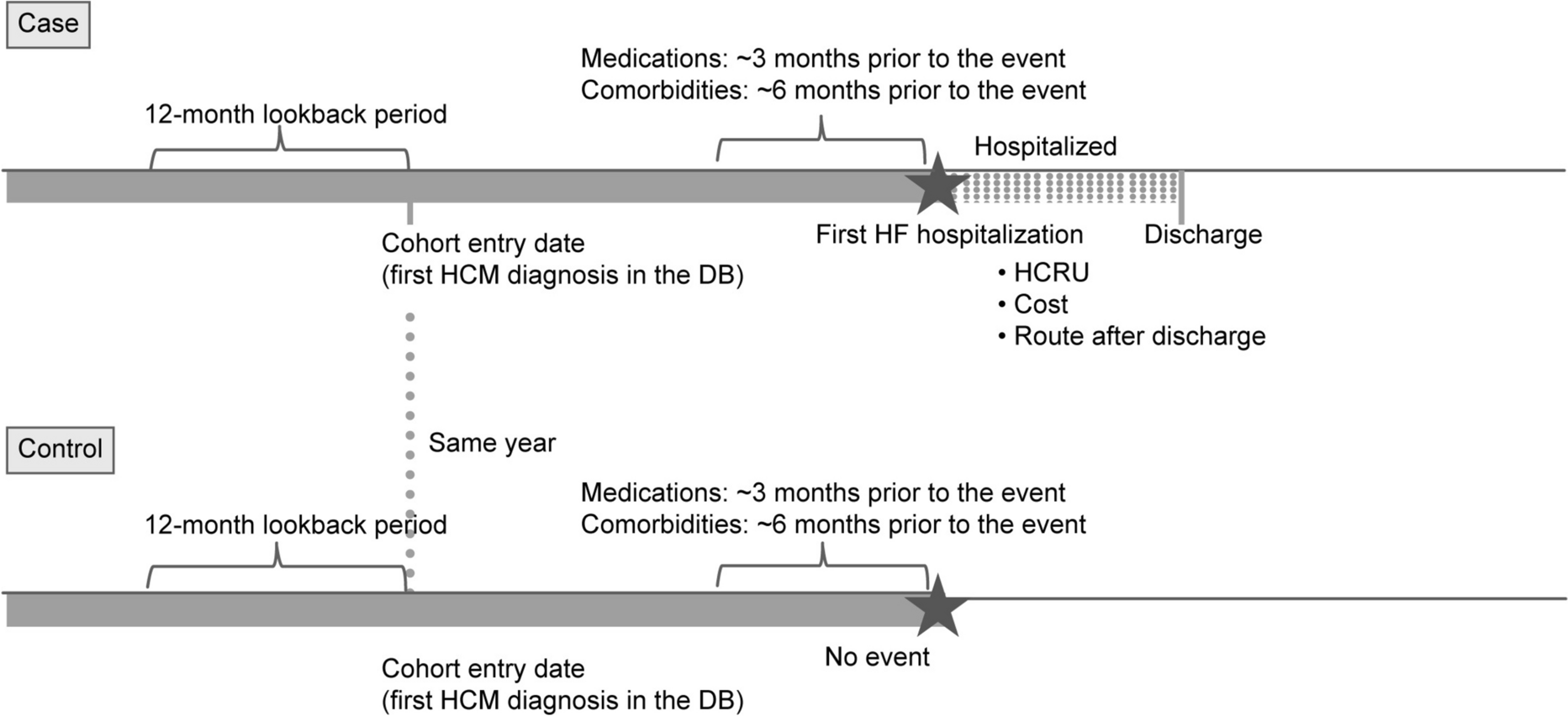
The current study has several strengths. This is the first study demonstrating the treatment sequence for patients with obstructive HCM in real-world clinical practice as well as diagnosis flow and HCRU associated with obstructive HCM in Japan. Secondly, data were collected from the payer claims database provided by DeSC Inc., which provides information on a broad number of individuals with obstructive HCM, as it includes AEMSS and Kokuho, as well as Kempo data, which cover approximately 8 million people insured by those insurances as of December 2022. Lastly, the DeSC database is an insurance-based claims database that allows the follow-up of patients even if patients change healthcare practices or hospitals.
Our study also has several limitations. First, the retrospective nature of this study limited the ability to establish causal relationships. Second, the study excluded patients who were prescribed BB, CCB, or SCB before HCM diagnosis for other diseases, including HF, arrhythmia, and hypertension. This exclusion may introduce selection bias and limit generalizability by omitting patients with relevant comorbidities commonly associated with HCM. Third, inspection data, including echocardiographic data and laboratory test results, were not available in the DeSC database; therefore, data associated with HCM diagnosis and validation of comorbidities were incomplete in this study. Fourth, there were risks of miscoding of diseases due to the nature of the administrative data. Comorbidities could be overestimated or underestimated due to the nature of the administrative data. Hypertension, HF, arrhythmia, etc., could be diagnosed for the reimbursement of medications such as BB, CCB, and SCB. Fifth, the administrative record is segmentalized when individuals change their insurance. Sixth, given that the majority of data were derived from Kokuho and AEMSS, fewer number of patients in full-time employment were included in this study. Seventh, due to the limited number of patients in certain subgroups, treatment patterns and changes for patients who received CCBs could not be fully described; therefore, the results should be interpreted with caution. Finally, the DeSC Healthcare claims database does not provide sociodemographic information such as education level, income, or occupation. Additionally, the database includes only individuals who are enrolled in specific insurance plans, and it may not capture populations who are uninsured or unable to sustain insurance coverage.


Comments (0)