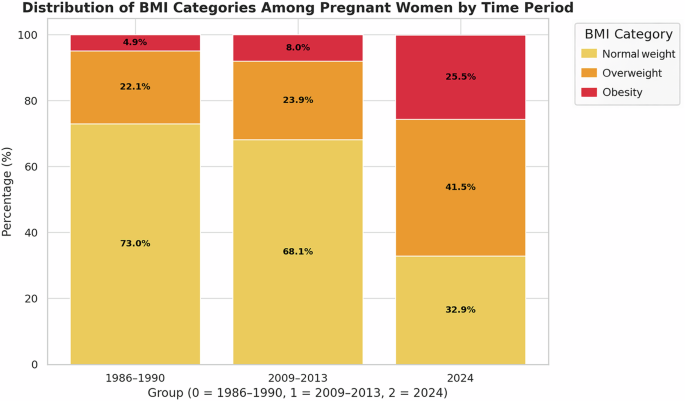
The data indicate a statistically significant and clinically relevant increase in BMI among pregnant women over the past four decades, driven by rising rates of overweight and obesity. The sharp drop in normal-weight pregnancies highlights the need for public health interventions focused on preconceptional and antenatal weight management.
Key contributors to this trend include changes in dietary habits, decreased physical activity, and shifts in socioeconomic conditions [10]. Urbanization and the widespread adoption of sedentary lifestyles have played a significant role in weight gain, especially among women of reproductive age. Furthermore, the increasing reliance on processed and calorie-dense foods has only intensified the problem [11].
The increase in the prevalence of high BMI among pregnant women poses significant public health concerns. Overweight and obesity affect approximately two-thirds of pregnancies, raising the risk of hypertension, preeclampsia, gestational diabetes, venous thromboembolism, and both maternal and fetal mortality [8, 12]. Moreover, maternal obesity is linked to an increased risk of future cardiovascular diseases for the mother [13].
Elevated BMI in pregnant women is closely linked to complications during labor and delivery. Maternal obesity increases the risk of adverse perinatal outcomes, including a lower probability of spontaneous labor onset, a higher rate of labor induction, and a higher likelihood of cesarean delivery, often due to labor dystocia and fetal macrosomia. It is also associated with an increased risk of stillbirth, a greater incidence of fetal macrosomia, and a higher frequency of urgent cesarean sections [13]. High BMI is associated with an increased risk of operative vaginal delivery and shoulder dystocia [14]. The risk of cesarean sections is 50% higher in women with overweight and more than twice as high in women with obesity compared to those with a normal weight [15].
Newborns of women with obesity have a higher risk of preterm birth, leading to lower gestational age. On the other hand, they are more likely to be large, which raises the risk of birth trauma. Additionally, they have a higher likelihood of low Apgar scores and more commonly experience hypoglycemia. The chances of admission to the neonatal intensive care unit or the need for specialized care are also greater [16]. Maternal obesity is further linked to an increased risk of birth defects in offspring, including heart defects, neural tube defects, and other congenital malformations. Moreover, children born to mothers with obesity are at higher risk of developing obesity, coronary heart disease, stroke, type 2 diabetes, and asthma. There is also evidence suggesting that maternal obesity may contribute to poorer cognitive development and a greater likelihood of neurodevelopmental disorders, such as cerebral palsy [17]. These children also have a higher risk of stillbirth and neonatal mortality. Perinatal mortality, which includes the death of the fetus or newborn, is almost six times higher in women with severe obesity (>40.0 kg/m²) compared to women with a BMI of 30.0–34.9 kg/m² [16].
Furthermore, the findings of our study are consistent with the projected epidemiological trends reported by Eurostat, which forecast a continued rise in maternal obesity in Slovakia through 2035. Notably, the rate of increase in Slovakia has outpaced the European average over the past decade, underscoring an urgent national public health priority [7]. These outcomes not only pose risks to maternal and neonatal health but also place a significant strain on healthcare systems. Addressing this requires a multi-pronged approach: preconception counseling and weight management programs can help women achieve a healthy BMI before pregnancy, while healthcare providers should offer personalized nutrition and exercise guidance to manage weight gain during pregnancy. Furthermore, public health campaigns must focus on raising awareness about the risks of obesity in pregnancy and the importance of maintaining a healthy lifestyle [18].

Comments (0)