This study demonstrated the antinflammatory effect of Tea-Xa and polysaccharide fraction FII obtained from X. americana barks in the rat model of arthritis induced by zymosan in the tibiotarsal joint. It also demonstrated that Tea-Xa given per oral in single doses (300, 2000 mg/kg) to rats lacked to produce mortality or toxicological signs.
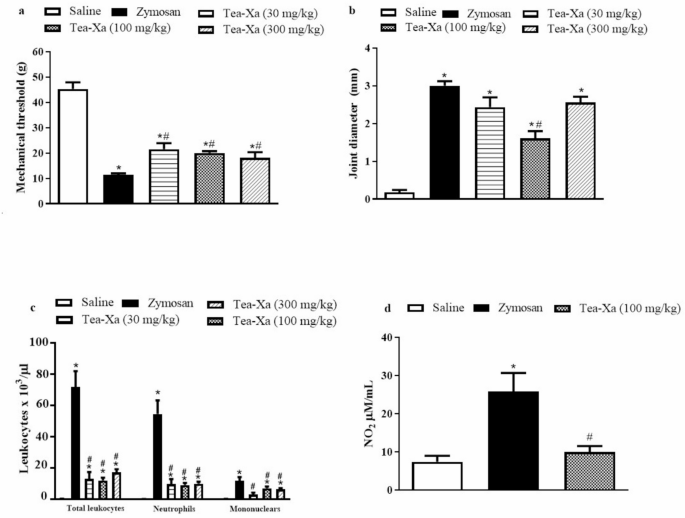
Arthritis induced by zymosan is an established experimental model that mimics the clinical and pathophysiological features of rheumatoid arthritis, such as articular edema, hypernociception and leukocyte influx, mainly of neutrophils (Bringel et al. 2020). Our results demonstrated the inhibitory effect of Tea-Xa, rich in polysaccharides, on joint edema, nociception and leukocyte influx elicited by zymosan. The effect on nociception and leukocyte influx was sustained up to 24 h after arthritis induction, indicating a long-lasting effect. The anti-inflammatory effect of the polysaccharides from X. americana barks had been previously demonstrated in animal models, such as gastritis (da Silva-Pantoja et al. 2018), pancreatitis (da Silva-Leite et al. 2018), and in the models of paw edema and peritonitis (Marques et al. 2020). The antinociceptive effects had also been demonstrated for these polysaccharides (da Silva-Leite et al. 2017, 2018; Marques et al. 2020).
It is well known that the inflammatory mediator nitric oxide (NO) induces vasodilation, increase in vascular permeability, nociceptors sensitization in articular inflammation in animals (Spiller et al. 2019; Bringel et al. 2020) and humans (Tsikas and Mikuteit 2022). In addition to the inhibitory effect of Tea-Xa on the inflammatory parameters mediated by NO, Tea-Xa also reduced the nitrite concentration in the articular fluid. Therefore, it is possible to suggest that NO is involved in the Tea-Xa effect on the inflammatory events present in the zymosan-induced arthritis. In this line, the total polysaccharides obtained from X. americana barks reduced nitrite levels in the experimental model of gastritis (da Silva Pantoja et al. 2018).
In this study, it was also demonstrated that the fraction FII, possessing similar quantity of polysaccharides compared to Tea-Xa, inhibited inflammatory parameters (joint edema, hypernociception, leukocyte influx) manifested in the zymosan-induced arthritis, suggesting the important role of polysaccharides in this effect. The anti-inflammatory effect of FII is in accordance with those demonstrated in other inflammation models (da Silva-Leite et al. 2018; da Silva-Pantoja et al. 2018; Marques et al. 2020). Moreover, other plant-derived polysaccharides had shown protective effect in articular inflammation models (da Silva Nascimento et al. 2021; Kuang et al. 2023).
Previous study of our research group had demonstrated reduction on leukocyte rolling and adhesion for the polysaccharides of X. americana barks (da Silva-Pantoja et al. 2018). Considering the high carbohydrate content present both in Tea-Xa and FII, it would be possible that the inhibition on neutrophil migration elicited by these polysaccharides occur due to their binding to adhesion proteins, alleviating the joint inflammatory process. Accordingly, the inhibition on neutrophil adhesion was previously shown for other plant-derived polysaccharides (Tong et al. 2014; Araujo et al. 2024).
Histopathological analysis of the joints revealed that X. americana polysaccharides reduce the leukocyte influx, necrosis and tissue disorganization induced by zymosan. The effect on tissue damage induced by the inflammatory process had been demonstrated in other estudies for plant derived-polysaccharides (da Silva-Leite et al. 2018; da Silva-Pantoja et al. 2018; da Silva Nascimento et al. 2021). The protective effects of X. americana polysaccharides on tissue injury, such as necrosis and edema, involve reduction of neutrophil migration and myeloperoxidase activity (Silva-Pantoja et al. 2018).
It is known that joint tissue damage triggers nociception and that plant-derived polysaccharides decrease joint nociception via attenuation of tissue injury (da Silva Nascimento et al. 2021). Furthermore, previous studies showed that these polysaccharides alleviate inflammatory response in the joint tissue cells, including chondrocytes (Wu et al. 2022).
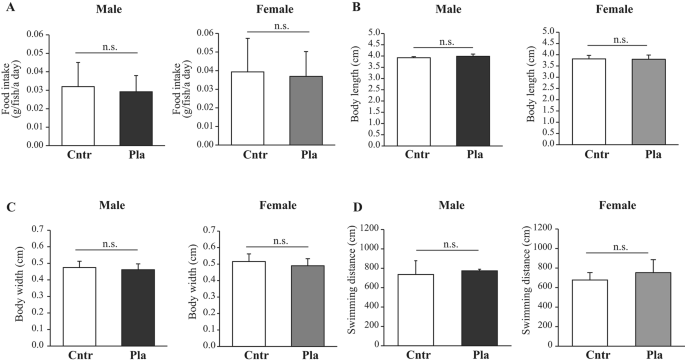
Moreover, the treatment with Tea-Xa given per oral in single doses to rats did not produce toxicological signs or mortality, when evaluated according to the OECD guideline 423. There were no significant changes in the breathing, somatomotor activity, convulsions, tremors or itching. Furthermore, no abnormal food or water intake, or significant variations in body weight were identified. It suggests the normal processing of lipids, carbohydrates and protein metabolism within the body of animals as such nutrients play important roles in different physiological functions (Olsen et al. 2021). These data are in line with previous study that demonstrated no signs of systemic toxicity for the polysaccharide extract obtained from X. americana barks (da Silva-Leite et al. 2017). Our findings also reinforce the literature on the lack of toxicity of plant polysaccharides (Xie et al. 2016).
On the other hand, changes in exploratory activity were observed on the 7th and 14th days after treatment, being more evident at 2000 mg/kg. It is well established that the increase in locomotion can be considered a stimulating effect, while its decrease is related to sedation or prostration. In the open field, an increase in locomotion or time spent in the central part of the device and vertical exploration can be interpreted as anxiolytic effect, while the opposite is associated with anxiogenic effect (Prut and Belzung 2003). Changes in exploratory activity have been already reported for other plant polysaccharides (Nonato et al. 2018).
The hematopoietic system is a primary target for toxic substances; therefore, several haematological parameters can be analyzed in sub-acute toxicity study, providing information specially to the functioning of the immune system and revealing pathologies in humans and animals (Li et al. 2010). In general, the administration of Tea-Xa did not cause changes on haematological parameters (hemoglobin, red blood cells, platelets), which reflects lack of adverse effects on the hematopoietic system, as previously demonstrated for the total polysaccharide extract of X. americana barks in mice (da Silva-Leite et al. 2017) and for other plant decoctions (Deyno et al. 2020).
The leukogram showed that Tea-Xa at 300 and 2000 mg/kg stimulates leukocytosis and neutrophilia. Since Tea-Xa contains in its composition immunostimulant molecules such as proteins, phenols and mostly polysaccharides (Marques et al. 2020), it may be stimulating bone marrow, a phenomenon that can be attributed to the immunomodulator role of plant polysaccharides (Ferreira et al. 2015).
In general, the assessment of some parameters such as body and organs weight, tissue injury, enzyme activity and other physiological disorders after pharmacological treatment may indicate animal health status (Michael et al. 2007). Our data showed no significant macroscopic changes either in body weight or relative organ mass, corroborating previous studies with the polysaccharidic extracts of X. americana (Silva-Leite et al. 2017; Cho et al. 2020).
The liver is the major target of toxic substances administered per oral. Changes in serum enzymes levels ALT and AST may indicate hepatocellular toxicity and liver damage (Singh et al. 2016) and the increased levels of serum creatinine and urea is indicative of changes in kidneys, an important organ for drugs elimination (Travlos et al. 1996). The per oral treatment with Tea-Xa in rats did not cause significant alterations in AST and ALT activities, or in the content of creatinine and urea, suggesting no alteration in the renal and hepatic systems, as already described in other studies with plant decoction (Deyno et al. 2020), and with the polysaccharide extracts of X. americana (Silva-Leite et al. 2017).
The histopathological analysis showed signs of portal congestion, signalizing possible hepatotoxic effect. However, as previously described, this toxicity can be questioned by the absence of alteration in the liver enzymes (ALT, AST). Furthermore, the literature reports that this effect may be related to the hormones, as there are differences in the development of liver lesions between male and female rats, which means that the animal’s gender may have influenced (Dongmo et al. 2019; Miller 2001).
In view of the exposed data, which suggest the safety of the consumption of X. americana barks decoction (Tea-Xa) in the folk medicine, along with the pharmacological effects of its polysaccharides described in the literature, Tea-Xa can be pointed to an alternative or adjuvant therapy for the treatment of inflammatory and painful conditions, especially in acute arthropathies.




Comments (0)