The method section is about what we did and how we did it.
This section has 4 parts.
Part 1 is about who did the evaluation.
Part 2 is about how we did the evaluation.
Parts 3 and 4 are about the co-researcher, who was an important part of this project.
Part 1: Who did the Evaluation?
The evaluation was completed by a group of researchers at a South Australian university.
The research team included a co-researcher with an intellectual disability.
This is because SACID wanted people with intellectual disability to be involved at every stage of the project and the evaluation.
This is also because the research team recognised the importance of inclusive research practice.
Inclusive research practice means making sure that people with disability are a part of research about them, as participants of the research and as the evaluators (Robinson, et al., 2014; Walmsley, et al., 2018).
We will share more about the co-researcher at the end of this section.
Part 2: What did we do?
First, we got approval from the university’s ethics committee (project number: 2552) to do the evaluation research.
We asked people to be involved.
We asked people who were involved in the activities we were evaluating.
SACID provided people with information about the evaluation and why we were doing it.
Everyone got an information sheet and a consent form written in Easy English.
If people wanted to be a part of the evaluation, they gave their signed consent forms to the research team.
People did not have to be involved if they did not want to.
We asked people from three different groups if they would like to do an interview or to be part of a focus group.
A focus group is a conversation in a small group with some guiding questions that the person running the focus group asks the group about (Cyr, 2019).
Group One was people who attended workshops.
Workshops are group activities that SACID runs for people with intellectual disabilities.
Each workshop shares information about a different topic like: Staying Safe, Strong Mind, Online Safety, and Healthy Habits.
Some of the workshops in this study were for families of people with intellectual disabilities.
One of these workshops was to co-design workshops for other families.
The workshop they designed was called Future Proofing.
People who attended workshops were invited to stay after the workshop, to speak with the researchers.
A small group of people were also contacted a few months after they had been at a workshop.
We spoke with them about what they had done since the workshop and how things had changed for them since doing the workshop.
This group was called the medium to long-term impacts group.
Group Two was peer action crew leaders and participants.
Peer Action Crew are a group of people with intellectual disabilities who meet regularly.
Sometimes they meet face-to-face, sometimes they meet online.
When Peer Action Crew started, there were different groups with different interests.
For example, there were groups in different geographical areas of the state.
There was also a group interested in Books, and another group called ‘Peers at the Pub’.
This project went for four years, which meant Peer Action Crew changed a lot during this time.
We spoke with people from Peer Action Crew 5 times during the project.
People from Peer Action Crew who wanted to be a part of the evaluation, contacted the researchers.
The researchers then arranged a time to meet.
SACID helped with arranging a location and confirming times.
This was important so that participants did not have to share personal contact information with the researchers.
Group Three was SACID staff and board members.
We spoke with people with and without intellectual disabilities who worked at SACID.
We also spoke with members of the SACID board.
None of the board members we interviewed had intellectual disabilities.
People who wanted to be a part of the evaluation contacted the researchers.
The researchers then arranged the time to meet.
Most focus groups and interviews were held at SACID.
This was because people were already there for work.
Some interviews were done over video call (Microsoft Teams).
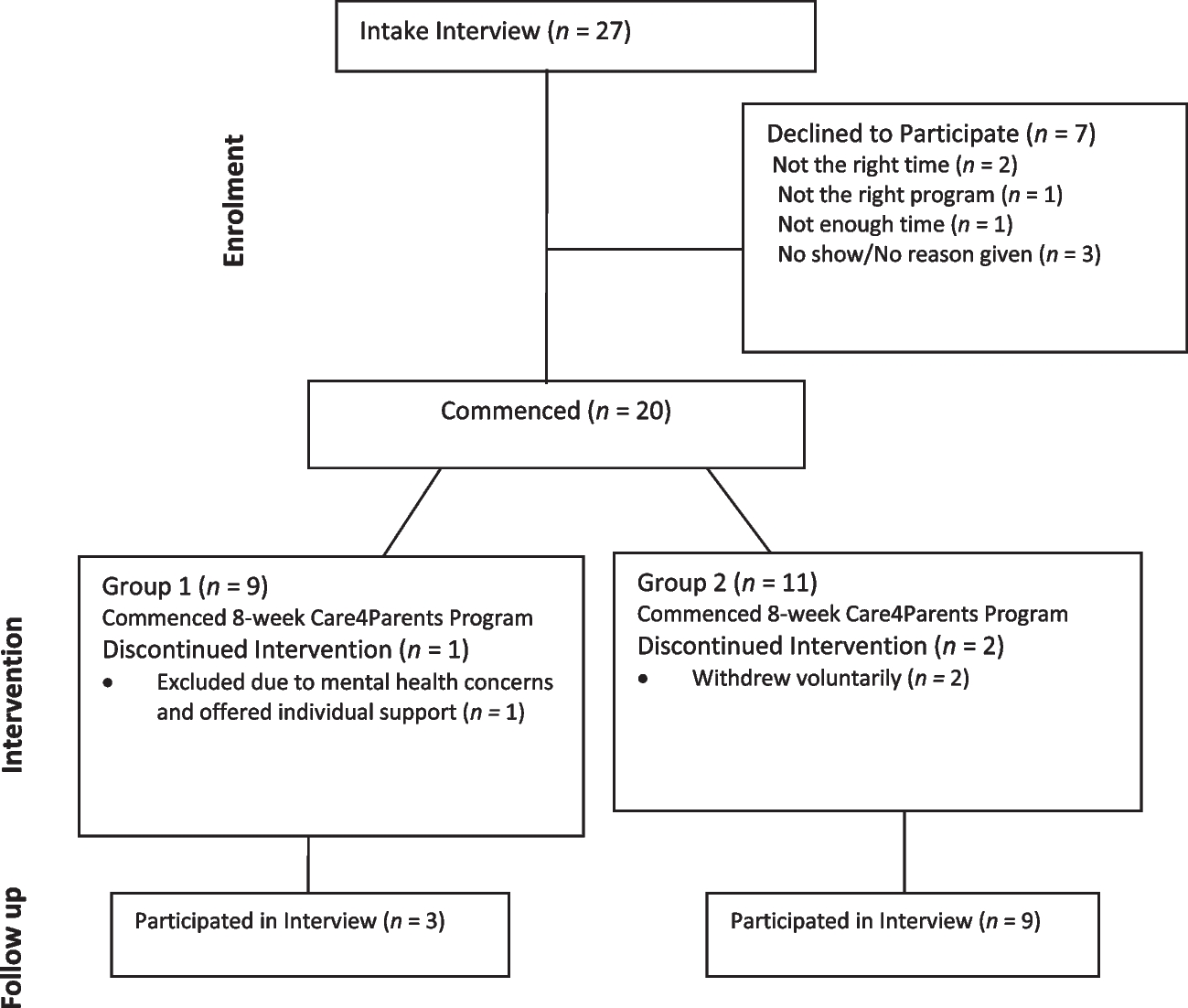
Table 1 shows the different groups and interviews we worked with, and how many people were in each group.
Table 1 Overview of participants and how they participatedWe talked with the groups of people (focus group), or people by themselves (interview).
We asked them questions about SACID activities.
We recorded what they said.
Next, we looked carefully at the information.
To do this, we typed what was recorded.
This is called transcription.
We sorted the things people said into key themes.
Finally, we wrote a report.
A report is basically a long way of saying what we did and what we found out.
This article is a shorter version of that report.
This project went on for four years, so there was a lot to write about.
There were also lots of changes in those four years, so we had to think carefully about how the information all fit together when writing the report.
The themes we found helped answer the research question.
We thought about what this meant and created a framework to explain what we had learned.
A framework is like a map that shows how different ideas are connected.
We put everything together and wrote our report.
We also made a presentation and some posters showing what we found out.
These posters are called infographics.
Then we wrote this article.
This is because we wanted to share the information in different ways.
Part 3: What did the Co-Researcher do?
Including a co-researcher in the research team was a very important part of this project.
The co-researcher was involved in every part of the research process.
Some of the things the co-researcher did were:
Creating information documents for participants in Easy English
Chairing meetings between the research team and SACID
Planning interview questions
Interviewing participants (together with a research assistant)
Transcribing interviews
Reviewing the transcripts
Identifying key information from participant interviews
Analysing and interpreting data
Writing and editing reports
Recording videos
Creating infographics and accessible versions of the report
Most of the participants we interviewed were people with intellectual disabilities.
Another important thing that the co-researcher did was coming up with ways to make sure everyone could participate in and contribute to the interviews.
Some of the ways we did this was:
The co-researcher and research assistant also worked together to find different ways of looking at the information and sorting it.
This was to make sure that both were able to contribute equally to the analysis.
The things that worked well were writing information on the whiteboard, using sticky notes, and colour coding similar information to identify themes.
The next section is written by the co-researcher for this project, the second author.
It shares her experience working on the evaluation.
Part 4: Reflections of the Co-Researcher
I started as a Co-Researcher in August 2020.
A Co-Researcher means that I, as a person with a disability, am involved in all parts of the research.
I work with a Research Assistant.
I worked with three different Research Assistants during this project.
They help me do things I can’t do.
They also help me work on the things I know and learn new things that I didn’t.
If I didn’t have someone to help me, I would not know what to do.
They also help me so I stay doing what I am meant to be doing, otherwise I will talk about and do things that are not work.
I like working with research assistants because it helps me stay on task and we learn from each other.
I like doing our work on the whiteboard when we analyse the data. That’s fun!
Before I started this project I had done another research project on pets for people with intellectual disabilities, so I knew some things about research.
This project has helped me to work on what I knew and learn new things as well.
Working has also helped me get out of the house and save money to go on a cruise.
Since joining the research team, I have done things like interviews, which means talking to a single person about research, and focus groups, which means talking to a group of people.
I have also been in charge of meetings which is called chairing a meeting, as well as typing up what was said in a voice recorder onto a word document, which is called transcribing.
One of the new things I learned was how Teams, which is used for online meetings, works and I also learned how to make documents into Easy Read.
Some of the things that I have done in this project I already knew how to do and were easy for me, other things were a little harder.
Typing was something that I found easy, but I have gotten better so I now no longer have to look at the keys as much.
I like creating things with pictures, but using Canva has taught me a lot more than what I knew before.
One of the harder things was when I was doing the transcription, trying to understand what people were saying was a challenge.
That challenge was made a little harder by having to go backwards all the time and losing where I was.
Teams should put in rewind and fast forward buttons.
Even if I was having difficulty with doing tasks, I had fun, so it wasn’t all that that bad.
The worst part of it was when COVID restrictions stopped us from being able to come into the Uni and we weren’t allowed to do interviews and focus groups face-to-face, and don’t get me started on all the panic buying!
We made things work by going online.
I can now say that I can use Teams and Zoom quite well.

Comments (0)