General anesthesia
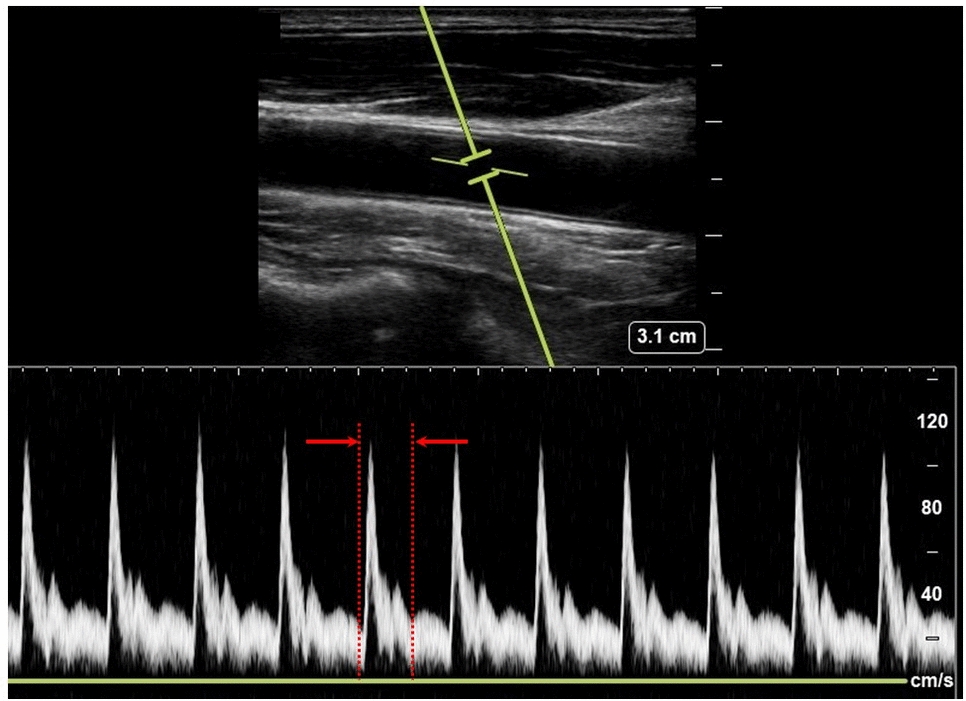
Kimura et al. [10] investigated the utility of recruitment maneuver–induced changes in FTc as predictors of fluid responsiveness in mechanically ventilated patients undergoing general anesthesia. In this prospective study of patients undergoing elective surgery, fluid responsiveness was defined as an increase in stroke volume of at least 10% after fluid loading. The authors demonstrated that a reduction in FTc of approximately 12% during the recruitment maneuver effectively discriminated responders from non-responders, with an area under the receiver operating characteristic curve (AUC) of 0.82. Sensitivity and specificity were 95.0% and 80.0%, respectively, indicating clinically acceptable diagnostic performance. Importantly, the study was conducted under lung-protective ventilation strategies with relatively low tidal volumes (6–7 mL/kg ideal body weight), a setting in which conventional dynamic indices such as SVV and PPV frequently lose accuracy. These findings suggest that FTc, when assessed as an intervention-induced change, may retain predictive value even when ventilation-related limitations compromise pressure-based indices. From a practical standpoint, the recruitment maneuver is short, reproducible, and familiar to anesthesiologists, making FTc assessment feasible without major disruption of the intraoperative workflow.
Critical care
Barjaktarevic et al. [11] evaluated the diagnostic performance of PLR-induced changes in FTc in patients with undifferentiated shock in a critical care setting. In this prospective observational study, fluid responsiveness was defined as an increase in stroke volume measured using a non-invasive reference method. The investigators reported that PLR-induced prolongation of FTc predicted fluid responsiveness with an AUC of approximately 0.88, comparable to values reported for established dynamic tests. A cut-off increase in FTc of 7% during PLR yielded a sensitivity of 96% and a specificity of 68%. Notably, the study population included patients with spontaneous breathing, a condition under which SVV and PPV are commonly unreliable. As PLR is reversible and does not require fluid administration, combining PLR with carotid Doppler assessment aligns well with contemporary intensive care unit (ICU) practice, which emphasizes physiological testing while minimizing unnecessary fluid loading.
Cesarean delivery
Invasive hemodynamic monitoring is not commonly performed during cesarean delivery under spinal anesthesia, and hypotension is often encountered. Juri et al. [12] explored whether changes in the FTc induced by Trendelenburg positioning before spinal anesthesia could predict hypotension during cesarean delivery. In their observational cohort, patients who subsequently developed hypotension after spinal anesthesia demonstrated significantly greater increases in FTc induced by the Trendelenburg position before anesthetic induction. The authors reported that the percent change in FTc suggested high predictive accuracy, with an AUC of approximately 0.88. Although the endpoint differed from classic fluid responsiveness, this study illustrates that FTc-based functional assessment can identify patients with limited preload reserves who are particularly vulnerable to sudden reductions in venous return following neuraxial blockade. This application is especially attractive in obstetric anesthesia, where non-invasive, rapid, and repeatable hemodynamic assessments are strongly preferred.
Broader perspectives and emerging applications
In addition to immediate assessment of fluid responsiveness, FTc may provide insights into overall hemodynamic status and postoperative recovery. Zhang et al. [13] investigated the feasibility of serial FTc measurements during the early postoperative period after cardiac surgery. In their cohort, shorter FTc values measured after ICU admission were associated with a longer ICU stay and prolonged duration of mechanical ventilation. Although this study was exploratory and not designed to establish causality, it suggests that FTc may reflect broader aspects of cardiovascular performance and preload reserve beyond binary responder classification. Therefore, serial FTc assessments may complement conventional vital signs and laboratory parameters, particularly in settings where continuous invasive monitoring is not available or has already been discontinued.



Comments (0)