
Remember me
A 23-year-old man with a single ventricle of left ventricular morphology underwent a Fontan procedure with an extracardiac total cavo-pulmonary connection at 2 years of age. He subsequently developed kidney failure secondary to bilateral hypoplastic kidneys and began PD at 12 years of age. PD was continued for 9 years because he was considered unsuitable for HD or kidney transplantation (KT) owing to impaired cardiac function, with an ejection fraction of 43%, and the presence of concomitant complete atrioventricular block. He remained on automated PD with a daytime dwell, maintaining stable ultrafiltration without any episodes of failure, and his daily ultrafiltration volume was approximately 1000 mL. At 21 years of age, during treatment for a refractory exit-site infection, laparoscopic examination revealed early-stage EPS [6]. Subsequently, the diagnosis of early-stage EPS necessitated withdrawal from PD, prompting reconsideration of IHD as an alternative kidney replacement therapy. During the 9-year PD course, no clinical signs suggestive of EPS, such as bowel obstruction or ultrafiltration failure, were observed. The results of the previous annual peritoneal equilibration tests, performed according to a standard protocol using 2.0 L of 2.5% dextrose solution, had been classified as low-average for the preceding 4 years. However, at the time of this evaluation, a 4 h dialysate-to-plasma creatinine ratio of 0.69, consistent with a high-average transporter profile. Oral prednisolone was initiated for early-stage EPS, and transition to IHD was considered.
On examination, his height was 153.3 cm and body weight was 37.7 kg. Vital signs showed a blood pressure of 123/67 mmHg and a pulse rate of 51 beats per minute. Blood tests revealed a blood urea nitrogen of 81.0 mg/dL, potassium 4.1 mEq/L, calcium 8.9 mg/dL, phosphate 5.1 mg/dL, and a brain natriuretic peptide (BNP) level of 25.0 pg/mL. Chest radiography, demonstrating findings typical of patients with Fontan circulation, showed a cardiothoracic ratio of 41.3% with sharp costophrenic angles, a mildly prominent right first cardiac contour, and slight concavity of the right second cardiac border. Electrocardiography revealed complete atrioventricular block. After consultation with pediatric cardiologists and cardiovascular surgeons, cardiac catheterization demonstrated a mildly elevated CVP (11–12 mmHg; normal range, 2–6 mmHg) and preserved ventricular function with a ventricular ejection fraction of 54%, representing an improvement compared with the value of 43% recorded 9 years earlier. Echocardiography also showed preserved ventricular contractility (fractional shortening 0.41) without pericardial effusion. These findings suggested that IHD could be introduced safely, after completion of atrioventricular block treatment.
The patient also had autism spectrum disorder, attention-deficit/hyperactivity disorder, and moderate intellectual disability (intelligence quotient of 44). Because of narrow veins and difficulty tolerating repeated needle puncture, creation of an arteriovenous fistula (AVF) was considered impractical. Therefore, a tunneled HD catheter was selected as long-term vascular access.
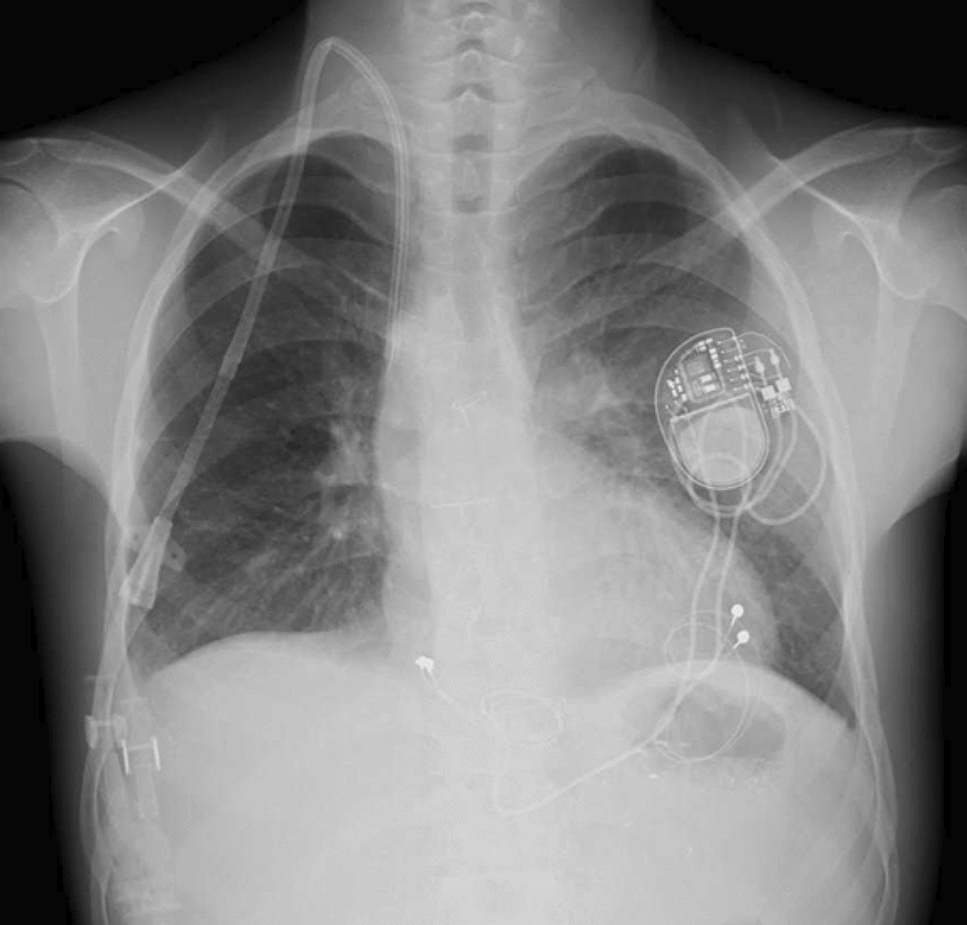
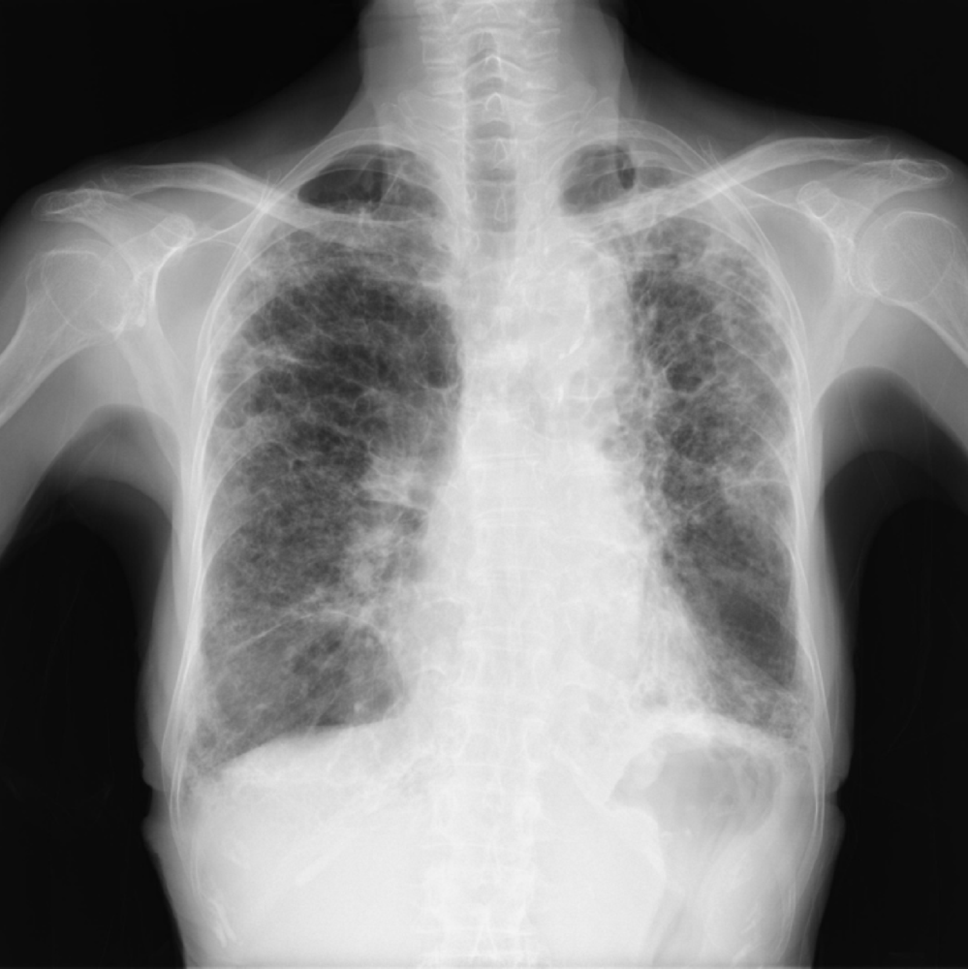
Permanent pacemaker implantation for complete atrioventricular block and insertion of a 13-French diameter tunneled HD catheter via the right internal jugular vein were performed (Fig. 1). IHD was initiated on the following day, and maintenance HD was performed with a blood flow rate of 150 mL/min. The interdialytic weight gain over a one-day interval was approximately 1 kg, corresponding to about 2.5% of his body weight, with a maximum ultrafiltration volume of 2.4 L. His blood pressure remained around 130–140/60–70 mmHg during HD sessions, without hemodynamic instability. IHD has since been continued for 9 months without major complications. Dry weight has been adjusted according to edema, blood pressure, and BNP levels, which have been maintained below 20–30 pg/mL. In addition, peritoneal lavage has been continued every other day, draining approximately 300 mL of ascitic fluid each time. He will be assessed in the near future regarding the feasibility of KT.
Fig. 1
Chest X-ray after insertion of a tunneled hemodialysis catheter. The tip of the tunneled hemodialysis catheter was presumed to be located in the extracardiac Fontan conduit. A permanent pacemaker was implanted at the same time
Comments (0)