The TMJ herniation into the external auditory canal (EAC) is a rare condition reported in the literature [6, 7]. TMJ Pain is a common symptom mentioned in some cases of HF [8]. In this study, the population considered were patients with TMD. No relationship was found between the TMJ and otologic symptomatology with the presence of timpani defect. This could have been related to the defect size average of 3.52 mm ± 1.1 mm found in this study. According to the study by Park et al. [9], the size of the defect is a determinant factor for the presence of symptoms. They reported that the mean size of the anterior wall defects in the studied group of TMJ herniation patients was 6.17 × 5.33 mm. The incidence of FH was 3.6% in our tomographic study. These results are relatively low compared to other published studies that reported a prevalence between 1.5 and 22.7% in tomography evaluation [10, 11] and an osteological study report that showed a prevalence of 7.2% [12].
An important factor should be considered to establish a geographical distribution of this condition: the membranous ossification patterns differences between races. Thus, race might affect the incidence of FH [13]. A meta-analysis established the highest prevalence of FH in Asia (21.4%) [14]. Compared with other studies that reported the incidence of FH in different countries, the Netherlands showed 4.6% [5], Turkey 13.4% [2], and Brazil 12.7% [6]. The literature poorly reveals HF prevalence in Europe, North, and South America. For this reason, future researchers may consider tomographic and anatomic studies to establish a solid prevalence in the different continents.
One relevant clinical issue is that this tympanic defect could be repaired in patients with a severe symptom like otalgia, or the FH could be part of a fistula of salivary otorrhea [15]; the literature reports that 50% of the cases reporting FH were under surgical correction [16], and different sorts of techniques are being described, including endoscopic-assisted transcanal repair of the tympanic defects [17], the use of polyethylene plates through a preauricular approach for the reconstruction of the tympanic defect [18], or auricle cartilage [19].
On the other hand, this anatomic defect could be asymptomatic in patients with TMD; for this reason, during the assessment of a TMD, patients must be at considerable risk of otologic injury during a TMJ arthroscopy procedure [20]. This study represents a group of patients with TMD who have a low incidence of this anatomic defect. Despite the literature reporting a low incidence of complications during the TMJ arthroscopy [21, 22], there are cases reported related to otologic complications, including tympanic membrane rupture, dislocation of the incus, injury to the tympanic segment of the facial nerve, labyrinthine disruption, and ear infection [23].
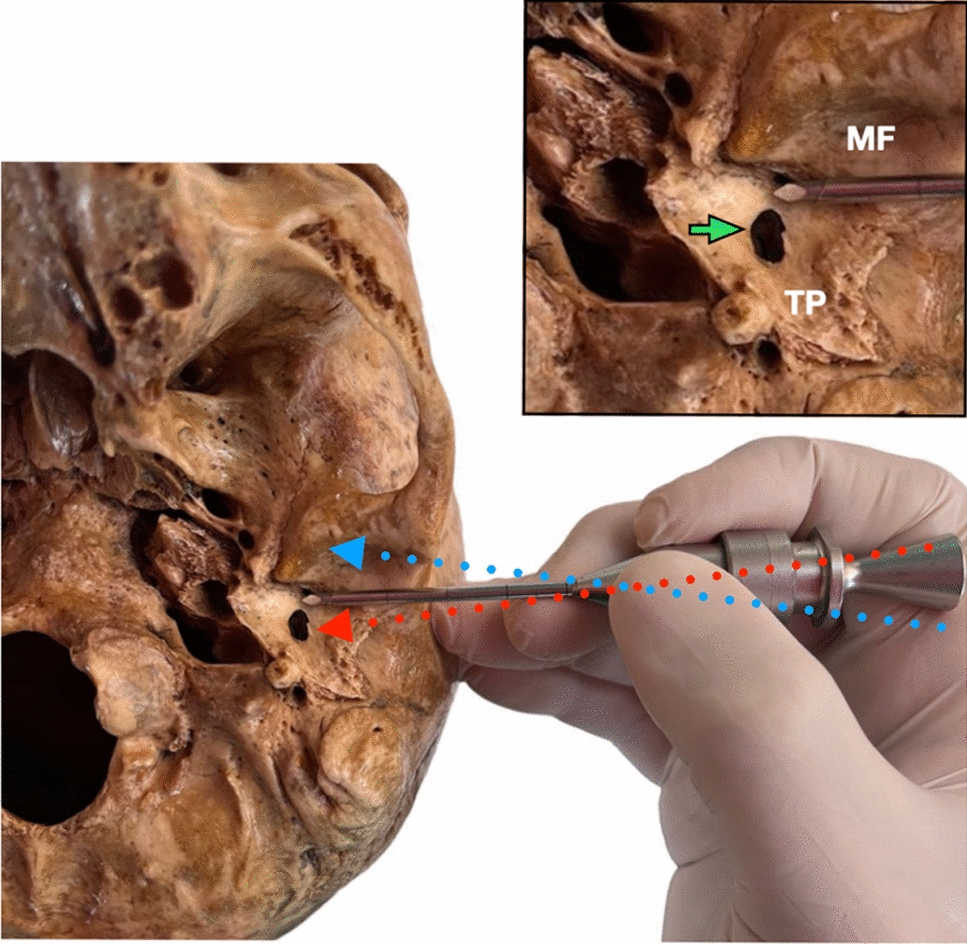
The relevant consideration of this defect should be set as an early fundamental issue during the training in TMJ arthroscopy due to the learning curve. The most common mistake is the angulation during the blind entrance to the upper joint space; a minimal angulation variation over 15°in the axial plane could lead to otologic damage [24]. The presence of FH in a patient who will undergo arthroscopy procedures could increase the risk of intraoperative complications. This is mainly due to two situations. The first is that during blind drilling with the acute trocar, if there is an incorrect inclination with a slight posterior direction, it could lead to a perforation of the membrane and facilitate entry into the middle ear. The second is that if the membrane was injured but not perforated and the fluid entry pressure or the depth of the arthroscopy is not controlled, the diffusion of the irrigation fluid can be facilitated, and otic pathology may present in the postoperative period. Thus, the initial evaluation of each patient must be addressed to assess the integrity of the tympanic bone.
The literature describes no relevant studies about this consideration, and currently, the surgical minimally invasive approach of TMD is becoming the first treatment option. During the arthroscopic procedure, the rigid instruments are placed in the posterior medial area of the mandibular fossa, and the risk of perforation, infiltration, and effusion of the irrigation solution could spread into the middle ear and lead to hearing impairment. In this study, the defect size was smaller than others previously reported. However, diffusion through the tympanic defect could spread the lavage substance into the middle ear during an arthroscopic procedure. In our experience, the prevalence of HF in TMD patients was low. Nevertheless, establishing a real prevalence in the population is very important, which is why other studies should be accomplished in different patient groups. More studies are required to establish a real prevalence of complications during the arthroscopic procedure in patients with TMD and FH which represent an ideal group of study.

Comments (0)