Study design and setting
This hospital-based retrospective case–control study was conducted at Ningbo University Affiliated Women and Children’s Hospital April 2016 and October 2021. The study adhered to the STROBE (Strengthening the Reporting of Observational Studies in Epidemiology) guidelines for observational research. Ethical approval was obtained from the Ethics Committee of Ningbo University Affiliated Women and Children’s Hospital (No. NBFE-2025-KY-072), with waived informed consent due to the retrospective use of de-identified data.
Study populationInitial cohort
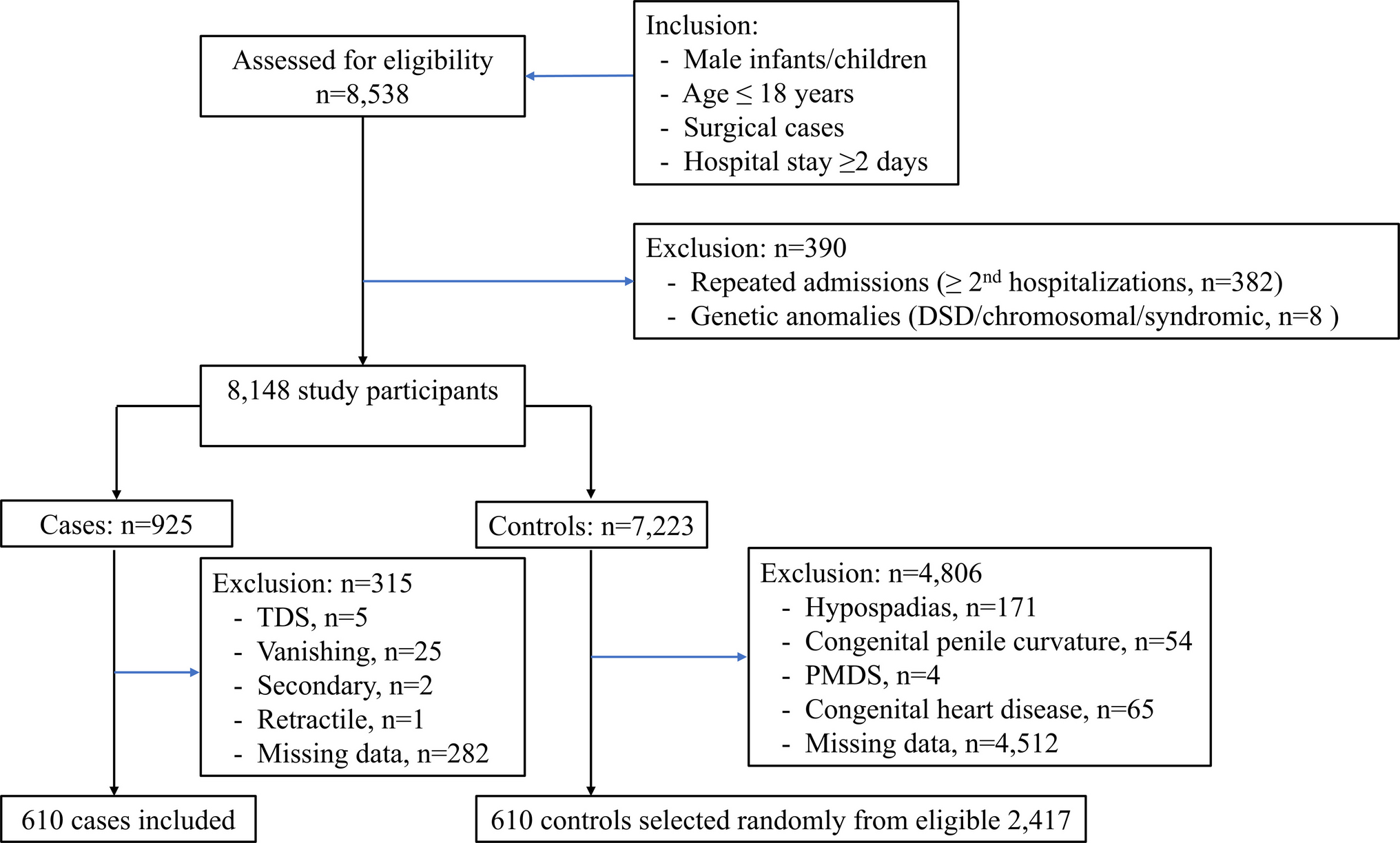
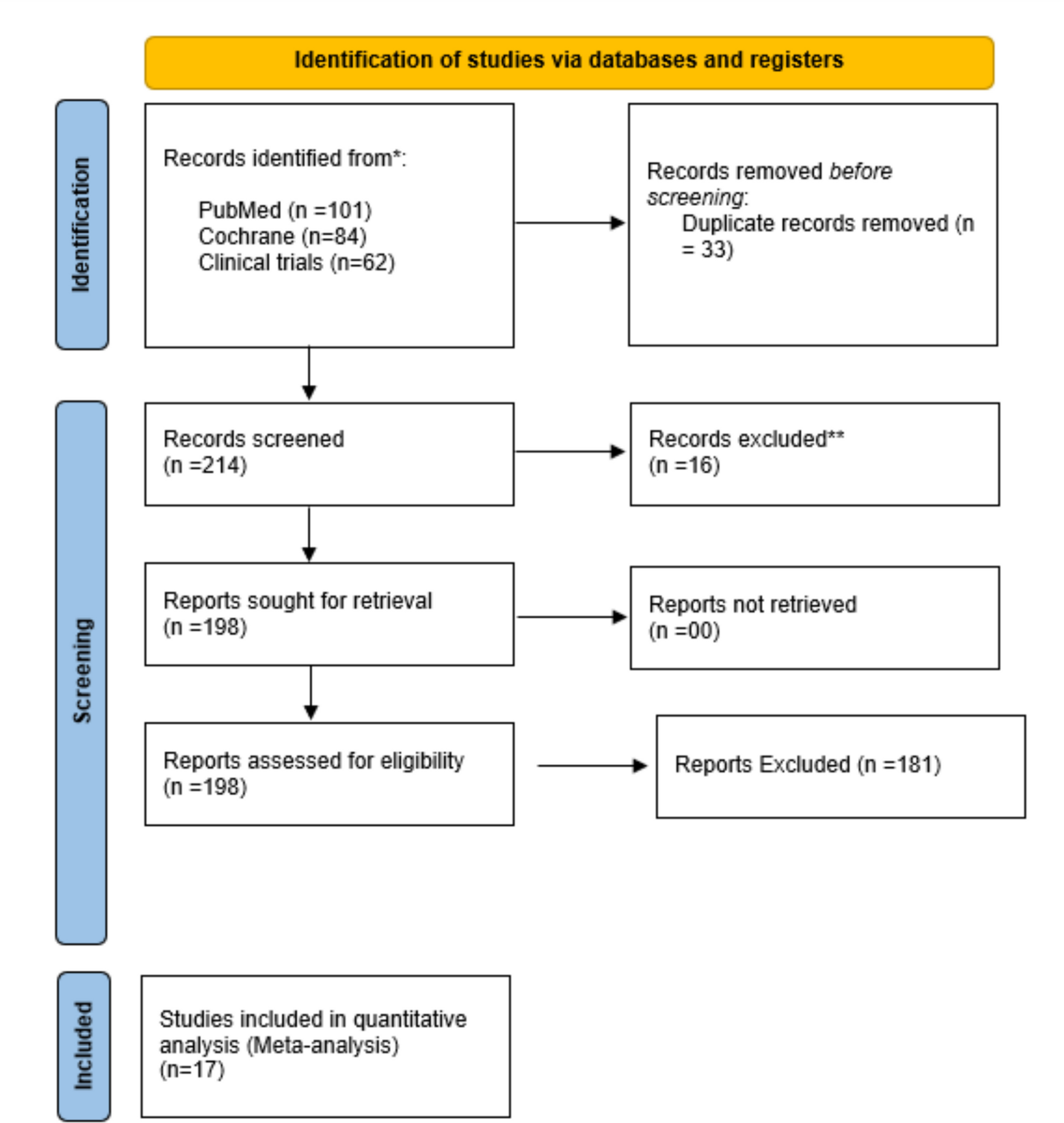
Participants were initially identified from an initial cohort of 8538 pediatric surgical admissions within the Pediatric Surgery Department. This initial cohort included all male infants and children aged ≤ 18 years admitted specifically for surgical procedures with a hospital stay duration of at least 2 days.
Exclusion criteria
Participants were excluded from the initial cohort if they had repeated admissions (≥ 2 hospitalizations) during the study period or genetic anomalies (including the disorders of sex development (DSD), chromosomal anomalies, or other syndromic disorders), leaving 8148 participants eligible for further evaluation.
Case and control definitions
Cases were defined as children undergoing orchiopexy for clinically confirmed cryptorchidism (persistent unilateral or bilateral undescended testis beyond 6 months of age). Patients were subsequently excluded if diagnosed with testicular dysgenesis syndrome (TDS), vanishing testes, secondary cryptorchidism, retractile testes, or if essential clinical data were missing. Ultimately, 610 cryptorchidism cases were included.
Controls were selected from pediatric patients undergoing unrelated surgical procedures, such as appendectomy, circumcision, or hernia/hydrocele repairs. Patients were excluded if they had endocrine-related urogenital anomalies (e.g., hypospadias, congenital penile curvature, persistent Müllerian duct syndrome), congenital heart diseases, or missing essential clinical data. From eligible participants (n = 2417), 610 controls were randomly selected. Subsequent statistical analyses confirmed no significant difference in maternal age distribution between cases and controls.
Data collection, quality assurance, and data verification
Data were extracted from electronic medical records using a standardized, piloted form with explicit variable definitions. Three pediatric clinicians received protocol training prior to abstraction. Blinding to case–control status was not feasible due to visible admission indications. Therefore, we restricted extraction to objective, source-documented variables and applied predefined coding rules. For data integrity, we implemented automated range/logic checks and cross-field consistency rules, de-duplicated records using a composite key (medical record number, date of birth, admission date), and manually reviewed any flagged collisions. In addition, a random 10% of records underwent independent double-extraction, with discrepancies adjudicated by a senior investigator via source-document review. Covariates were selected based on prior literature and univariable analysis, and included the following variables:
1.
Prenatal exogenous progesterone exposure:
Defined as maternal administration of progesterone (oral or intramuscular routes) during the first trimester
Included progesterone use related to assisted reproductive technology (ART) if administered within the specified gestational period
Comprised exclusively bio-identical progesterone (i.e., no synthetic progestins)
2.
ART conception:
Defined as pregnancy achieved through assisted reproductive technology (e.g., intrauterine insemination, in vitro fertilization, or intracytoplasmic sperm injection)
Recorded as a separate variable for all participants, regardless of case–control status
Given that progesterone administration is routine in ART cycles, ART-conceived participants were classified as “progesterone-exposed” according to the above criteria
Considered a potential confounder and adjusted for in multivariable logistic regression analyses
Collinearity with progesterone exposure was assessed prior to model fitting, and results are presented in the “Results” section
3.
Maternal characteristics:
Age at pregnancy confirmation (years, continuous)
Smoking (active smoking ≥ 1 cigarette/day for ≥ 1 week during preconception or pregnancy)
Alcohol use (≥ 1 drink/week during preconception or pregnancy)
Gestational hypertension (systolic blood pressure ≥ 140 mmHg and/or diastolic blood pressure ≥ 90 mmHg on ≥ 2 occasions, excluding pre-existing hypertension)
Gestational diabetes mellitus (physician-diagnosed and managed, excluding pre-existing diabetes)
Abortion history (≥ 1 spontaneous or induced abortion meeting all of): (a) occurring after birth of youngest older sibling (if any), and (b) before conception of index pregnancy, and (c) excluding all pre-first-born abortions (example: for a second child, only abortions occurring after first birth counted)
4.
Perinatal factors:
Delivery mode (vaginal or cesarean)
Prematurity (delivery at 28–37 weeks)
Low birth weight (LBW, < 2500 g)
Blood type (ABO)
5.
Family history:
Missing data handling
For all study variables (including exposure, outcome, and covariates), we excluded cases with any missing data, performing a complete-case analysis. This approach ensured all analyzed observations had complete data across all specified variables.
Statistical analysis
Continuous variables are reported as mean ± standard deviation (SD) and categorical variables as frequencies and percentages. Group comparisons were performed using Student’s t-test (normal distribution) or Mann–Whitney U test (non-normal), and χ2 or Fisher’s exact test for binary categorical variables.
Univariable logistic regression was used to identify factors potentially associated with cryptorchidism (P < 0.1). However, given clinical relevance and previous literature, all collected variables were included in subsequent multivariable logistic regression models. Model 1 adjusted for prematurity, smoking, alcohol, hypertension, diabetes, (maternal) age, delivery mode and blood type. Mode 2 further adjusted for LBW, abortion, ART, and family history. To evaluate potential collinearity among covariates, we calculated variance inflation factors (VIFs) for binary/continuous variables and generalized VIFs (GVIFs) for categorical variables; all VIFs and adjusted GVIF^(1/(2 × df)) values were < 1.3, indicating negligible multicollinearity. Results are reported as odds ratios (ORs) with corresponding 95% confidence intervals (CIs). Model calibration was assessed using the Hosmer–Lemeshow test, and discrimination was quantified by the area under the receiver-operating characteristic curve (AUC) with 95% confidence intervals.
Interaction analyses explicitly tested the modifying effect of delivery mode (vaginal vs. cesarean) on the association between exogenous progesterone exposure and cryptorchidism, with P for interaction values reported in both the text and tables. Subgroup analyses were performed to evaluate the robustness and consistency of the association across clinically relevant strata. To test the robustness of our findings, we performed sensitivity analyses excluding controls with hernia/hydrocele or ART cases.
All statistical tests were two-sided, with P < 0.05 considered statistically significant. The false discovery rate (FDR) correction was applied to interaction and subgroup analysis P values to account for multiple comparisons. All statistical analyses were performed using R Statistical Software 4.2.2 (http://www.R-project.org, The R Foundation) and Free Statistics Analysis Platform (Version 2.1.1, Beijing, China, http://www.clinicalscientists.cn/freestatistics). Given the retrospective design, no a priori sample-size calculation was performed; post hoc, the study had > 90% power to detect the observed effect size (OR = 1.85) at α = 0.05.

Comments (0)